













Summarize this article with:

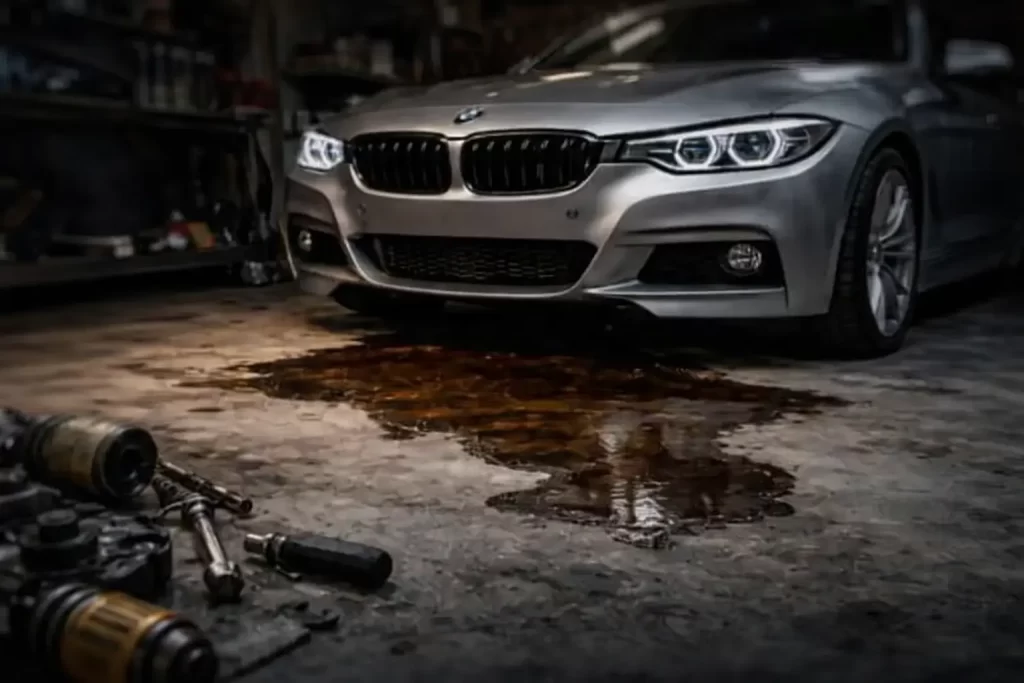
Coolant leaks typically start small with a faint sweet smell after shutting the car off or an unstable, low coolant warning. A day later, you notice a few drops under the front bumper. For many BMW owners, this scene is all too familiar.
BMW coolant leaks are one of those problems that seem minor until they become a major issue. Many drivers top off the reservoir and move on, not realizing that these cars use a pressurized system where even a slow leak can throw things off balance.

Jacksonville's
Most Trusted
Euro Car Shop
Book Your Appointment Today
In this post, we’ll walk through how to recognize the early signs of a coolant leak, what typically causes them in BMWs, and the right way to have them fixed before they turn serious.
Key Takeaways
- BMW coolant leaks often start from aging plastic parts, weak seals, or worn fittings.
- Early warning signs include a sweet smell, low coolant alerts, or small puddles near the front of the car.
- Proper diagnosis requires a pressure test, not just visual inspection.
- Replacing one failed part often reveals others close to failure; fixing the system as a whole prevents repeat issues.
- Ignoring a leak can lead to overheating, head gasket failure, or costly engine damage.
Common Signs of BMW Coolant Leaks
Most BMW owners notice a coolant leak before it becomes serious, but usually ignore the symptoms since they’re easy to miss for car newbies. These are the signs we see most often in the shop:
- Low coolant warning light: Often the first sign that coolant is escaping. It may flicker on and off as levels change with temperature.
- Sweet smell from the engine bay: That faint sugary odor usually means coolant is burning off on a hot component.
- Small puddles under the front of the car: Coolant tends to collect beneath the radiator or under the engine after parking.
- White or chalky residue on hoses and fittings: Dried coolant leaves visible traces where it seeps from small cracks or loose clamps.
- Engine temperature climbing faster than normal: Reduced coolant flow or trapped air pockets can cause sudden overheating.
Our technicians at Southside Euro are trained to spot these early during routine maintenance visits. A quick inspection often reveals small leaks before they become major repairs, saving both time and money while keeping your BMW running at the correct temperature.
Why BMW Coolant Leaks Happen
BMW cooling systems are efficient but delicate. They depend on lightweight plastic components that face extreme heat cycling. When those materials age, the pressure that once kept the coolant contained starts working against them.
Below are the most common reasons we find coolant leaks in BMWs during service.
Aging Plastic Components
The main culprit in most BMW leaks is heat fatigue. Beamers use molded plastic expansion tanks, radiator end caps, and quick-connect hose fittings. Over time, constant heating and cooling make them brittle.
In Florida’s climate, we see these parts fail as early as 60,000 miles. Once one piece cracks, pressure spikes elsewhere in the system, and the next weakest link usually follows.
The Chain Reaction Effect
We see this often on the 3-Series, 5-Series, and X5 models. A cracked coolant reservoir gets replaced, but a few months later, the radiator seam or a nearby hose fitting gives out. Each part in the system shares pressure with the others, so one failure often reveals the next one waiting to happen.
For that reason, our technicians usually inspect the entire cooling system when a leak shows up. It’s faster, cleaner, and saves repeat visits later.
High Operating Temperatures
BMW designs its engines to run hotter than most brands for emissions and efficiency. While that helps performance, it accelerates wear on plastics, gaskets, and seals. On turbocharged engines, the added heat load shortens component life even further. We regularly replace water pumps and thermostats on N20 and N55 engines before 80,000 miles for this reason.
Coolant Type and Part Quality
Coolant chemistry matters more than most owners realize. Using generic green coolant or worse, water, rather than BMW’s blue or purple formula, can cause internal corrosion that weakens seals and metal fittings. Installing cheap aftermarket reservoirs or hoses will also cause warped fittings, poor sealing surfaces, and short service life.
Every Southside Euro repair service installs only OEM or OEM-equivalent coolant components, either sourced by us or the car owner. We also perform the refill with factory-approved coolant to prevent these repeat failures.
Climate and Usage Factors
Florida’s heat, stop-and-go driving, and long idling times all make the cooling system work harder. Even newer BMWs can develop small leaks if exposed to constant thermal stress without regular maintenance checks. Routine inspections and every oil service help catch these weak spots early.
How Do You Diagnose BMW Coolant Leaks?
Finding the source of a coolant leak on a BMW isn’t always simple. The cooling system runs under pressure, and small leaks often evaporate before they leave visible signs. A proper diagnosis means applying the right tools and checking known weak points in order.
1. Pressure Test
We start by pressurizing the system to its operating range while the engine is cold. This exposes leaks that only appear under pressure, such as small cracks, loose fittings, or weak seals. The test also helps confirm whether coolant loss is internal or external.
2. Visual and UV Dye Inspection
Once pressure is applied, we look over the system from top to bottom. If the leak is still hard to see, we inject UV dye into the coolant and recheck under black light. This highlights even the smallest seep at a hose joint or water pump weep hole.
3. Check Known Weak Points
Every BMW engine family has common leak areas. On the N20 and N55 engines, we often see coolant escaping from the thermostat housing or the plastic crossover pipe under the intake. On older M54 and N52 engines, the expansion tank and radiator seams are frequent offenders.
Experience with these patterns saves time and helps avoid unnecessary parts replacement.
4. Confirm Pressure Retention
After visible leaks are repaired, we test again to make sure the system holds pressure over time. A slow drop often points to an internal issue like a head gasket leak or a failing oil cooler gasket. If necessary, we perform a combustion leak test to check for exhaust gases in the coolant, which confirms an internal breach.
5. Verify Bleeding and System Balance
Once the leak is fixed, the final step is bleeding the system to remove trapped air. Air pockets cause erratic temperature readings and can mimic a failing water pump. We use BMW’s electronic bleed procedure to ensure proper flow and stable temperatures.
How to Prevent Future Leaks in Beamers
BMW cooling systems work best when serviced on schedule. Fresh coolant helps control corrosion and keeps seals flexible, reducing the chance of cracks or leaks.
During regular maintenance, ask for a pressure test or visual inspection. Our technicians often catch small seeps around fittings or tanks before they turn into major failures.
Stick to BMW-approved coolant and avoid mixing types. Using water or generic blends changes boiling points and weakens seals over time.
Finally, replace plastic cooling parts around 80,000 miles or sooner if you drive in extreme heat. Preventive work here costs far less than fixing an overheated engine later.
The Right Way to BMW Coolant Leaks
Coolant leaks in BMWs can’t be patched or ignored. Once pressure is lost, the leak will continue to grow. The fix starts with identifying the failed part and replacing it with one that can handle proper system pressure again.
At Southside Euro, we only install OEM or OEM-equivalent parts. They fit correctly and last longer than cheaper aftermarket pieces, which often warp or crack under heat.
When one part fails, nearby components are usually close behind. It’s better to inspect the full cooling system, hoses, tank, radiator, and water pump, rather than replacing pieces one by one.
After repair, we bleed the system using a vacuum or electronic procedure to remove trapped air. Skipping this step leads to overheating even after the leak is gone.
Keep Your BMW Cooling System Reliable
A coolant leak is more than an inconvenience; it’s also a sign your BMW’s cooling system is under stress. Catching it early prevents overheating, protects expensive components, and keeps performance consistent.
Routine inspections and proper coolant maintenance go a long way toward avoiding repeat problems. If you notice a low coolant warning or a faint sweet smell, schedule an appointment with us for a quick diagnostic check. It’s the easiest way to make sure your BMW stays dependable on every drive.
Frequently Asked Questions About BMW Coolant Leaks
How much does it cost to fix a BMW coolant leak?
Costs vary depending on which part failed and how much labor is involved. A small hose or tank can be a few hundred dollars, while a full cooling system rebuild can reach higher. We always perform diagnostics first so you know exactly what’s needed.
Can I drive my BMW with a coolant leak?
You shouldn’t. Even a slow leak can lead to overheating within minutes once pressure drops. Continuing to drive risks warping the cylinder head or damaging the head gasket.
Is a coolant leak worth fixing?
Yes. Fixing a small leak early prevents far more expensive repairs later. The longer the coolant loss continues, the higher the risk of major engine damage.
Why do BMWs have so many coolant leaks?
Most issues come from heat cycling and aging plastics. BMW’s run hotter than many cars, and over time, the constant expansion and contraction weaken reservoirs, fittings, and hoses.
How can I prevent coolant leaks in my BMW?
Stick to regular coolant flushes, use factory-approved coolant, and have the system inspected at each service. Preventive replacements of plastic parts before 80,000 miles save money and downtime.