













Every July, our shop sees a roughly 3x spike in overheating tows from European drivers — BMW, Audi, Mercedes, VW, all of it. The same six components are responsible for about 90% of those failures, and Jacksonville’s combination of sustained 95-plus ambient temperatures, stop-and-go I-95 and 295 traffic, and 70-plus percent humidity is the perfect storm for a European car cooling system failure. These engines are designed for autobahn airflow and a Bavarian summer that tops out at 82 degrees — not a six-week stretch of South Georgia heat dome. Below are the six parts most likely to leave you on the shoulder of the Hart Bridge with steam under the hood, what they cost to replace correctly, and how to spot the warning signs before catastrophic damage cascades into your cylinder head.
Why Florida Is Uniquely Brutal on European Cooling Systems
Before we get into the failure list, it’s worth understanding why your neighbor’s Camry can sit in 105-degree heat-index Beach Boulevard traffic and shrug it off, while your F30 BMW 328i starts climbing past 230 degrees coolant temp. European manufacturers design cooling systems around three assumptions that don’t hold here:

- Ambient temps rarely exceed 90 degrees for extended periods. The thermal margin between operating temp (around 220 F) and a coolant boil-over event is much tighter than on a domestic V8.
- Vehicles are moving most of the time. Most European cooling designs lean heavily on ram-air through the radiator. In stop-and-go I-295 traffic, the electric fan is doing 100% of the work.
- Plastic and rubber components live a normal 7-10 year life. In Jacksonville’s UV load and underhood temperatures, that life is often cut to 4-6 years.
Stack constant AC compressor load on top and you have an engine bay running 15-25 degrees hotter than the same car would in Munich. July is the worst month because we’re 4-6 weeks deep into the heat cycle, plastic has had time to embrittle, and afternoon thunderstorms cause thermal shock when a 240-degree radiator gets hit with a 75-degree downpour. That’s when expansion tanks split open.
#1 Electric Water Pump Failure (BMW N52/N54/N55 and Audi/VW EA888)
The number one cooling failure we tow into the shop, by a wide margin. Beginning in the mid-2000s, BMW moved to electrically-driven water pumps on the N52 (E90 328i, E60 528i), N54 (135i, 335i, 535i twin-turbo), and N55 (F30 335i, F10 535i) engines. Audi and VW followed suit on the EA888 — the 2.0T in everything from the B8 A4 to the MK7 GTI. The pump runs off a small DC motor with a control module bolted directly to it. Great for fuel economy. Bad for longevity in 250-degree underhood temps — bearings dry out, the plastic impeller cracks at the hub, or the controller MOSFETs fry.
Symptoms
- Coolant temperature climbing under sustained load (highway hill, AC at max)
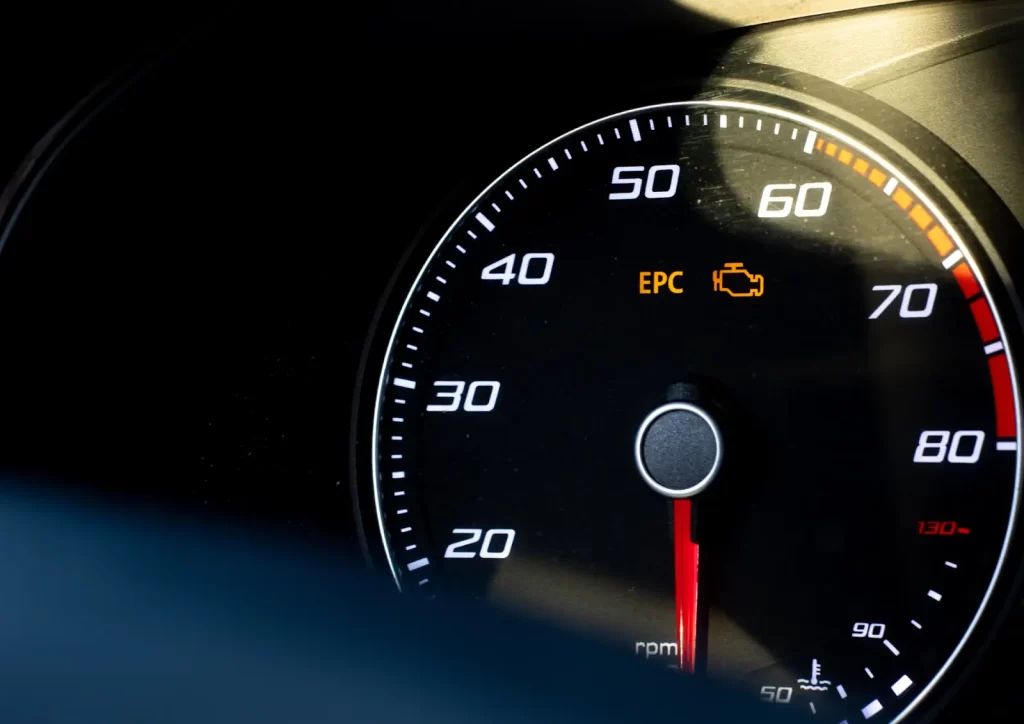
- “Drivetrain malfunction” or “engine overheating, drive moderately” warning on the iDrive
- Fault codes 2E81, 2E82, 2E83 (BMW) or P26A6 / P26A7 (VAG)
- Pump audibly silent when key is cycled with the cap off
Why Florida heat kills them faster
The pump motor’s duty cycle in Jacksonville is roughly double what it is in a temperate climate. We’re seeing N52 pumps fail at 60,000-80,000 miles versus BMW’s 100,000-plus design life. The EA888 pump (called the “pump and thermostat module” because they’re integrated) typically goes between 70k and 90k here.
Replacement cost
$600-$1,100 installed. N54/N55 pump runs $400-550 OE Pierburg, plus 2-3 hours labor because the alternator and several brackets have to come off. The EA888 pump-thermostat module runs about $300 in parts but requires intake manifold or turbo inlet removal, pushing total to $900-$1,100.
#2 Plastic Expansion Tank Cracking (BMW E90/F30, Mercedes W204/W212, Audi B8)
The coolant reservoir on virtually every modern European car is molded glass-filled nylon (PA66-GF30 or similar), pressurized to 14-20 psi by design. Every drive cycle, that plastic goes through a pressure and temperature swing. Jacksonville’s heat-soak — underhood temps staying elevated for hours after shutdown — breaks down the polymer chains faster than in a milder climate.
The classic failure mode is a hairline crack at one of the seams — usually around the pressure cap neck, the low-coolant sensor port, or the bottom return barb. Coolant doesn’t gush out; it weeps under pressure when hot. By the time the car cools, the crack closes back up. You won’t see a puddle on the driveway, but you’ll smell that sweet ethylene glycol smell, and you’ll find a white crystalline residue trail running down the side of the tank.
Specific platforms and ages we’re seeing fail
- BMW E90/E92 (2006-2013 3-series): 7-9 years in FL; every N52 and N54 needs one eventually
- BMW F30 (2012-2019 3-series): newer plastic compound, still failing at 6-8 years here
- Mercedes W204 C-Class and W212 E-Class (M271 1.8T, M272 V6): tanks crack at the upper seam
- Audi B8 A4/A5 and Q5 (2009-2016): tank lives next to the turbo on the 2.0T — heat-cycle stress is severe
Cost
$200-450 installed. The tank itself is $80-180 OE, plus a new cap ($25-40) and a coolant flush and refill ($120-200). Do not cheap out on aftermarket plastic — we’ve seen URO-brand tanks fail in under 18 months. OE Behr, Hella, or genuine BMW/Mercedes/Audi only.
#3 Thermostat Stuck Closed (Most Makes)
The thermostat on a modern European car isn’t just a wax pellet. On most BMW, Mercedes, and VAG engines, it’s “map-controlled” or “electronically heated” — the ECU commands it open for performance or efficiency reasons. When it fails, the wax pellet usually sticks closed and the electronic heater can’t move it far enough to matter. In Jacksonville summer traffic, a thermostat that won’t open past 60-70% of its travel causes coolant temps to climb steadily until the car derates into limp mode.
Diagnosis and codes
- P0128 — coolant temperature below thermostat regulating temperature (usually means thermostat is stuck open, common in winter — but in FL we sometimes see it after a partial failure)
- P0597 / P0598 / P0599 — thermostat heater circuit faults (electrical side of the map thermostat has died)
- BMW-specific: fault 2A82 or 2A87 (thermostat stuck or activation faulty)
- Mercedes-specific: fault P0128 or P0597 typical on M271, M272, M276
Cost
$400-$700 installed on most platforms. The thermostat housing and gasket are almost always replaced as a unit because the housing is plastic and the bolts have a habit of snapping off if you try to reuse the old one. BMW N20/N26 (2012-2016 328i) and N52 (2007-2013 328i): about $500. Mercedes M271/M272: $450-650. VAG 2.0T EA888: usually replaced with the water pump as a combined unit at $900-1,100 (see #1).
#4 Radiator Fan and Fan Control Module (BMW, Mercedes)
European cars rely on a brushless electric fan with a dedicated control module to manage cooling at low vehicle speeds. The fan is enormous — typically 600-850 watts on a BMW or Mercedes — and it lives directly behind the radiator where it bakes in 220-degree airflow all summer. The control module is often integrated into the fan shroud, mounting the electronics to the hottest spot on the car. Failure modes are predictable:
- Module fries internally. Fan either won’t run or runs at one speed (usually wide-open) constantly. You’ll hear the fan howling like a jet engine at idle, or for several minutes after you shut the car off.
- Brushless motor bearings seize. Fan stops turning, AC pressures spike, the car overheats in traffic but is fine at highway speed.
- Wiring connector at the fan melts. Common on E90/E92 BMW — the connector pins corrode in FL humidity, current draw increases, plastic melts.
The “fan running at full speed after shutdown” sign
Your early warning. The fan should run 30-90 seconds after a hot shutdown to bleed heat out, then quietly stop. If it’s running at “leaf blower” volume for 3+ minutes, or won’t stop until you disconnect the battery, the control module is on its way out. The next failure is no fan at all in 95-degree traffic.
Cost
$500-$1,200 replacement depending on platform. BMW E90 fan and module: $550-750. F30 (newer brushless unit): $750-1,000. Mercedes W212 E-Class: $800-1,200. Cheap aftermarket fan assemblies exist and we strongly discourage them — the OE Behr or SPAL units are noticeably quieter and last twice as long.
This is one of the things Southside Euro sees most often in late July — a customer comes in for “noisy AC” and we find the fan has been running flat-out for weeks because the module is intermittently failing. Catch it early and it’s a single repair. Ignore it and you’re replacing the fan, the module, and cleaning up a thermal-runaway event in the engine bay.
#5 Auxiliary Water Pump Failure (Mercedes, Audi)
Most independent shops forget about this one — and most owners don’t know it exists. Many European cars run a second, smaller electric pump in addition to the main one, to keep coolant moving through the heater core, turbocharger, or throttle body after the engine shuts down. The point is preventing heat-soak damage to turbo bearings and oil coking in the turbo center section.
Mercedes uses an auxiliary pump on virtually every turbo and AMG engine since 2010 — M276, M278, M157, M133. Audi runs them on 2.0T and 3.0T applications. VW 2.0T has one on the firewall side of the engine.
When the auxiliary pump dies, the turbo bearings cook every time you park after a spirited drive. You won’t get an overheating warning — the main system still works. But over months, you’re trashing a $2,500 turbocharger because a $200 pump is dead.
Symptoms
- Heater blowing cooler than it should at idle (on Mercedes especially)
- Slight “tick-tick” sound from the engine bay for 2-5 minutes after shutdown — that’s the pump trying and failing
- Fault code P26B7, P252F, or P00B7 depending on platform
- Blue smoke on cold start after the car has been sitting for several days (turbo oil seals failing from heat-soak)
Cost
$300-600 installed. Pump itself is $120-280 OE, plus an hour or two of labor depending on access. Mercedes M276 V6 access is straightforward. Audi 2.0T can require intake manifold removal. Replace preventively at 80,000 miles or 8 years, whichever comes first.
#6 Coolant Hose and Quick-Connect Failures
The sixth most common failure isn’t a single part — it’s the network of hoses, plastic connectors, and quick-disconnect fittings that tie the cooling system together. European manufacturers love plastic quick-connects because they’re fast on the assembly line. Florida heat and ethylene glycol exposure embrittles them.
The specific failure spots we see weekly:
BMW thermostat housing and lower coolant pipe
The N52 (2006-2013 3-series, X3, 5-series, Z4) has a plastic coolant pipe under the intake manifold. It cracks at the rubber-to-plastic junction. Replacement requires intake removal — $700-900 labor alone. The N20/N26 (2012-2016 four-cylinder) has a thermostat housing with two quick-connects that warp under heat. Replace as a unit ($450-650 installed) when you do the thermostat.
Audi/VW EA888 metal flange behind timing cover
The 2.0T uses a metal coolant distribution flange bolted to the back of the head. The O-rings inside it harden and shrink. Coolant weeps out, runs down the back of the block, and looks like a head gasket leak. It isn’t — but the labor to replace the flange is similar ($1,200-1,800) because the timing cover comes off.
Mercedes M272 coolant manifold
A plastic manifold between the cylinder banks routes coolant to each head. It cracks at the seams on cars over 100,000 miles. Replacement is $800-1,400 because the upper intake has to come off.
Universal: upper and lower radiator hoses
Molded silicone-jacketed hoses on most European cars are good for 8-10 years in a normal climate, 5-7 here. Don’t trust a 12-year-old hose because it looks fine. Squeeze it cold — rock-hard or any soft “balloon” spots and it’s done.
The Cascade: How One Failure Becomes Three
This is the part nobody wants to hear. If you push past a cooling failure — even briefly — the cost goes up by 10x or more, fast. Here’s the typical cascade we see:
- Stage 1: Thermostat sticks closed. Temp climbs to 240 F. You see the warning and pull over within a minute or two. Cost: $500-700 to fix the thermostat.
- Stage 2: You ignore the warning, or you don’t have a temp gauge (most modern BMWs hide it behind a menu) and you keep driving 5-10 minutes. Temp hits 260-270. Aluminum cylinder head warps. Now you need a head gasket, head resurfacing, head bolts (which are torque-to-yield single-use), valve seals. Cost: $4,500-7,500.
- Stage 3: You make it home, the car cools off, and the head gasket fails partially over the next few weeks. Coolant leaks into the oil, the bearings spin, and now you’re looking at a complete engine. Cost: $9,000-18,000 depending on the platform.
BMW N54/N55, Mercedes M273/M278 V8, Audi 3.0T supercharged — all especially vulnerable. Modern European engines are designed for tight thermal tolerances and the head will warp before the block cracks. If you see “engine overheating, drive moderately” on the iDrive, pull over now and call a tow. Limping home costs you the engine.
Florida-Specific Cooling System Maintenance Schedule
Here’s what we recommend for any European car driven daily in the Jacksonville area:
Coolant change interval
BMW says “lifetime.” Mercedes says 10 years. Audi says 5. In Florida, every one of those numbers is too long. Corrosion inhibitors in modern HOAT/G12+ coolants are depleted by heat exposure, not just mileage. We recommend a full flush and refill every 3 years for any car driven daily here. Use the manufacturer formula — BMW Coolant (blue), Audi/VW G13 (purple/pink), Mercedes 325.0 (yellow). Mixing types causes additives to drop out of suspension and clog the heater core.
Annual pressure test
Before May every year, have your shop do a cooling pressure test — 16 psi for 15 minutes. Any pressure drop and you find the leak now, in the cool of spring, not on the highway in July. $40-60 at most independent shops as part of a regular inspection.
What to watch for in July
- Temp gauge above the normal indicator line (BMW: 12 o’clock; Mercedes/Audi: midpoint). Anything above that in normal driving is abnormal.
- Sweet smell after a drive — coolant leak somewhere
- Heat coming through the floor on the passenger side — heater core or coolant manifold leak
- White residue trail anywhere in the engine bay
- Cooling fan louder than usual or running too long after shutdown
- Any “Drivetrain Malfunction” or temp warning — pull over, don’t keep driving
Catch a cooling problem early and it’s a $400-1,100 repair. Let it cascade and you’re rebuilding the top end. That’s the entire calculus, and it’s why we push so hard on preventive cooling inspections every spring. At Southside Euro, we run a free underhood cooling check for any existing customer between April and June — get on the calendar before the heat dome lands.