













Summarize this article with:
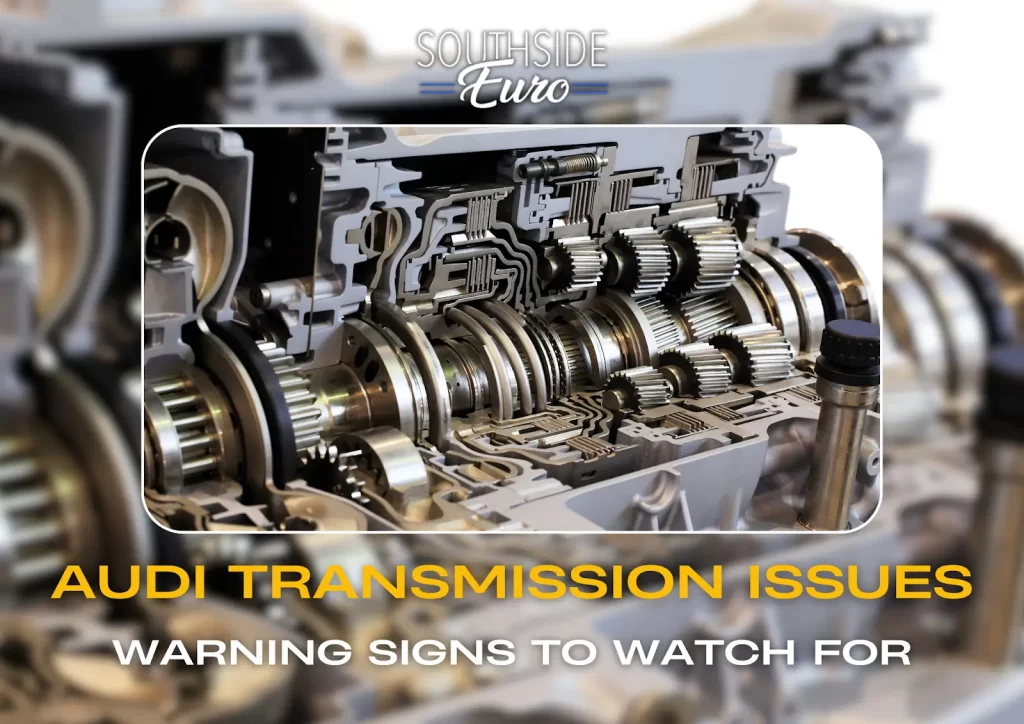
Audi’s sophisticated transmission systems deliver exceptional performance and efficiency, but their complexity creates numerous failure points that owners must monitor carefully. The Direct Shift Gearbox (DSG), S tronic dual-clutch, Tiptronic automatic, and multitronic CVT transmissions each exhibit unique warning signs when problems develop.
Understanding these symptoms and acting quickly prevents minor issues from escalating into catastrophic failures requiring complete transmission replacement or rebuilding. This comprehensive guide helps Audi owners recognize trouble before being stranded with a non-functional transmission.

Jacksonville's
Most Trusted
Euro Car Shop
Book Your Appointment Today
Understanding Audi’s Transmission Technologies
DSG and S tronic Dual-Clutch Systems
Audi pioneered dual-clutch transmission technology in production vehicles, offering manual transmission efficiency with automatic convenience. The system uses two separate clutches and gear sets where one clutch controls odd-numbered gears while the other manages even-numbered gears and reverse.
While one clutch engages, the other preselects the next gear. During shifts, one clutch releases while the other engages, allowing gear changes in milliseconds without interrupting power delivery. This technology delivers the responsiveness of a manual with the convenience of an automatic.
Common DSG Variants
The DQ250 (6-speed DSG) is used in smaller engines including 1.8T and 2.0T applications. This wet clutch design operates with clutches immersed in transmission fluid and has become known for mechatronic unit issues and clutch wear patterns over time.
The DQ381 (7-speed S tronic) appears in higher-output engines like 3.0T and 4.0T variants. Also featuring wet-clutch design with improved electronics, it still experiences mechatronic complications and pressure accumulator concerns as mileage increases.
The DQ500 (7-speed S tronic) serves as the heavy-duty version for performance and SUV applications. While engineered to handle higher torque loads, it shares similar failure modes with other dual-clutch units in the Audi lineup.
Tiptronic Automatic Transmissions
Traditional torque converter automatic transmissions appear in older Audi models and some current applications. The ZF 6HP and 8HP series represent smooth-shifting conventional automatics known for reliability when properly maintained, though issues typically stem from neglected fluid changes and valve body wear over extended periods.
The Aisin 09G/09M is a six-speed automatic used across various Audi model lines. It’s relatively robust but demonstrates sensitivity to fluid quality and can experience electronic control module failures that affect shift quality and reliability.
Multitronic CVT Systems
The Continuously Variable Transmission uses a chain and pulley system for infinitely variable gear ratios. The Multitronic 01J was deployed in A4, A5, and A6 models with four-cylinder and V6 engines through mid-2010s.
This system has become notorious for chain wear and valve body failures, with many owners choosing to convert to conventional automatic transmissions when facing CVT failure due to the poor reliability record these units have accumulated over time.
Early Warning Sign 1: Hesitation or Jerking During Shifts
Normal vs. Abnormal Shift Behavior
Healthy Audi transmissions shift smoothly with barely perceptible gear changes. Any noticeable jerkiness, hesitation, or harshness indicates developing problems that require attention before they worsen into complete system failure.
DSG/S tronic Hesitation Symptoms
Pause before engaging Drive or Reverse represents one of the earliest warning signs. This clutch actuation delay suggests hydraulic pressure issues or worn clutch plates beginning to slip under load.
Jerking during 1st to 2nd gear shift is perhaps the most common failure point in DSG systems. This indicates clutch wear or mechatronic valve body restrictions that prevent smooth power transfer between gear sets.
Shuddering during low-speed acceleration results from clutch material glazing or contamination that prevents smooth engagement. The clutch plates grab and release intermittently, creating an uncomfortable vibration through the drivetrain.
Rough downshifts often accompanied by a slight “bang” sensation suggest aggressive clutch engagement from software calibration drift or pressure regulation issues within the mechatronic unit.
Tiptronic Hesitation Symptoms
Flare during shifts where engine RPM rises briefly before the gear fully engages indicates clutch pack slippage. This happens when clutch friction material wears thin and can no longer hold under normal torque loads.
Harsh downshifts when stopping result from valve body wear causing incorrect shift timing. The transmission releases one gear before fully engaging the next, creating an abrupt transition that passengers can feel.
Delayed response to throttle means the transmission takes one to two seconds to respond to acceleration input. The delay occurs as the transmission computer tries to compensate for worn components or degraded fluid.
What Causes Shift Quality Degradation
Multiple factors contribute to poor shift quality. Contaminated transmission fluid accumulates metal particles from normal wear, which then restrict valve body passages. DSG transmissions are particularly sensitive to fluid condition.
Clutch wear in dual-clutch systems comes from friction material degradation through normal use or accelerated wear from heavy traffic, performance driving, towing, launches, or aggressive driving habits.
Mechatronic Unit Problems
The mechatronic unit integrates electronic controls with hydraulic valves in a single compact assembly. Sludge buildup restricts valve movement, causing incorrect clutch pressure application, delayed engagement between gears, harsh shifts that jolt the vehicle, and stored fault codes in the transmission computer.
Adaptive learning corruption happens when transmission computers learn shift points and clutch engagement characteristics over time. Electrical issues, battery disconnection, or software glitches can corrupt these learned values, requiring professional reset procedures to restore normal operation.
When Hesitation Requires Immediate Attention
Some hesitation patterns indicate urgent problems requiring immediate professional attention. Severe delay engaging Drive lasting three or more seconds suggests critically low fluid level from leaks, failed mechatronic pressure accumulator, or severe clutch wear approaching complete failure.
Violent jerking or banging during shifts indicates damaged engine or transmission mounts allowing excessive movement, internal hard part failure such as broken gear teeth or fractured clutch hub, or mechatronic unit experiencing complete failure.
Intermittent engagement failure where the transmission occasionally won’t engage gear suggests electrical connector issues affecting signal transmission, mechatronic unit internal failure, or critical clutch wear at the point of impending breakdown.
These symptoms require immediate professional transmission diagnosis to prevent complete failure that could leave you stranded.
Early Warning Sign 2: Grinding or Whining Noises
Identifying Transmission Noise Sources
Unusual transmission noises indicate mechanical wear or damage requiring diagnosis before the problem escalates.
Grinding Noise During Shifts
Characteristic grinding or “crunching” sound during gear changes in DSG/S tronic systems becomes most noticeable during cold starts before transmission warms to operating temperature, aggressive acceleration when maximum torque transfers through the clutches, and manual mode shifting where gear changes happen more abruptly.
Causes include clutch pack friction material deterioration creating abrasive particles that circulate through the system, internal bearing wear on input and output shafts that creates metal-to-metal contact, and synchronizer-related wear in some transmission designs.
Whining That Increases With Speed
High-pitched whining noise that rises and falls with vehicle speed, regardless of which gear is engaged, indicates input or output shaft bearing wear creating rotational friction, differential bearing failure within the transmission housing, or gear tooth wear from inadequate lubrication or contamination over time.
CVT-Specific Growling
Distinctive growling sound particularly noticeable during acceleration in Multitronic systems comes from chain wear where the steel link chain develops play and makes improper contact with pulley surfaces, pulley surface wear creating metal-to-metal contact under load, or bearing deterioration in the hydraulic pump that pressurizes the system.
Noise Progression Timeline
Transmission noises typically worsen gradually over time, giving attentive owners multiple opportunities to address problems before catastrophic failure.
Early stage presents as slight whine only at specific speeds, typically around 30-40 mph, occasional grinding during cold weather operation that disappears as components warm, and noise that completely disappears once the transmission reaches operating temperature.
Mid-stage brings whining present across wider speed range affecting multiple driving conditions, grinding occurring during every shift regardless of driving style, and noise volume increasing noticeably week by week.
Late-stage severity features loud grinding or whining regardless of temperature or driving conditions, additional rattling or clunking sounds joining the primary noise, accompanying vibration through the drivetrain that passengers can feel, and imminent complete failure requiring immediate attention.
Professional Noise Diagnosis
Experienced technicians identify specific noise sources through systematic evaluation. Test drive assessment notes exactly when noise occurs including specific speeds, particular gears, and environmental conditions that affect the sound.
Lift inspection involves running the vehicle on a lift to isolate the noise source and check for visible damage to transmission components, seals, and mounting points.
Fluid analysis examines drained transmission fluid for metal particles indicating internal wear, checking color and consistency for signs of overheating or contamination.
Bearing play checks measure shaft end play and radial movement to identify worn bearings before they cause secondary damage to other transmission components.
Comprehensive transmission diagnostics prevent misdiagnosis and unnecessary repairs by pinpointing the exact source of problems.
Early Warning Sign 3: Check Engine Light with Transmission Codes
Common Audi Transmission Fault Codes
The check engine light or transmission warning light accompanied by specific fault codes indicates electronic or mechanical failures requiring professional diagnosis.
Critical Fault Codes to Watch
P17BF – Clutch 1 Pressure Adaptation Limit indicates the DSG clutch 1 requires excessive pressure to engage, suggesting worn clutch plates or hydraulic pressure loss somewhere in the system. This often appears as the first code before major clutch failure develops.
P189C – Clutch Slip Monitoring means the transmission computer is actively detecting clutch slippage under load. This represents a critical warning of impending clutch failure, and continuing to drive causes rapid damage escalation that can affect other transmission components.
P0730 – Incorrect Gear Ratio shows the detected gear ratio doesn’t match the commanded gear, indicating internal mechanical failure or sensor malfunction. This can result from clutch slip, worn gears, or chain/belt slip in CVT applications.
P0715 – Input Speed Sensor Circuit involves the sensor measuring transmission input shaft speed experiencing electrical or mechanical failure, causing shift quality issues and possible limp mode activation. This can stem from actual sensor failure or damaged wiring harnesses.
P0711 – Transmission Fluid Temperature Sensor means the fluid temperature sensor is reading implausible values, causing the transmission to operate with incorrect assumptions about fluid viscosity and affecting shift quality, timing, and protection systems.
P2714 – Mechatronic Unit Pressure Solenoid indicates a solenoid valve in the mechatronic unit is failing electrically or mechanically. Multiple solenoid codes appearing together (P2714, P2715, P2716, etc.) typically suggest complete mechatronic failure requiring unit replacement.
Understanding Fault Code Implications
Different codes indicate varying repair complexity and urgency. Sensor-related codes like P0715 and P0711 typically point to component replacement needs, sometimes requiring wiring repair, and occasionally indicating mechatronic connector issues that can be addressed without major disassembly.
Clutch-related codes such as P17BF and P189C in early stages may respond to fluid change and adaptation reset procedures, mid-stage problems require clutch pack replacement involving transmission disassembly, while late stage situations demand complete transmission overhaul to address all damaged components.
Mechatronic codes in the P2714 series might respond to valve body cleaning procedures that remove accumulated deposits, but often require complete mechatronic replacement including transmission removal, new mechatronic installation, computer programming, and complete adaptation procedures.
Gear ratio codes like P0730 can stem from clutch-related issues requiring friction material replacement, internal hard part failure necessitating extensive internal repairs, or CVT chain wear demanding major transmission work.
The Danger of Ignoring Fault Codes
Many owners continue driving with transmission warning lights, assuming issues are minor or will resolve themselves. This decision frequently transforms manageable repairs into catastrophic failures.
Consider this typical progression: Week 1 sees P17BF clutch pressure code appear indicating early clutch wear. Week 4 with the code ignored sees clutch slippage begin, generating heat and damaging other components. Week 8 with continued driving damages the mechatronic unit and contaminates the entire fluid system, transforming a simple fluid service into a complete transmission rebuild.
Early Warning Sign 4: Leaking Transmission Fluid
Identifying Transmission Fluid Leaks
Transmission fluid leaks appear as red or brown puddles under the vehicle. Fresh DSG fluid displays bright red color while older fluid becomes darker red-brown as it ages and accumulates contaminants.
Leak Severity Assessment
Not all leaks require immediate attention, but none should be ignored long-term. Minor seepage creating a few drops overnight should be monitored with weekly fluid level checks and repair planned within one to two months before the leak worsens.
Moderate leak producing quarter-sized puddle overnight requires fluid level checks every few days to ensure adequate fluid remains, with repair scheduled within two to four weeks to prevent low fluid damage.
Severe leak with large puddle and visible dripping demands daily fluid level checks with fluid added as needed, immediate repair arrangement to prevent being stranded, and recognition that driving with low fluid level causes catastrophic damage to internal components.
Low Fluid Level Consequences
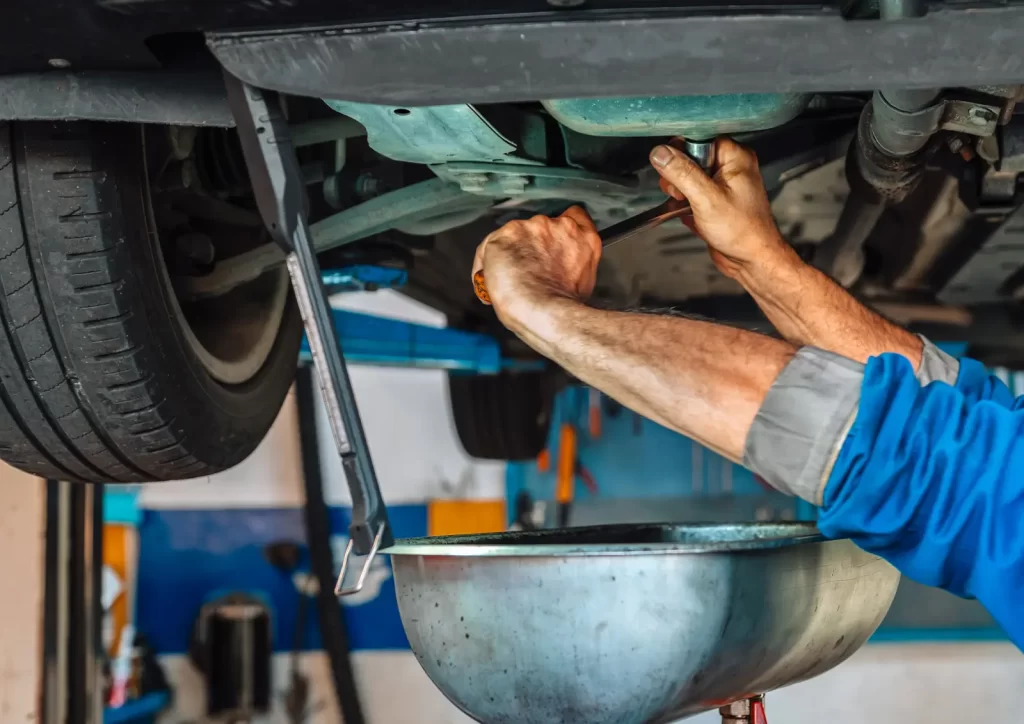
Transmission fluid serves multiple critical functions. It provides hydraulic pressure for clutch actuation, ensures proper lubrication for gears and bearings, and provides cooling for clutch packs and mechatronic electronics.
Low fluid level causes slipping clutches where insufficient hydraulic pressure prevents proper clutch engagement. Clutches slip under load, generating extreme heat that destroys friction material within hundreds of miles of operation.
Overheating occurs as reduced fluid volume cannot dissipate heat effectively. Transmission temperatures rise above safe limits, breaking down remaining fluid and damaging seals throughout the system.
Cavitation damage happens when air enters the hydraulic system as fluid level drops too low. Air bubbles compress and expand violently, eroding metal surfaces in the pump and mechatronic unit through microscopic impacts.
Bearing failures result from inadequate lubrication causing bearings to fail rapidly, creating metal contamination throughout the transmission that accelerates wear on all components.
The progression from leak detection to catastrophic failure can occur quickly with severe leaks or gradually with minor seepage, but the outcome is the same without proper repair.
Early Warning Sign 5: Transmission Overheating
Normal vs. Excessive Temperature
DSG and S tronic transmissions monitor fluid temperature through sensors in the mechatronic unit. Understanding normal ranges helps identify problems.
Normal operating temperatures range from cold start at ambient temperature, normal operation between 160-200°F, performance driving up to 200-220°F which is acceptable short-term, to warning threshold at 230°F and above which triggers protection mode.
Overheating Symptoms
Dashboard warning lights appear including transmission temperature warning displayed as thermometer with gear symbol, “Transmission Too Hot” text message on instrument cluster, and transmission shifting to fail-safe mode with limited gears available.
Performance changes include harsh shifting as fluid viscosity changes under extreme heat, hesitation or delayed engagement as systems struggle to function, clutch slip under heavy acceleration from degraded friction materials, and eventually complete loss of function until the transmission cools down.
Preventing Overheating Damage
Monitor temperature gauge if your vehicle displays transmission temperature, avoid aggressive driving in stop-and-go traffic where heat builds rapidly without airflow cooling, service transmission fluid every 40,000 miles regardless of manufacturer claims about “lifetime fluid,” address any clutch slip symptoms immediately before heat damage occurs, and avoid towing with DSG/S tronic equipped vehicles.
Early Warning Sign 6: Difficulty Shifting in Manual Mode
Manual Mode Operation Issues
Audi’s DSG and S tronic transmissions offer manual mode through Sport mode with paddle shifters or gear selector movement. Problems in manual mode reveal underlying transmission issues.
Refusal to Shift When Commanded
Pulling shift paddle or moving selector produces no gear change, caused by mechatronic unit software issue preventing command execution, clutch wear preventing proper engagement under load, or sensor failure confusing the transmission computer about current operating conditions.
Delayed Shifts in Manual Mode
Significant lag measuring one to two seconds between command and actual shift results from hydraulic pressure accumulator losing charge and failing to maintain system pressure, clutch actuator wear creating sluggish response, or mechatronic valve body restrictions limiting fluid flow.
Automatic Override Despite Manual Selection
Transmission shifts automatically even in manual mode due to rev limiter protection which is normal behavior if approaching redline, transmission overheating protection indicating an abnormal overheating issue, or electronic control unit malfunction disrupting manual mode programming.
Preventive Maintenance for Audi Transmissions
DSG/S tronic Service Schedule
Every 40,000 miles requires complete fluid and filter change using proper Audi-specified fluids, mechatronic adaptation reset restoring learned values, and clutch wear measurement via professional scan tool to assess remaining service life.
Every 80,000 miles needs in-depth inspection including clutch pack condition assessment without transmission removal, mechatronic function testing to verify all solenoids operate properly, and output shaft seal inspection checking for leaks or imminent failure.
Tiptronic Service Schedule
Every 60,000 miles demands transmission fluid and filter change using correct specification fluid, valve body adaptation reset restoring proper shift characteristics, and torque converter clutch operation test ensuring proper lock-up function.
Software Updates
Audi releases transmission software updates addressing shift quality improvements based on field data, extended component life through refined control strategies, and resolving known issues affecting multiple vehicles.
Update procedure involves checking for available updates using vehicle VIN, flashing updated software to transmission control module, and performing complete transmission adaptation process teaching the computer proper operating parameters.
Many transmission issues resolve with proper software updates and adaptations without requiring physical component replacement.
Professional Audi Transmission Service at Southside Euro
Specialized Audi Expertise
Our Audi transmission specialists understand the unique characteristics and common failures of DSG, S tronic, Tiptronic, and Multitronic systems through years of hands-on experience.
We’ve diagnosed and repaired hundreds of Audi transmission issues since 2019, including A4, A5, A6, A7, and A8 sedan models, Q5, Q7, and Q8 SUV applications, plus S and RS performance models with their unique transmission calibrations.
Factory-Level Diagnostic Equipment
We use VCDS (VAG-COM) scan tools providing complete access to all transmission control modules reading every available parameter, live data monitoring during test drives showing real-time transmission operation, clutch wear measurements indicating remaining service life, mechatronic function testing verifying all solenoids and sensors, software version verification ensuring latest updates installed, and adaptation value analysis revealing improper learned parameters.
This diagnostic capability identifies issues that generic shops miss, preventing misdiagnosis and unnecessary repairs that waste your time and money.
Proper Fluid Specifications
We exclusively use Audi-specified transmission fluids meeting exact viscosity and additive requirements. For DSG/S tronic systems we use VW G 052 182 A2 fluid, for Tiptronic applications we use VW G 055 025 A2 or manufacturer equivalent, and for Multitronic CVT we use VW G 052 516 A2 meeting specific chain and pulley requirements.
We never use generic “compatible” fluids that accelerate wear and void any remaining warranty coverage.
Complete Service Documentation
Every transmission service includes before and after scan reports showing fault codes and adaptation values, fluid condition assessment documenting contamination level, clutch wear percentages for DSG/S tronic systems showing remaining service life, recommendations for future service based on current condition, and warranty documentation covering our workmanship and parts.
Jacksonville’s Audi Transmission Experts
Located at 4583 Sunbeam Rd., Jacksonville, FL 32257, Southside Euro provides comprehensive Audi transmission repair and service.
Don’t ignore transmission warning signs that will only worsen over time. Call (904) 240-1440 to schedule diagnostic service today. Early detection saves significant expense in avoided repairs and prevents being stranded with complete transmission failure.
Frequently Asked Questions About Audi Transmission Problems
Audi transmissions rely on precise electronics and fluid pressure. These FAQs cover early warning signs and explain why quick diagnosis is essential.
What are the earliest warning signs of Audi transmission issues?
Early signs include delayed gear engagement, rough or jerky shifting, hesitation during acceleration, and transmission warning lights. These symptoms often appear gradually and are easy to dismiss, but they usually indicate fluid degradation, sensor faults, or internal wear that will worsen without proper diagnosis.
Can Audi transmission problems escalate quickly?
Yes. Audi transmissions are tightly engineered, and small issues can escalate rapidly. A minor fluid leak or software error can cause overheating, clutch damage, or internal gear failure. Continued driving under these conditions often turns a manageable repair into a costly transmission replacement.
How important is transmission fluid condition in Audi vehicles?
Transmission fluid plays a critical role in cooling, lubrication, and hydraulic pressure. Degraded or incorrect fluid reduces protection and increases friction. Audi transmissions require specific fluid types, and improper servicing can lead to premature wear and performance issues.
Is it safe to drive with transmission warning signs?
Driving with transmission symptoms increases the risk of internal damage. Slipping gears or delayed shifts place excessive stress on components that are already compromised. In many cases, continued driving is what turns repairable issues into complete transmission failures.
How are Audi transmission issues properly diagnosed?
Proper diagnosis requires brand-specific diagnostic equipment, fluid analysis, and test driving. Generic scans often miss transmission-related fault codes or misinterpret them. Accurate diagnosis ensures the correct repair and prevents unnecessary part replacement.