










Summarize this article with:
The BMW E60 was the fifth-generation entry in the brand’s 5-Series lineup, built between 2003 and 2010. Designed with sharp edges, sweeping body lines, and a futuristic approach to technology, it marked a shift from the more understated design language of previous BMW sedans.
The E60 introduced modern tech like adaptive headlights, active steering, and the first-generation iDrive system, which centralized vehicle functions into one console. While innovative, these features also introduced new electronic complexity and became a source of concern for long-term reliability.
Jacksonville's
Most Trusted
Euro Car Shop
Book Your Appointment Today
If you’re looking into buying, restoring, or maintaining one of these models, this guide covers what you need to know from model specs to hidden problems and the smartest way to keep it on the road.
What is the BMW E60 Edition?
The BMW E60 represents the fifth generation of the iconic 5-Series lineup, launching in 2003 in Europe and reaching the U.S. market in 2004. This generation marked a dramatic evolution in design and onboard technology, stepping away from traditional styling cues and into a more modern, angular silhouette.
The E60 lineup included several popular models like the 525i, 528i, 530i, 535i, 545i, and 550i, each offering its own balance of performance and luxury. At the top of the range sat the legendary M5, which came equipped with a naturally aspirated 5.0L V10 (S85 engine) , a motor that remains one of BMW’s most celebrated achievements among enthusiasts.
BMW used the E60 platform to push the boundaries of vehicle electronics. Features such as the first-generation iDrive infotainment system, adaptive headlights, and active steering introduced drivers to a new era of car control and customization.
These systems, while impressive, also signaled a shift toward more complex onboard electronics, which later became a source of reliability challenges for some owners.
BMW E60 Engine Options & Trims
The BMW E60 lineup offered a wide range of trims and engines, catering to both daily drivers and performance-focused enthusiasts. Each model came with its own unique setup, including drivetrain and transmission options that varied by year and market.
The 525i and 528i models featured BMW’s reliable inline-6 N52 engine, known for its balance of efficiency and smooth power delivery. The 530i initially used the same N52 but later adopted the N53 in European markets, which introduced direct injection for improved fuel economy and responsiveness.
The 535i stood out with its twin-turbocharged N54 engine, which delivered significantly more torque and became popular for tuning potential. For those seeking V8 power, the 545i and 550i used the N62 engine, a naturally aspirated V8 that offered a refined yet powerful driving experience.
At the top of the performance spectrum, the E60 M5 came equipped with a 5.0L V10 (S85) paired to a 7-speed SMG automated manual, though European buyers could later opt for a traditional manual gearbox.
Transmission options varied; most models offered a choice between 6-speed manual and automatic, with later years introducing 6-speed automatics and optional paddle shifters. Availability differed slightly between the U.S. and Europe, especially with emissions-compliant engines and specific trim packages.
Common BMW E60 Problems
- Oil Leaks: Valve cover gaskets and oil filter housing gaskets often wear with mileage, especially on inline-6 models.
- Cooling System Failures: Water pumps and thermostats may fail after 80K–100K miles, risking overheating.
- iDrive & Electronics: Early iDrive systems often lag or glitch; parking sensors and control modules can also develop faults.
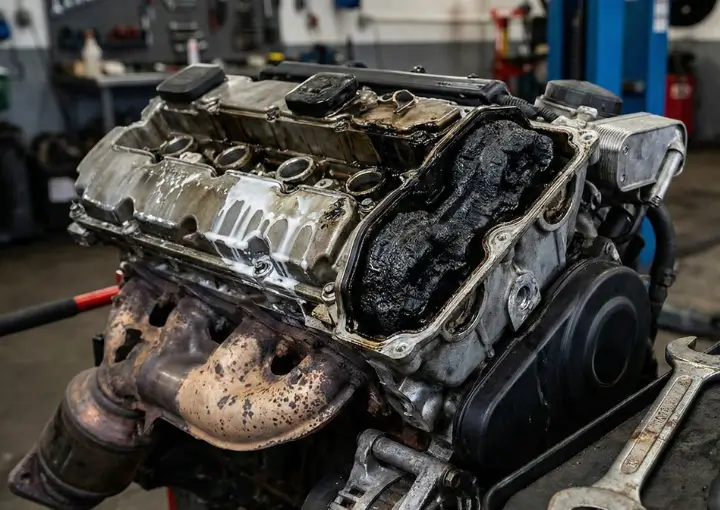
- Turbo Carbon Buildup: On the 535i’s N54 engine, carbon deposits on intake valves can cause misfires or rough idling.
- V8-Specific Issues: Models like the 545i and 550i may suffer from valve stem seal failure and oil burning.
- M5 Concerns: The S85 V10 is powerful but prone to rod bearing wear and SMG transmission issues if neglected.
BMW E60 vs Other 5-Series Generations
| Feature/Aspect | BMW E39 (1995–2003) | BMW E60 (2003–2010) | BMW F10 (2010–2016) |
| Technology | Limited electronics, analog-focused | First 5-Series with iDrive, adaptive lights, active steering | Heavily digital with driver aids and safety tech |
| Design Language | Classic and understated | Bold and polarizing (Chris Bangle design) | Conservative and more premium-looking |
| Driving Dynamics | Balanced and analog feel | Sporty, responsive handling with comfort balance | Softer, more luxury-oriented drive feel |
| Tuning/Mods | Moderate aftermarket options | High potential especially 535i (N54 engine) | Fewer performance-focused variants (outside of M5) |
| Overall Appeal | Enthusiasts love the analog feel | Cult following for power, tech, and design uniqueness | Ideal for buyers wanting refinement and tech |
Is the BMW E60 Reliable?
The BMW E60 can be reliable when properly maintained, but issues vary based on the engine type.- N52 models (525i, 528i, 530i) are generally dependable with fewer major flaws.
- N54 engines (535i) offer performance but need regular carbon cleanings and fuel system checks.
- N62 V8s (545i, 550i) demand more attention due to oil-related wear and sensor issues.
- M5 variants require expert care due to high-revving engines and complex transmissions.
Own a BMW E60? Keep It Driving Like New with Southside Euro
Whether you’re commuting or carving up back roads, your BMW E60 deserves expert care. Southside Euro offers specialized diagnostics, fluid services, and repairs tailored to each E60 engine from the smooth N52 inline-6 to the powerful S85 V10. We use dealer-level tools, OEM parts, and treat every car like it’s our own. No guesswork, just precision, transparency, and performance that lasts. Book Your Service Today or call (904) 240-1440 With the right maintenance and attention, your E60 can deliver the driving experience BMW intended well beyond 100K miles.Conclusion
The BMW E60 stands as a bold step in the evolution of the 5-Series. With its advanced features, distinctive design, and range of powerful engines, it remains a favorite among enthusiasts. Like any aging performance sedan, proper care and timely maintenance are essential to enjoy its full potential without surprise breakdowns.Frequently Asked Questions About the BMW E60
What years was the BMW E60 made?
The BMW E60 was produced from 2003 to 2010. It launched in Europe in 2003 and reached the U.S. market in 2004.
Is the BMW E60 a reliable car?
The BMW E60 can be reliable with proper maintenance. N52 engines are known to be more dependable, while N54 and M5 variants often require more costly upkeep.
Which BMW E60 model is the best?
For daily use, many prefer the 530i or 528i for balance between performance and reliability. The M5 is top-tier in power but demands high maintenance.
Does the BMW E60 have iDrive?
Yes, the E60 introduced the iDrive system across its lineup. Earlier models had a simpler version; later models featured improved functionality.
What is the difference between E60 and F10?
The E60 has sportier handling and more raw feedback. The F10, which replaced it in 2011, offers a smoother, more refined driving experience.