












Every BMW, Audi, Mercedes, Porsche, and VW driver in Jacksonville hits this fork in the road by about 60,000 miles. The dealer service writer just quoted $2,800 for a job, and you’re wondering if there’s a better way. There is. Finding a good european car mechanic in Jacksonville is not about chasing the cheapest oil change on Facebook Marketplace — it’s about finding an independent shop that runs the same factory-level diagnostic tools the dealer uses, sources the same OEM parts, employs technicians with brand-specific training, and charges you a labor rate without the marble-lobby overhead. This guide walks you through how to vet that shop, what to ask, what red flags to walk away from, and what realistic dealer-versus-independent pricing looks like in Duval County in 2026.
The Dealer Markup Problem in Jacksonville
Dealer service departments in Jacksonville — Tom Bush BMW, Audi Jacksonville, Mercedes-Benz of Jacksonville (the old Brumos building), Porsche Jacksonville, and Hanania VW — operate on a fixed-overhead model the independent shop does not have to absorb. You are paying for the marble floors, the loaner fleet of MSRP vehicles, the franchise fees, and the manufacturer-required facility upgrades.

What does that mean on the invoice? Dealer hourly door rates in Jacksonville run $185 to $240 per labor hour depending on the brand. Porsche and AMG sit at the top; BMW and Audi in the $195 to $215 range. The top independent European specialists in town run $140 to $180 per hour — a $50-to-$80 spread on every billed hour.
Then there’s parts markup. Dealers typically mark OEM parts up 40 to 65 percent over wholesale. A good independent marks the same OEM part up 25 to 35 percent. Stack it across a major service and you are looking at 30 to 50 percent less out the door at a competent indie for the same job, with the same OEM parts, often performed by a tech who trained at that same dealer years ago.
Why Jacksonville specifically
Jacksonville’s European market is unusual in a useful way. We have a high concentration of military families cycling through NAS Jacksonville, NS Mayport, and NSB Kings Bay — many of whom bought a BMW, Audi, or Mercedes during a European or West Coast tour. We also have heavy corporate transplant traffic from the Northeast and Midwest. The result: more European vehicles per capita than most Southeast metros, but only one dealer per brand for the entire region. That gives the dealers significant pricing power. The upside is that a serious independent specialist is now within a 15-to-25-minute drive for most of Southside, Mandarin, the Beaches, Riverside, San Marco, and Orange Park.
The 7 Questions to Ask Any European Specialist Before You Hand Over the Keys
This is the most important section of this entire post. If you read nothing else, read this. Print it. Bring it on your phone. Ask every one of these questions before you authorize work on an Audi, BMW, Mercedes, Porsche, VW, Mini, Land Rover, or Volvo:
1. “What OEM-level scan tool do you use for my brand?”
The right answers, by brand: BMW and Mini = ISTA+ (sometimes still called ISTA-D for diagnostics and ISTA-P for programming) running on a genuine BMW ICOM Next interface. Audi, VW, Porsche, and Bentley = ODIS-S (Offboard Diagnostic Information System, Service version) with a VAS 6154 or 5054A interface. Mercedes-Benz = XENTRY Diagnosis (the successor to the legacy DAS / Star Diagnosis) on a Mercedes C6 OpenShell XENTRY Connect or DoIP MultiPlexer. Porsche = PIWIS 3 (the current version is PIWIS Tester III). Land Rover = Topix / Pathfinder. Volvo = VIDA.
You should also hear at least one strong third-party tool mentioned for cross-brand work: Autologic AssistPlus, Snap-on Verus Edge Euro, or the Launch X-431 PRO5 with the Euro pack. Hearing “we use VCDS” (VAG-COM Diagnostic System by Ross-Tech) for an Audi or VW is a positive signal at the routine-service level, but it is not a substitute for ODIS for newer coding work.
Walk away if you hear: “we have a really good scan tool” with no brand name, “OBD2 reader,” “Autel” (without specifying the MS909EV or MaxiSys Ultra), or “we send the car out for that.”
2. “Does anyone here have brand-specific manufacturer training?”
You want to hear BMW STEP graduates, Mercedes-Benz STAR Certified technicians, Audi Academy graduates, Bosch Service Center certifications, ASE Master + L1, and ideally a EUROBAT or ASA (Automotive Service Association) member shop. If everyone on staff “learned on the job,” that’s a problem on a modern German car.
3. “How many years has this shop worked on European vehicles exclusively?”
You want at least five years of European-only focus. Shops that also work on Hondas, Fords, and Chevys are dividing their tool budget and their training budget across too many platforms to be elite at any of them.
4. “Do you have loaners or shuttle service?”
This is a quality-of-life question, but it also tells you about cash flow. A shop with a loaner fleet has the financial stability to be around in three years when your warranty claim comes up.
5. “What’s your warranty on parts and labor?”
The right answer in 2026 is 24 months / 24,000 miles, nationwide if you’re part of a network like NAPA AutoCare or TechNet. 12 months / 12,000 miles is the absolute floor and acceptable. Anything less is a red flag.
6. “Do you use OEM parts or aftermarket — and how do you decide?”
The right answer is nuanced: OEM for anything emissions, electronic, safety-related, or covered by an active TSB. OE-equivalent or premium aftermarket (think Bosch, Continental, Mahle, Pierburg, Pagid, Textar, Bilstein, Sachs, Lemforder) for routine wear items. Aftermarket-only shops cut corners; OEM-only shops gouge you on brake pads.
7. “Can I see a written estimate before any work starts, and will you call before any change to it?”
This is the legal floor in Florida under Chapter 559, Part IX of the Florida Statutes (the Florida Motor Vehicle Repair Act) for any repair over $100. But you want the shop to volunteer this without being prompted.
Red Flags: When NOT to Take Your BMW, Audi, or Mercedes There
Some signals are so reliable you should turn around in the parking lot:
“We work on all makes and models”
The single biggest red flag for a European owner. Modern BMWs alone require ISTA+, an ICOM Next interface, an ENET cable, Esys licensing for coding, and a tech who knows the difference between an F30 and a G20 chassis. A shop that also does Camrys and F-150s is not investing $40,000 a year keeping a BMW tooling environment current.
The only scan tool you can see is a handheld OBD2 reader
A $400 generic tool reads and clears emissions codes. It cannot register a battery on a BMW (writing capacity, type, and serial to the IBS and DME via ISTA), code an N20 timing chain replacement, program an FRM3 module after a dead-battery brick, adapt a ZF 8HP valve body, or do guided fault finding on a Mercedes 9G-TRONIC. If diagnostics stop at the OBD2 port, your car gets diagnosed by parts cannon.
No EUROBAT, ASA, NAPA AutoCare, or TechNet accreditation
None of these are bulletproof, but the complete absence of any third-party accreditation suggests the shop hasn’t been around long enough — or has been declined.
A suspiciously low quote that skipped inspection
If someone quotes a fixed price for “BMW timing chain replacement” without first scanning the car, pulling the valve cover to check guide wear, and verifying tensioner condition, you’re either getting surprise-charged halfway through or getting incomplete work.
What “OEM-Level Diagnostic Tools” Actually Means
This is the single most misunderstood part of European car ownership. When you hear oem-level diagnostic tools, picture this: the manufacturer’s own factory software, running on a dedicated tester, connected via the manufacturer’s own interface hardware, with an active license pulling live data from factory servers.
For BMW, that means ISTA+ connected via an ICOM Next A+B+C kit. Licensing through AiCoder, Esys token services, or a genuine BMW subscription runs a serious shop $3,000 to $8,000 a year. The ICOM Next hardware is another $1,800. That’s before any training.
For Mercedes, XENTRY Diagnosis with a current Pass-Thru subscription runs roughly $2,500 per year per workstation, plus $2,000 for the C6 OpenShell or DoIP MultiPlexer. Updates are pushed monthly and older XENTRY versions cannot talk to newer chassis.
For Porsche, PIWIS 3 is leased only — you cannot buy it outright — at roughly $14,000 per year. This is why most general “European” shops cannot work on a 992-generation 911 or a current Cayenne competently. They can do oil services, brakes, and tires, but they cannot code a key fob or program a control unit.
For Audi and VW, ODIS-S with a current Erwin subscription runs about $1,800 a year, plus the VAS interface hardware.
The top-tier independents in town have invested in the full factory tool stack for the brands they specialize in. The reason an independent saves you money is overhead — not by cutting corners on diagnostics.
When the Dealer Is Actually Worth It
Be skeptical of any shop — including any indie — that says the dealer is never the right answer. There are clear scenarios where the dealer is the right call.
Open recalls
If your car has an open safety recall, the dealer performs it for free. The independent shop cannot bill the manufacturer for a recall.
Active factory warranty or CPO coverage
If you are still under the original 4-year / 50,000-mile factory warranty or a CPO extension, take warrantable repairs to the dealer. The Magnuson-Moss Warranty Act (15 U.S.C. § 2301 et seq.) protects your right to use an independent shop for maintenance without voiding your warranty, but it does not require the manufacturer to cover repair costs at the indie. For routine maintenance — oil, brakes, filters, tires, alignment — keep your receipts and use a competent indie. For a warranty claim, the dealer is the path of least resistance.
Software-only TSBs that require dealer-key coding
A few TSBs require actions tied to the manufacturer’s secure dealer account — keys or tokens an independent cannot pull. Rare, but real. A competent indie will tell you when you’ve hit one and refer you out.
Class-action remediation
Any work tied to a class action, buyback, or settlement (VW Dieselgate, BMW N63 customer care package, Mercedes BlueTEC remediation) goes through the dealer.
What to Expect From a Top Independent European Shop in Jacksonville
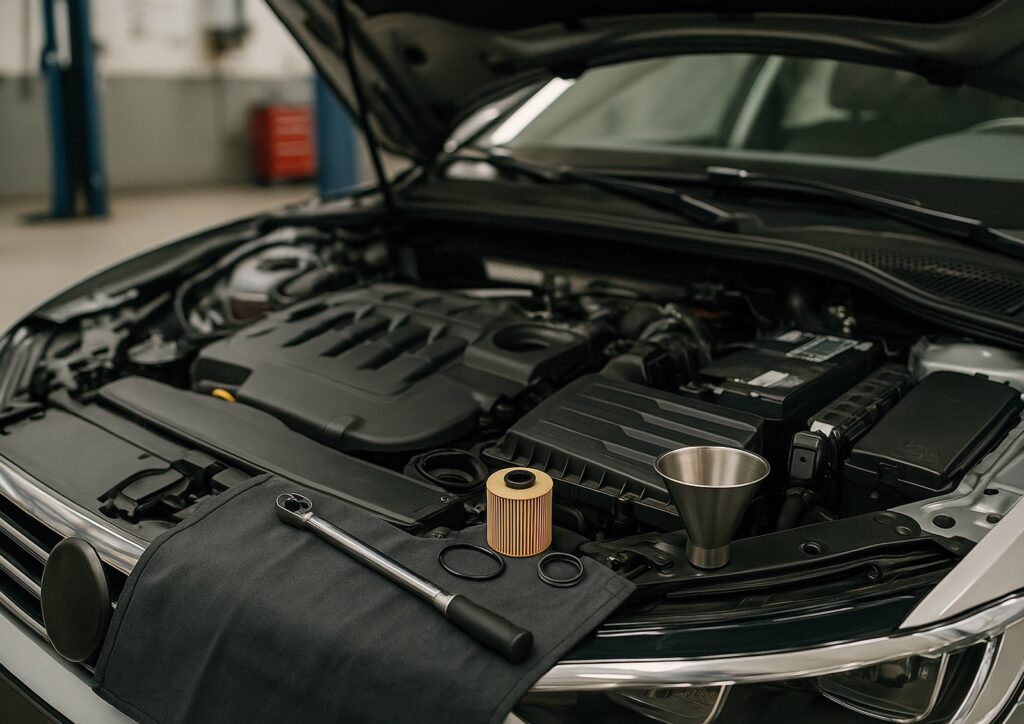
A top-tier indie looks and feels like a small dealer service department minus the showroom. Concrete bays, organized tool boxes, brand-specific specialty tools on the wall (BMW timing chain tensioners, Mercedes valve spring compressors, Audi cam-locking kits), a clean parts room, and a customer area with a written estimate process.
Pricing comes in at 60 to 75 percent of dealer pricing for the same repair using the same quality parts. Turnaround is typically faster because the indie isn’t fighting through 40 cars a day. Communication is usually better because you talk to the same advisor every time. Warranty is 12 months / 12,000 miles at the floor and 24 months / 24,000 miles at the better shops.
For example: a customer at Southside Euro recently came in with a 2018 BMW 540i (G30) needing a full cooling system overhaul — water pump, thermostat, expansion tank, radiator hoses, coolant. The Tom Bush quote was $3,180. The Southside Euro quote, using genuine BMW pumps and Behr/Mahle ancillaries, was $1,945 — out in 36 hours instead of the dealer’s 5 business days.
Common Jacksonville European Car Repairs: Dealer vs. Independent Pricing
Real 2026 Jacksonville-metro ranges. Your exact car, mileage, and shop will move these around, but the gap is consistent:
BMW N20/N26 water pump and thermostat (F30, F32, F22, F25 era)
Dealer: $1,150 – $1,400. Independent: $720 – $920. Genuine BMW Pierburg pump and thermostat housing.
Mercedes M276 oil service (E350, C350, GLE350)
Dealer Service B with cabin filter: $480 – $610. Independent: $295 – $375. MB 229.5 5W-40, Mahle filter.
Audi 3.0T supercharger thermostat and crankcase breather (B8/B8.5 S4, S5, Q5)
Dealer: $1,950 – $2,400. Independent: $1,250 – $1,550.
Porsche 991.1 / 991.2 minor service (40K)
Dealer: $720 – $895. Top-tier Porsche-capable independent: $480 – $625.
BMW front and rear brake job (F30 335i)
Dealer: $1,650 – $1,950 (Genuine BMW Powerflow). Independent: $980 – $1,250 (Textar/Pagid pads + Brembo/Zimmermann rotors).
Four-wheel alignment
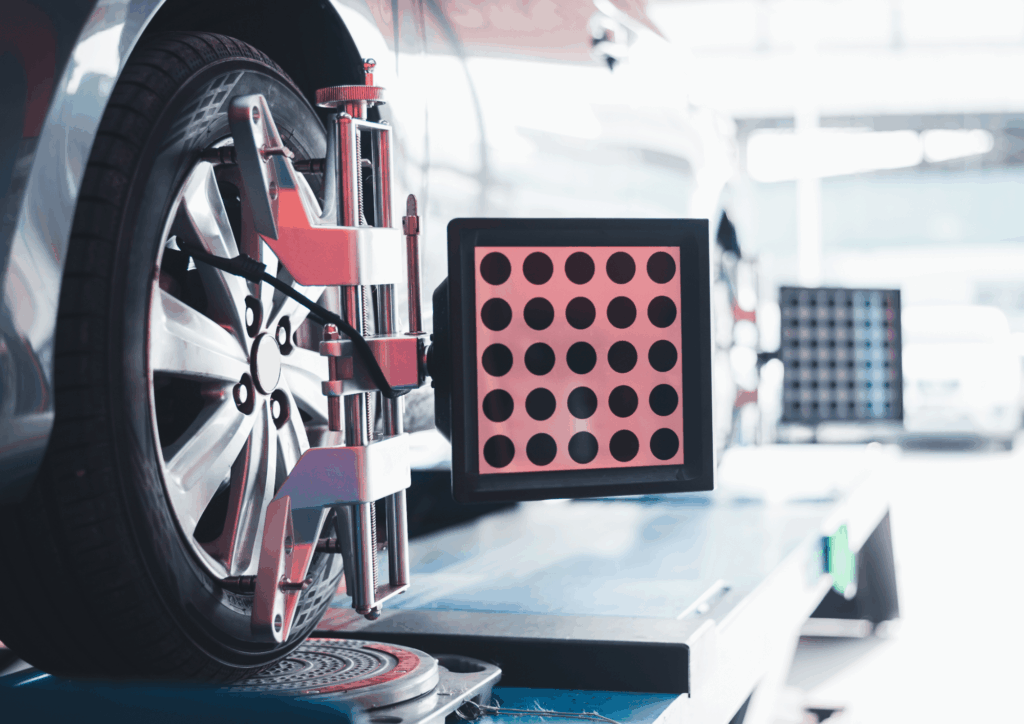
Dealer: $260 – $340. Independent: $140 – $210. Same Hunter HawkEye or John Bean equipment.
Front control arms, both sides (E90 / F30 BMW or B8 Audi)
Dealer: $1,450 – $1,850. Independent: $890 – $1,200 (Lemforder OEM-supplier).
ZF 8HP transmission service (fluid + pan with filter)
Dealer: $810 – $1,050. Independent: $510 – $680. Same ZF Lifeguard 8.
On a typical year of out-of-warranty ownership, the spread between dealer and indie servicing is $1,500 to $3,500. Over five years, you have funded the down payment on your next car.
How to Vet Reviews and Ask for References
Five-star Google ratings are easy to fake. Here’s how to read between the lines.
Good reviews are specific
You want reviews that name the repair (“they replaced my N55 valve cover gasket and the eccentric shaft sensor”), name a tech or advisor by first name, mention turnaround, communication, and how a follow-up issue was handled. Generic “great service, friendly people” reviews in volume are often manipulated.
Read the negative reviews
A shop with zero one- or two-star reviews after five years is suspicious. Real shops have real complaints. What matters is how the shop responded — professional, factual responses are a stronger signal than no negatives at all.
Cross-check across platforms
Pull the shop up on Google, Yelp, Facebook, the BBB, and CarTalk’s Mechanics Files. A shop at 4.9 on Google but 2.3 on Yelp likely has reputation manipulation. Consistent 4.5-to-4.9 across all five platforms over multiple years is the real deal.
Ask for a reference
Most shops will, if asked, connect you with a recent customer who had similar work done. If they refuse, that’s information. If they happily connect you, that’s information too.
Check brand-specific community presence
Search Bimmerforums, AudiWorld, MBWorld, Rennlist, and the local BMW CCA, Audi Club, and PCA chapters for the shop name. Enthusiast reputations are hard to fake.
You bought a European car for the driving experience and the engineering. None of that requires funding a dealer’s marble lobby for ten years. A properly equipped independent — running ISTA+, ODIS-S, XENTRY, PIWIS 3, or VCDS for your brand, staffed by brand-trained techs, with a real warranty — saves you 30 to 50 percent versus the dealer while delivering equal or faster work.