













Summarize this article with:

That small puddle of oil under your BMW or Audi might seem insignificant now, but what starts as a few drops on your driveway can rapidly escalate into thousands of dollars in engine repairs.
European vehicles from manufacturers like Mercedes-Benz, Porsche, Volkswagen, Volvo, Mini Cooper, Jaguar, Land Rover, Alfa Romeo, Maserati, and Rolls-Royce are engineered with precision components that demand proper lubrication at all times.

Jacksonville's
Most Trusted
Euro Car Shop
Book Your Appointment Today
When oil leaks go unaddressed, even minor seepage creates a domino effect of mechanical failures that can leave you stranded and facing a complete engine rebuild.
Understanding Why European Cars Develop Oil Leaks
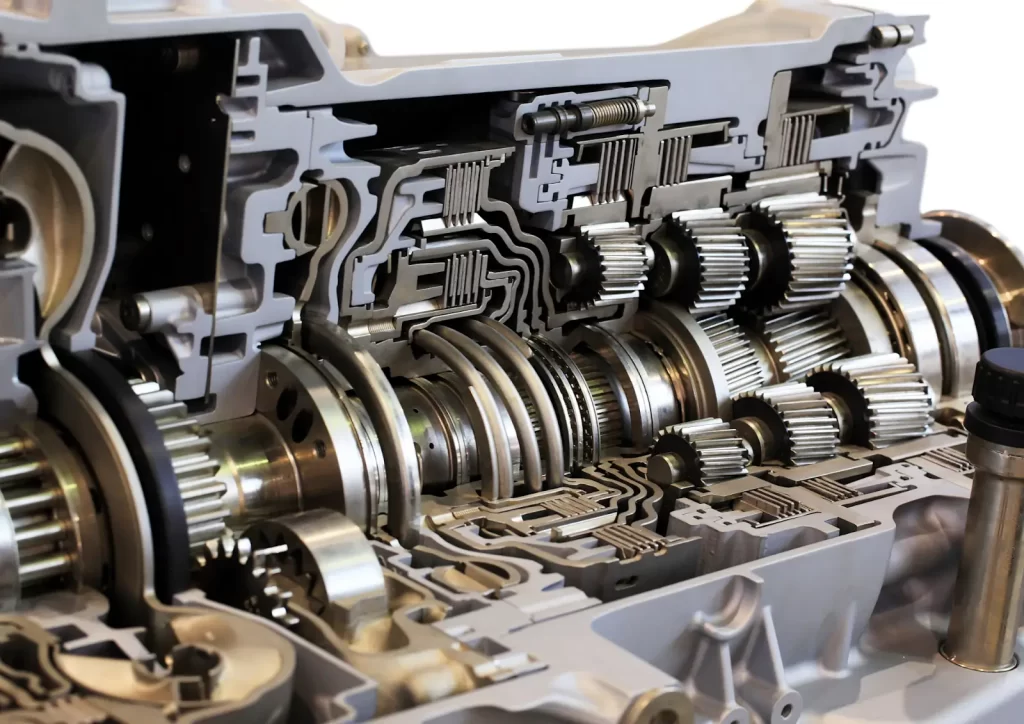
European vehicles use advanced engine designs with tighter tolerances than their American or Asian counterparts. These sophisticated powertrains generate substantial heat and pressure, which gradually degrades gaskets, seals, and valve cover components over time. Unlike conventional engines, European motors often feature turbochargers, direct injection systems, and complex oiling mechanisms that place additional stress on sealing surfaces.
Common leak sources in European engines include the valve cover gasket, oil pan gasket, rear main seal, timing cover, oil filter housing, and camshaft position sensor seals. Audi and Volkswagen models frequently develop leaks from their plastic oil pans, while BMW engines are notorious for valve cover gasket failures. Mercedes-Benz vehicles often experience leaks from their oil cooler seals and front crankshaft seals. Porsche flat-six engines can develop intermediate shaft bearing failures that present as oil leaks before catastrophic failure occurs.
The rubber compounds used in European vehicle seals are specifically formulated to withstand high operating temperatures and synthetic oil compositions. When these seals age, they lose elasticity and begin allowing oil to escape. Climate conditions in Florida accelerate this degradation process, as extreme heat cycles cause seals to dry out and crack faster than in moderate climates.
The Progressive Damage Timeline of Ignored Oil Leaks
Weeks 1-2: Initial Oil Loss and Lubrication Compromise
During the first weeks of an oil leak, your engine continues operating normally despite losing small amounts of lubricant. However, your oil level drops below the manufacturer’s specified range, reducing the oil pump’s ability to maintain proper pressure throughout the system. Critical components like camshaft bearings, connecting rod bearings, and piston rings begin experiencing microscopic wear that accumulates with every mile driven.
Modern European engines monitor oil level through sophisticated sensors. Many BMW, Audi, and Mercedes models will display low oil warnings on the dashboard. Ignoring these alerts means your engine operates with insufficient lubrication during the most demanding conditions, cold starts, highway acceleration, and sustained high-speed driving.
Month 1-3: Accelerated Component Wear
As weeks turn into months, the oil leak worsens as damaged seals deteriorate further. Your engine now operates with significantly reduced oil volume, forcing the remaining lubricant to work harder. Oil that would normally last 10,000 miles between oil change services breaks down at 5,000 miles due to overheating and contamination.
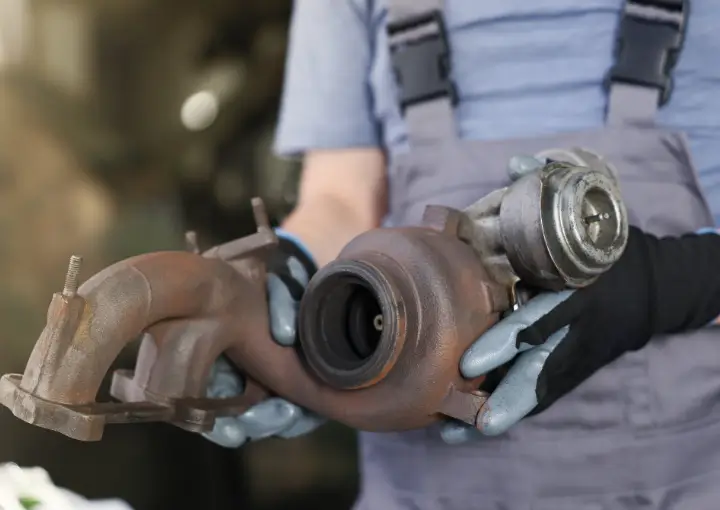
Turbochargers in vehicles like the Audi A4, BMW 3 Series, and Mercedes C-Class require immediate oil pressure upon startup. Insufficient oil volume means these precision components spin without adequate lubrication, causing bearing wear and shaft scoring. The repair cost for a failed turbocharger ranges from $2,500 to $5,000, a catastrophic expense that stems from a leak that initially cost $300 to repair.
Variable valve timing systems common in Porsche, Jaguar, and Volvo engines depend on precise oil pressure to function correctly. Low oil levels cause these systems to malfunction, triggering check engine lights and reducing performance. The engine computer stores fault codes related to timing issues, which often confuse inexperienced technicians who don’t recognize oil starvation as the root cause.
Month 3-6: Critical System Failures Begin
At this stage, multiple engine systems show signs of distress. The timing chain tensioner in BMW N20 and N26 engines loses hydraulic pressure, allowing timing chain slack that produces a rattling noise at startup.
Once this occurs, the timing chain can skip teeth on the sprockets, causing catastrophic valve-to-piston contact that destroys the engine. This failure mode is particularly common in Mini Cooper S models that share the same engine architecture.
Valve train components experience accelerated wear without proper lubrication. Camshaft lobes develop flat spots, lifters collapse, and rocker arms seize. These failures create metallic ticking or tapping sounds from the engine, often misdiagnosed as normal valve noise by owners unfamiliar with European engine characteristics. Professional engine repair at this point requires significant disassembly and component replacement.
The oil leak itself grows larger as increased internal engine pressure forces oil past already compromised seals. What started as a few drops now leaves substantial puddles. Oil spraying onto hot exhaust components creates smoke and burning smells that permeate the cabin. This presents both a fire hazard and an environmental concern, as petroleum products contaminate driveways and parking areas.
Month 6-12: Engine Destruction Imminent
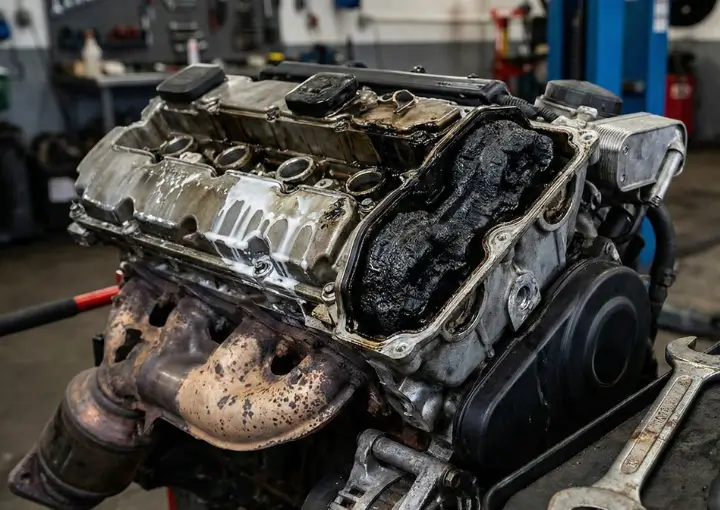
Within a year of ignoring an oil leak, European engines often reach a point of no return. Main bearing clearances increase beyond specification as the crankshaft journals wear unevenly. Piston rings lose tension and allow combustion gases to enter the crankcase, further degrading the remaining oil. The engine consumes oil at an alarming rate, sometimes a quart every 500 miles, requiring constant top-offs between scheduled services.
Metal particles circulate through the oiling system, acting as abrasive agents that accelerate wear throughout the engine. The oil pump pickup screen clogs with debris, restricting flow even when adequate oil volume exists. Oil pressure drops to dangerous levels during idle, causing the oil pressure warning light to illuminate. At highway speeds, pressure may return to normal ranges, creating a false sense of security.
Connecting rod bearings begin to fail catastrophically. The symptoms progress from a light knocking sound to violent hammering as bearing material disintegrates. Once this occurs, complete engine failure is imminent. The connecting rod can break free and punch through the engine block, creating a hole and spilling all remaining oil onto the road. This type of failure leaves drivers stranded and often requires a complete engine replacement costing $8,000 to $15,000 for most European vehicles.
Specific Vulnerabilities by European Manufacturer
BMW and Mini Cooper Engines
BMW’s turbocharged four-cylinder and six-cylinder engines commonly develop valve cover gasket leaks between 60,000 and 100,000 miles. The valve cover incorporates the positive crankcase ventilation system, and when gaskets fail, oil seeps down the side of the engine block. This oil drips onto the exhaust manifold and creates smoke. BMW owners who ignore these leaks often face turbocharger failure and timing chain issues that could have been prevented with a $400 gasket replacement.
Audi and Volkswagen VAG Platform
Audi and Volkswagen vehicles share engine designs across multiple model lines. Their 2.0T TSI engine develops oil consumption issues exacerbated by leaking valve stem seals and piston ring problems. The 3.0T supercharged V6 frequently leaks from the timing cover and upper oil pan. These leaks contaminate the timing chain with debris, leading to premature chain stretch that destroys the engine. Proper diagnostics can identify these issues before catastrophic failure occurs.
Mercedes-Benz M272 and M273 Engines
Mercedes-Benz V6 and V8 engines from 2005-2014 suffer from balance shaft issues that present as oil leaks before complete failure. The front crankshaft seal and oil cooler gaskets commonly leak, and when ignored, the balance shaft gears disintegrate and send metal fragments throughout the engine. This destroys the crankshaft, camshafts, and bearings in a matter of seconds. What appears as a minor leak actually indicates an impending $12,000 engine replacement.
Porsche Flat-Six Engines
Porsche’s iconic flat-six engines feature intermediate shaft bearings that can fail without warning. Early symptoms include oil seeping from the rear of the engine. Drivers who dismiss this leak face total engine destruction when the intermediate shaft bearing seizes, causing immediate engine stoppage and internal component breakage. The repair requires complete engine removal and rebuilding at costs exceeding $20,000.
Jaguar and Land Rover Products
Modern Jaguar and Land Rover vehicles use turbocharged four-cylinder engines prone to oil leaks from the turbocharger oil feed and return lines. These leaks allow oil to enter the intake system and intercooler, creating a buildup that reduces performance. Ignoring these leaks results in turbocharger bearing failure and the potential for catastrophic engine damage if oil-soaked intake components ignite during high-temperature operation.
The Financial Reality of Delayed Repairs
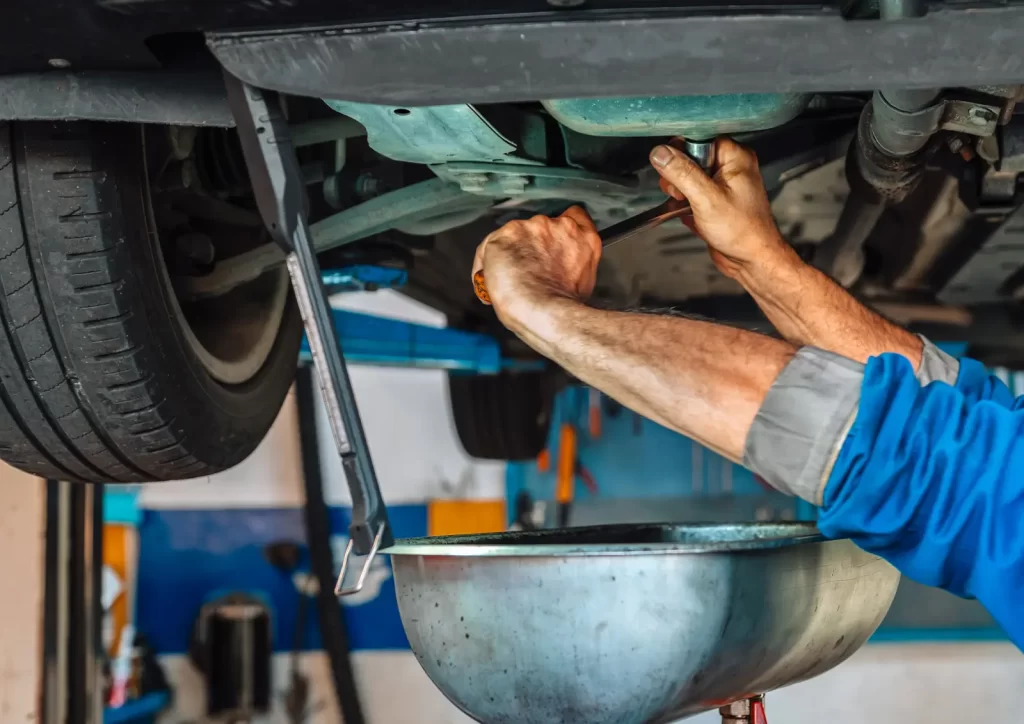
A minor oil leak repair typically costs between $200 and $800 depending on the leak location and required parts. Common repairs include valve cover gasket replacement, oil pan gasket service, or oil filter housing gasket installation. These are routine maintenance procedures that take 2-4 hours of labor at specialized European repair facilities like Southside Euro.
Contrast this with the cost of ignoring the leak. Turbocharger replacement runs $2,500-$5,000. Timing chain service costs $1,500-$3,500. Complete engine rebuilds range from $6,000-$12,000. Total engine replacement for European vehicles typically exceeds $10,000-$20,000 when factoring in labor, parts, and ancillary components that must be replaced during the installation.
Insurance rarely covers engine failure resulting from deferred maintenance. Warranty coverage specifically excludes damage caused by lack of proper oil level maintenance. European vehicle owners bear the full financial burden of these repairs, and many discover their vehicle’s total value doesn’t justify the repair cost, forcing them into difficult decisions about whether to fix or replace their car.
Warning Signs That Demand Immediate Attention
European car owners should watch for these indicators that an oil leak requires immediate professional evaluation. Dark puddles or stains under the vehicle after overnight parking signal active leaks. A burning oil smell during or after driving indicates oil contacting hot engine components. Blue-gray smoke from the exhaust suggests oil entering the combustion chamber. Dashboard warning lights for oil pressure or oil level should never be ignored.
Unusual engine noises including ticking, tapping, knocking, or rattling often indicate oil starvation affecting critical components. Reduced engine performance, hesitation, or loss of power can result from oil-related timing system problems. The engine oil appears excessively dark or contains visible debris and metal particles. Oil consumption increases dramatically between service intervals.
Why Professional Diagnosis Matters
European vehicles require specialized diagnostic equipment to properly assess oil leak sources and resulting damage. Generic code readers cannot access manufacturer-specific systems that monitor oil pressure, temperature, and consumption patterns. Professional technicians at European car specialists use factory-level scan tools to retrieve detailed fault information and live data streams.
Pressure testing identifies leak sources that aren’t visible during static inspection. Fluorescent dye injection allows technicians to trace oil flow under ultraviolet light, pinpointing exact failure points. Borescope inspection through spark plug holes reveals internal engine condition without disassembly, helping determine whether damage has already occurred.
Comprehensive vehicle inspection services evaluate not just the leak itself but its downstream effects on connected systems. This holistic approach prevents scenarios where a leak gets repaired but existing damage causes subsequent failures weeks later.
Taking Action Before It’s Too Late
If you’ve noticed oil spots under your European vehicle, don’t wait for the problem to escalate. Contact Southside Euro at (904) 240-1440 to schedule a comprehensive leak inspection. Our ASE-certified technicians specialize in BMW, Audi, Mercedes-Benz, Porsche, Volkswagen, and all European makes. We’ll identify the leak source, assess any existing damage, and provide transparent pricing for repairs that prevent catastrophic engine failure.
Located at 4583 Sunbeam Rd., Jacksonville, FL 32257, we’ve served the Northeast Florida European car community since 2019 with honest, expert service backed by comprehensive warranties. Don’t let a minor leak destroy your engine and your wallet. Schedule your inspection today and protect your investment before it’s too late.