











Summarize this article with:
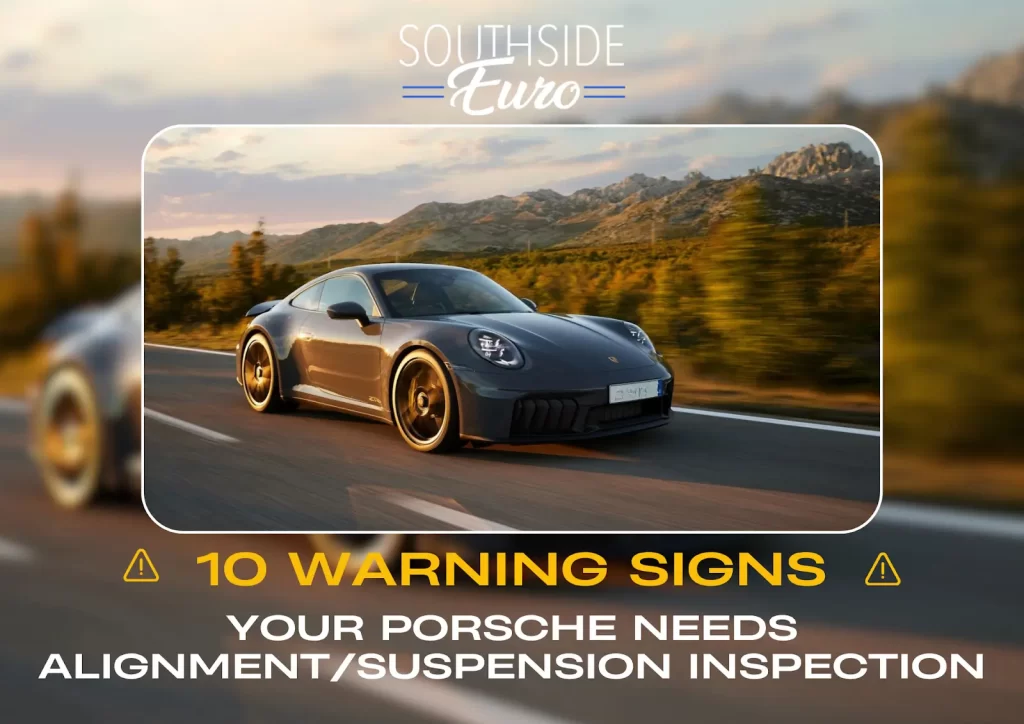
When you drive a Porsche, precision isn’t optional, it’s the whole point. That sharp steering feel, smooth cornering, and confident braking all depend on a finely tuned alignment and suspension system. But Florida roads can be rough on even the best German engineering. Potholes, curbs, rain-worn pavement, and heat expansion all take their toll faster than most drivers realize.
If your Porsche has started feeling “off” lately, it’s not your imagination. Small changes in alignment or suspension geometry can transform a perfectly balanced machine into one that feels unpredictable, twitchy, or noisy.

Jacksonville's
Most Trusted
Euro Car Shop
Book Your Appointment Today
Here are ten warning signs that it’s time to book an inspection, and why catching these issues early can save you thousands in repairs down the line.
Key takeaways:
- Small misalignments can throw off your Porsche’s handling and comfort.
- Pulling, uneven tires, and steering vibration are early warning signs.
- Florida roads and humidity accelerate suspension wear.
- Early inspections prevent costly suspension and tire damage.
- Southside Euro restores factory-precise alignment for Porsche owners in Jacksonville.
1. Your Porsche Pulls to One Side While Driving
If your Porsche drifts to the left or right even when your steering wheel is centered, that’s the first red flag. Misalignment in the camber, caster, or toe angles causes your tires to fight each other instead of tracking straight.
This problem shows up most often in Porsche 911s and Macans, which are engineered for precise handling. A subtle pull may seem minor now, but it puts uneven pressure on suspension components and speeds up tire wear.
At Southside Euro, our certified techs use OEM-level alignment equipment specifically calibrated for European vehicles, so every angle is returned to factory spec, not just “close enough.”
2. The Steering Wheel Sits Off-Center
You’re driving straight, but the steering wheel tilts slightly, sound familiar? That’s another sign of poor alignment. Even if the car doesn’t visibly drift, that crooked wheel means something in the geometry is off.
Over time, that imbalance can stress tie rods and steering racks, leading to bigger repairs. It’s one of those small annoyances that Porsche owners often overlook until it starts affecting performance feel or fuel efficiency.
If you’ve recently replaced tires, struts, or control arms, it’s worth getting a post-service alignment check at Southside Euro.
3. Uneven or Rapid Tire Wear
No Porsche should burn through tires unevenly. When one side of the tread wears faster than the other, that’s your alignment telling on itself. Inner-edge wear often points to excessive negative camber, while feathering can mean the toe angle is out.
Because performance tires are expensive, and Porsches rely on them for grip, this issue can get costly fast. Schedule a quick tire inspection or rotation during your next car maintenance service to stay ahead of the problem.
Our technicians document wear patterns during each visit so you can spot trends early, before you’re due for a full suspension overhaul.
4. Clunking or Knocking Sounds Over Bumps
That knocking sound you hear over speed bumps? It’s not the road. It’s your suspension telling you something’s loose. On Porsche Cayenne and Panamera models, worn control arm bushings or strut mounts are the usual suspects.
Left unchecked, those noises turn into handling issues and uneven braking performance. Because modern suspension systems are so interconnected, a small bushing failure can eventually affect steering stability.
Our team uses advanced car diagnostics tools to pinpoint whether it’s an alignment issue or deeper suspension wear before any parts start failing outright.
5. Excessive Vibration at Highway Speeds
Highway vibration can mean a lot of things: tire imbalance, worn ball joints, or bent suspension arms, but if your Porsche shakes at 60–70 mph and smooths out after, alignment’s a likely culprit.
Vibration is more than an annoyance; it accelerates wear on suspension joints and tires, making the problem worse over time. Our specialists check wheel balance, alignment, and ride height together to rule out hidden causes that generic tire shops might miss.
For high-performance models like the Porsche Taycan or Cayman, even a few millimeters of misalignment can upset ride quality and steering precision.
6. Loose or “Floaty” Steering Feel
One of the best parts of driving a Porsche is that tight, communicative steering. When that starts to feel loose, vague, or “floaty,” the issue could stem from worn tie rods, strut bearings, or improper alignment.
This problem can sneak up gradually until you suddenly realize the steering feels delayed or disconnected. It’s particularly risky at high speeds, where small steering corrections make a big difference.
Our technicians recalibrate steering response and check hydraulic systems to restore that signature Porsche handling feel. If you’ve been putting it off, this is a good time to schedule a performance and upgrade service.
7. Uneven Ride Height
Does your Cayenne or Panamera look lower on one side? Porsche air suspension systems are prone to leaks or leveling sensor issues, which can cause one corner to sag. While it might seem cosmetic, uneven ride height directly affects suspension geometry, and eventually alignment.
Driving like this strains the compressor and can lead to expensive suspension control unit repairs. Southside Euro’s team can run a full suspension diagnostic to detect leaks early and restore the correct balance before further damage occurs.
8. Steering Wheel Vibrates When Braking
If your steering wheel shakes when you press the brake pedal, you’re dealing with more than worn pads. While warped rotors can cause vibration, alignment or suspension irregularities often make the problem worse.
When your Porsche’s suspension geometry is even slightly off, the braking force gets unevenly distributed across wheels. Over time, that inconsistency can warp rotors or wear out control arm bushings.
We see this often with Porsche Panamera and Cayenne owners in Jacksonville, especially those driving through heavy rain or humidity, which speeds up corrosion on suspension joints. If you notice vibration while braking, it’s time to stop guessing and get a full diagnostic inspection to isolate the real cause before it affects steering or braking performance.
9. Rattling or Noisy Front End
A rattling sound from the front end, especially when going over uneven pavement or turning at low speeds, is one of those warning signs that’s easy to ignore, but shouldn’t be.
In many Porsche models, these noises come from worn strut mounts, ball joints, or sway bar links. Each part helps stabilize your car during cornering, and when one fails, it puts stress on the others.
It’s worth noting that Porsches are particularly sensitive to small suspension variations. A noise that seems minor in another car can completely change the way your Porsche 718 Cayman or 911 Carrera feels on the road.
Our technicians at Southside Euro are trained specifically in European suspension repair in Jacksonville, which means we catch and correct issues before they become full replacements. That’s the difference between a $300 fix and a $3,000 overhaul.
If you’re hearing that rattle, it’s time to bring your Porsche in for an inspection, especially before your next long highway trip.
10. You’ve Hit a Pothole or Curb Recently
Even the smallest impact can knock a Porsche’s suspension or steering geometry out of spec. These vehicles are designed with ultra-precise tolerances, which means one bad curb hit can undo thousands of dollars in engineering.
After any noticeable impact, especially one that leaves your car feeling “off”, it’s smart to schedule a quick alignment check. A small adjustment today can prevent major component wear later.
Our alignment machines at Southside Euro use manufacturer-calibrated specs for Porsche, Audi, BMW, and Volvo, so your setup matches factory standards, not generic defaults. That level of precision matters if you care about keeping the Porsche driving feel intact.
You can book an inspection here or stop by our Jacksonville location to get your suspension geometry tested before it turns into a bigger problem.
Why Alignment and Suspension Matter So Much for Porsche Owners
Think of alignment and suspension as the foundation of your Porsche’s personality. They control how your tires meet the road, how your brakes engage, and how confidently you corner. When alignment drifts out of spec, you lose that signature Porsche precision, the tight, balanced, road-hugging feel that makes every drive rewarding.
A misaligned suspension doesn’t just affect ride comfort; it compromises your vehicle’s safety and long-term reliability. If the car starts pulling, vibrating, or leaning unevenly, you’re not only wearing down tires faster, you’re stressing joints, shocks, and even the chassis.
At Southside Euro, our certified European specialists use advanced diagnostic tools designed for high-end vehicles like Porsche, BMW, Audi, and Volkswagen. That means your car isn’t just aligned, it’s recalibrated to its original driving dynamics.
How Southside Euro Handles Porsche Suspension and Alignment Repairs
Unlike generic shops that rely on “close enough” alignments, Southside Euro uses OEM-approved tools and procedures to restore each vehicle’s original geometry.
When you bring in your Porsche for an alignment or suspension inspection, here’s what our technicians typically perform:
- Full diagnostic scan: We use car diagnostics technology to detect sensor errors or uneven load readings.
- Ride height and camber check: Especially important for air-suspension models like the Cayenne and Panamera.
- Road-force balance test: Ensures tires are evenly contacting the pavement under real driving conditions.
- Suspension joint inspection: Checks for play in control arms, bushings, and tie rods.
- Precision alignment: Adjustments made using OEM Porsche specs, not generic alignment targets.
Every step is designed to bring your Porsche back to that “tight and true” road feel it was built for.
Real Results from Local Jacksonville Porsche Drivers
We hear it all the time from customers, driving home after service feels like stepping into a brand-new car. One local European car owner shared:
“The process of booking an appointment was extremely easy. No surprise fees, and they verified what actually needed fixing before doing any work. Communication was great and pricing was fair, worth the drive for quality service.”
Local European car owner, Jacksonville (see full review)
That’s the kind of feedback that reflects what we aim for every time: transparency, factory-level precision, and honest service. You can read more reviews here on Google.
When to Schedule an Inspection
If you notice any of the warning signs we’ve covered, pulling, vibration, uneven tires, or loose steering, it’s time to act. Porsche’s advanced suspension systems aren’t built to “self-correct,” and waiting too long can turn a small adjustment into a full mechanical repair.
The best approach? Make alignment checks part of your routine maintenance schedule every 6–12 months or after any tire replacement or major road impact. You can add it to your next car maintenance visit to save a trip.
Why Jacksonville Porsche Owners Trust Southside Euro
- Factory-trained technicians specializing in Porsche, Audi, BMW, and Volvo
- OEM-level diagnostics for exact alignment calibration
- Transparent pricing, no surprise diagnostics fees or upsells
- Fast scheduling and communication, as many customers mention in their reviews
And unlike most general shops, we stock European-grade parts and use calibration systems made for Porsche platforms, not one-size-fits-all tools. Whether it’s suspension, diagnostics, or performance tuning, you’re working with specialists who understand what makes your car special.
If you’re overdue for an inspection, or your Porsche just doesn’t feel as dialed in as it used to, schedule your visit today through our contact page.
Frequently Asked Questions
How often should I get my Porsche’s suspension inspected in Florida?
Porsche suspension systems should be inspected every 12 months or 10,000 miles. Florida’s heat, humidity, and uneven roads accelerate wear on bushings, struts, and control arms. Catching early issues, like uneven tires or steering pull, during routine maintenance helps prevent expensive repairs and keeps your Porsche handling tight.
What are the most common suspension issues in Porsche vehicles?
Cayenne, Panamera, and Macan models often experience control arm wear, leaking struts, or degraded bushings. These parts take constant stress and deteriorate faster in Florida’s humid climate. Regular inspections at Southside Euro identify small problems early, saving you from major suspension repairs later.
Can bad alignment damage my tires permanently?
Yes. When alignment angles drift off spec, tires lose even road contact, causing one side to wear faster. This uneven friction reduces grip and lifespan, sometimes ruining tires in months. A precision alignment service restores balance, improves performance, and extends tire life dramatically.
Why does my Porsche pull to one side while driving?
If your Porsche drifts left or right, alignment or tire pressure could be off. Worn control arms or tie rods may also cause steering pull. Florida’s potholes and heat expand metal parts, affecting geometry. The experts at Southside Euro correct alignment to factory spec for smooth, confident handling.
Do I need a dealership for Porsche alignment?
Not at all. Independent specialists like Southside Euro use the same OEM diagnostic tools and alignment racks as dealerships, minus the markup. Their certified technicians know Porsche suspension geometry inside out, ensuring pinpoint accuracy and optimal performance without the inflated dealership cost.
Is suspension inspection part of regular maintenance?
Yes, it’s an essential part of routine maintenance. Suspension wear develops gradually, so small changes in ride height or handling often go unnoticed. Regular checks catch worn shocks, leaks, and loose joints before they cause uneven tire wear or compromise Porsche’s precision steering.
Can alignment issues affect performance or fuel economy?
Definitely. When your wheels aren’t aligned, tires fight each other instead of rolling freely. That resistance strains the engine, reducing efficiency and dulling Porsche’s responsive handling. Professional alignment at Southside Euro restores balance, improves fuel economy, and keeps performance razor-sharp.