













You are sitting at a light on Southside Boulevard, in Drive, foot on the brake, air conditioning running. The steering wheel buzzes. The center console rattles. Put it in Neutral and it mostly goes away. Pull onto the road and by 1,500 rpm it is gone entirely.
That is a collapsed engine mount, and in Florida it happens earlier than the mileage charts say it should.

Search this repair and you get one generic answer, as though every BMW were the same car underneath. It is not. What separates an easy version of this job from a hard one is access: what comes apart, and what holds the engine up, before anyone can reach the mount. A 328i and an X5 50i are not the same job. One is an afternoon. The other means carrying the engine from above with the subframe partly out.
Here is what actually differs, one chassis at a time.
What the job involves, by chassis
Everything below assumes a pair of front engine mounts, because that is how it is done. Every BMW gets both replaced together. Doing one is false economy: the second is the same age, has lived through the same heat, and sits in access that is already open.
| Chassis and engine | Typical years | How the engine is supported | Subframe and access work | Hours and realistic shop time |
|---|---|---|---|---|
| E90/E92 328i, 335i (N52, N54) | 2006 to 2013 | From above on a bridge, or below on the oil pan. Subframe stays put. | Belly pans and reinforcement plate off, then lift to clear the studs. | 2.5 to 3.5 hours. Same day. |
| F30 320i, 328i (N20, N26) | 2012 to 2018 | From above on a strut-tower bar. Subframe stays up. | Trays and reinforcement bar off first. Check the oil filter housing gasket while it is open. | 2.5 to 3.5 hours. Same day. |
| F30 335i, 340i (N55, B58) | 2012 to 2019 | From above. Subframe stays up. | Charge pipework and heat shielding crowd the mount area on the turbo sixes. | 3.0 to 4.0 hours. Same day. |
| X1 (E84, F48) | 2012 to 2022 | E84 from above; F48 cradled from below. | Two cars, one name. E84 follows the E90 procedure; F48 is transverse, different work. | 3.0 to 4.0 hours. Same day. |
| F10 528i, 535i | 2011 to 2016 | From above, lifted further than a 3 Series. Subframe stays up. | Heavier shielding, and less room to swing a tool above the mount. | 3.5 to 4.5 hours. Same day if it arrives early. |
| X3 (F25), X5 (F15) xDrive | 2011 to 2018 | From above, held while the driveline is worked around. Subframe stays up. | The xDrive front differential and output shaft sit in the path. | 4.5 to 6.0 hours. Full day. |
| N63 V8: 550i, 650i, X5 50i | 2011 to 2019 | Carried from above. Subframe comes partly down. | Mounts sit behind the exhaust manifolds. Here the access work is the job. | 8 to 12 hours. A full day, often two. |
The transmission mount is worth checking while everything is already unbolted; it adds about an hour on the lift. It fails the same way, and the symptom overlaps: a shudder through the floor on gear changes and light throttle, rather than the steady idle buzz that points at the front pair.
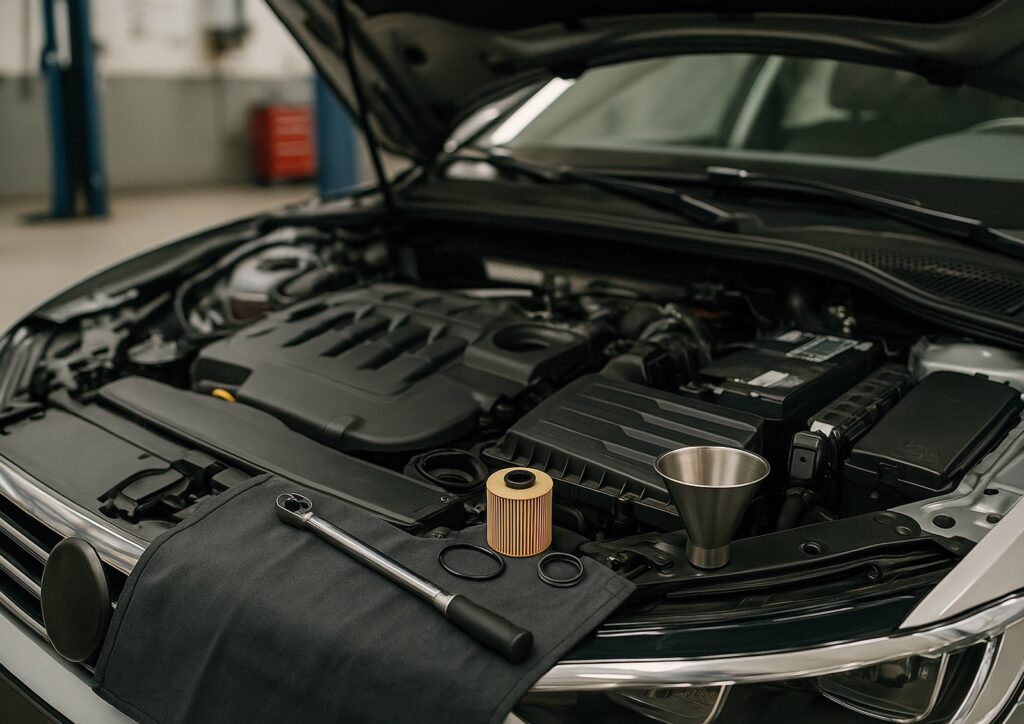
The hours above are guides. A seized stud, corroded subframe hardware or an oil leak fixed at the same time will move them. We fit OE or OE-supplier mounts (Lemförder, Corteco).
Why the V8 is a different universe. On the N63 cars, the mounts sit behind the exhaust manifolds in a space that was clearly designed last. Getting to them means dropping or partly lowering the front subframe and supporting the engine from above. That is not a shop padding hours. It is the actual repair procedure, and it is why lumping every BMW into one generic “engine mount job” tells you nothing useful.
Dealer versus independent, honestly
The comparison people usually make between a dealership and a good independent shop misses what actually varies here. Start with diagnostics: a mount complaint arrives as “a vibration,” and separating a collapsed mount from a misfire, a tired flex disc or a failing driveshaft center bearing takes factory-level scan access. Without it, a shop replaces mounts and hopes.
Second, the part, where the cheap option fails fast: bargain aftermarket mounts are usually solid rubber rather than proper hydraulic units, and on a car engineered around a fluid-damped mount you will feel the difference at idle immediately, then feel it fail again in eighteen months. Third, ask whether anyone will show you the old part; a collapsed mount is unmistakable beside a new one. Fourth, ask what the warranty names, and for how long.
We are an independent shop that runs BMW factory-level diagnostics and fits OE-supplier parts. That is the middle path, and it is the whole reason a European car mechanic without dealer prices is a category that exists.
Why Florida heat kills these mounts early
Most BMW engine mounts are hydraulic. They are not blocks of rubber. Each one is a rubber body with a sealed chamber of fluid inside, tuned to absorb specific engine frequencies so the cabin stays smooth at idle. That design is why a BMW idles the way it does, and it is also the design’s weak point.
Three things happen to a hydraulic mount in Northeast Florida faster than they happen in Ohio.
Heat cycling ages the rubber. Underhood temperatures on a Jacksonville summer afternoon are brutal, and the mounts sit low in the engine bay near the exhaust where heat soak lingers long after shutdown. Rubber that is repeatedly cooked and cooled hardens, then cracks. Once the body cracks, the fluid weeps out and the mount collapses.
Idle time is heat time. Sitting in Butler Boulevard traffic with the air conditioning on maximum is the worst case: no airflow through the bay, cooling fans working, and the engine still producing heat. Cars that spend their lives in stop-and-go accumulate far more heat-soak hours than the odometer suggests.
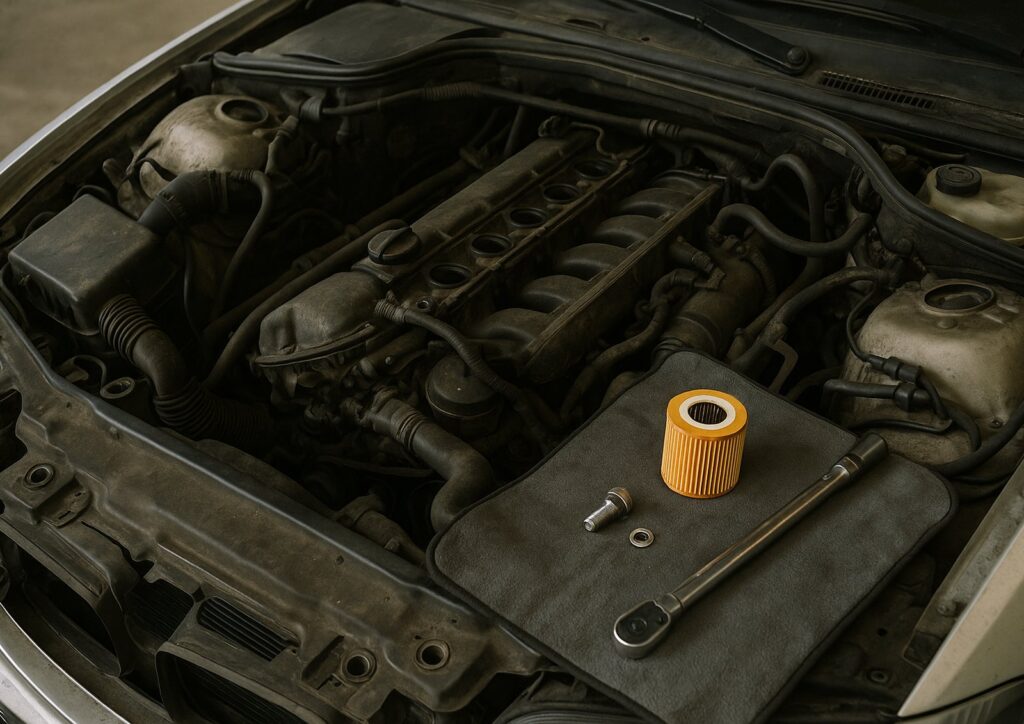
Oil finishes the job. Any BMW with a weeping valve cover gasket or oil filter housing gasket is dripping onto the mounts below. Oil degrades mount rubber, and on the N20 and N55 those gaskets are common failure points anyway. We frequently find a collapsed mount sitting directly under an oil leak, which means fixing one without the other guarantees a repeat visit.
The practical result: national guidance says BMW engine mounts last 100,000 miles or more. In Florida we regularly replace them between 60,000 and 90,000, and on cars that live outside and idle a lot, sooner.
How to tell it is actually the mounts
Engine mount symptoms get misdiagnosed as misfires, transmission problems, and bad axles constantly. Here is what genuinely points to mounts.
- Vibration at idle that changes with gear selection. Worst in Drive or Reverse with the brake held, noticeably better in Neutral or Park. This is the single most reliable indicator.
- It smooths out as revs rise. Above roughly 1,500 rpm the engine frequency moves off the mount’s failure range and the buzz disappears.
- A clunk or thud on takeoff, braking, or gear changes. The engine is physically shifting on its mounts and hitting its travel limit.
- Buzz through the steering wheel, seat rails and center console rather than a sound from one corner of the car.
- Visible fluid. A failed hydraulic mount often shows an oily wet residue on and below the mount body. That is mount fluid, not an engine leak, and it is conclusive.
How we actually check
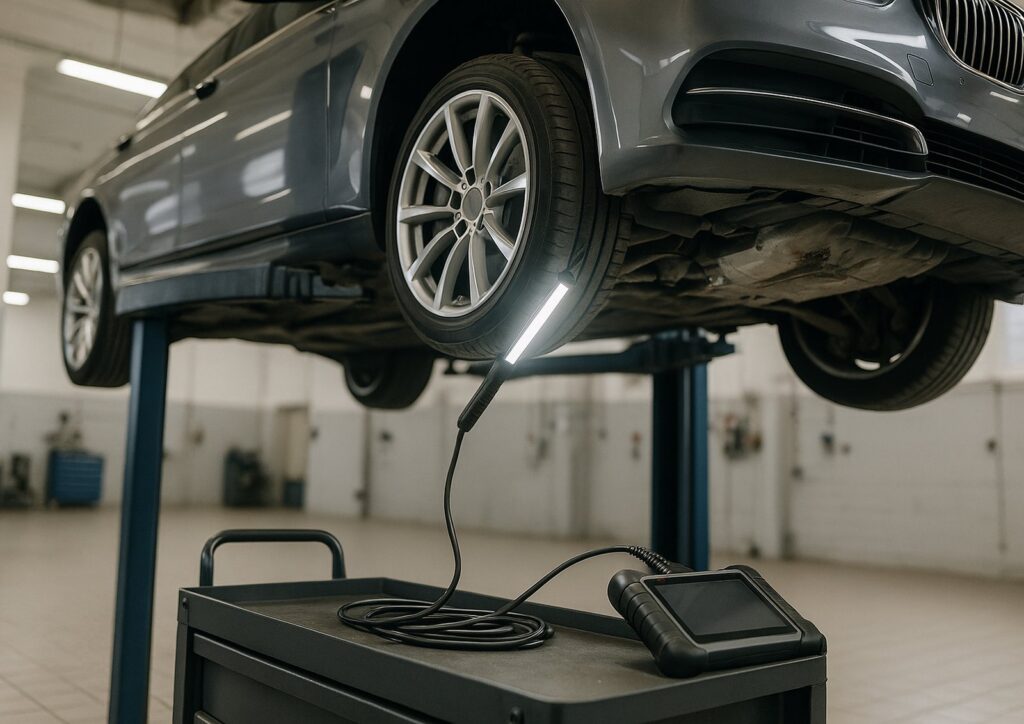
We put the car on the lift and look first, because a collapsed or weeping mount is frequently visible. Then we load the engine: brake held, light throttle in Drive and Reverse, watching how far the engine physically moves and whether it settles back or thuds. We compare mount height side to side, since a collapsed mount sits lower than its partner. And we scan for stored faults, because the point of a diagnosis is also to rule out what it is not.
That last part matters more than it sounds. Vibration complaints on BMWs come in with a dozen possible causes, and a shop that replaces mounts without ruling out misfires, a failing flex disc, or worn axles is guessing. Our European engine repair in Jacksonville work always starts with the diagnosis.
If your vibration comes with a warning message rather than just a feel, read BMW drivetrain malfunction warning first, because that is a different problem with a different urgency.
Can you keep driving on bad mounts?
Short term, yes. This is not a leave-it-on-the-shoulder failure.
But it does not stay cosmetic. When the engine can move further than designed, everything bolted to it takes load it was never meant to take: exhaust flex sections, coolant hoses, wiring harnesses, and on rear-wheel-drive cars the driveshaft and its center bearing. We have pulled cars in for a mount job and found a cracked exhaust flex pipe caused by months of extra engine movement.
The other loss is comfort. People genuinely stop enjoying the car, decide it “feels old,” and start shopping for a replacement when the actual fault is a pair of collapsed mounts.
Other BMW brands, same job
The same failure mode applies across the German brands we work on, and the labor logic is identical: the work tracks accessibility, not badge.
- Audi mounts, particularly on the A6 and A7 with longitudinal V6s, are a known wear item and often come out during timing or supercharger work when access is already open.
- Mercedes-Benz mounts on the M272 and M276 engines are hydraulic and fail the same way, with the same idle vibration signature.
Both are handled the same way here, with the same diagnostic step first. And worth knowing: engine mounts and transmission mounts are both named components under our Total Tune Protection warranty coverage list.
Frequently asked questions
How long do BMW engine mounts last?
How do I know if my BMW engine mount is bad?
Is it worth fixing engine mounts?
Can I still drive with bad engine mounts?
How many miles before engine mounts fail?
What kills engine mounts?
How long does it take to replace all the mounts?
Should I replace both mounts or just the bad one?
Get a real diagnosis first
If your BMW buzzes at idle and smooths out as you drive away, bring it in. We will confirm whether it is actually the mounts before quoting you for mounts, put the car on the lift, load the engine, and show you what we find.
We are a Jacksonville independent shop specializing in European vehicles, with BMW-level diagnostic equipment and OE-supplier parts. See our BMW repair specialists page for what that covers.