













If your BMW idles like it has a lumpy aftermarket cam, hesitates between 2,000 and 3,000 RPM, or rattles for a second or two on a cold start, there is an excellent chance you are looking at BMW VANOS failure. The frustrating part is that VANOS issues are one of the most misdiagnosed BMW problems in the independent shop world, often blamed on bad coils, dirty injectors, a tired battery, or a weak fuel pump before anyone bothers to actually look at the variable valve timing system. We see it constantly here in Jacksonville on N52, N54, N55, M54, and S54 cars, and the longer the system limps, the more expensive the repair becomes. This guide breaks down what VANOS is, how it fails, what it costs to fix, and why the Florida climate makes the problem worse than it would be almost anywhere else.
What VANOS Actually Is and Why BMW Invented It
VANOS stands for Variable Nockenwellensteuerung, German for variable camshaft timing. BMW introduced it on the M50TU in 1992, and it has been the backbone of every modern BMW inline-six since. VANOS uses oil pressure, controlled by an electric solenoid, to advance or retard the camshaft relative to the crankshaft while the engine runs. That gives the engine early intake valve opening for low-end torque, late intake closing for high-RPM breathing, and everything in between, on the fly.

Before VANOS, designers had to pick one cam timing profile and live with the compromises. Aggressive cams made peak power but had ugly idle and emissions. Mild cams idled well but ran out of breath up top. VANOS killed that compromise by moving the intake cam (and on later double VANOS engines, both cams) through a 40 to 60 degree window of authority.
How the System Physically Works
The VANOS unit bolts to the front of the cylinder head. Inside is a helical-spline piston that converts linear hydraulic motion into rotational movement of the camshaft sprocket. The DME commands a solenoid, the solenoid meters oil pressure into the VANOS unit, and the unit twists the cam. When healthy, the requested cam position and the actual cam position match within a degree or two. When VANOS fails, that match falls apart and codes appear.
Single VANOS vs Double VANOS: Which BMW Engines Have Which
This is where a lot of owners get tripped up, because the repair, the parts, and the cost are wildly different depending on which generation of VANOS you are dealing with.
Single VANOS Engines
The original M50TU and early M52 (pre-1998) used single VANOS, meaning only the intake cam was adjustable. The exhaust cam ran on a fixed sprocket. Single VANOS units are mechanically simple, fail predictably, and seal kits are cheap. If you own an E36 325i or 328i, an early E39 528i, or an E36 M3 with the US-spec S52, you have single VANOS.
Double VANOS Engines
BMW rolled out double VANOS, which adjusts both intake and exhaust cams, on the M52TU and S54 around 1998. From there it spread to nearly every BMW engine. The M54, N42, N46, N52, N54, N55, S54, S65, and S85 are all double VANOS designs. These units are more complex internally and contain more rubber seals, solenoids, and failure points. The S54 in the E46 M3 is famous for expensive double VANOS rebuilds, and the N52 (the magnesium-block naturally aspirated six in the E90 328i, E60 528i, and many other models) has its own well-known quirks.
The N54 and N55 turbo sixes also run double VANOS but combine it with HPFP and turbo concerns, which is why VANOS faults on these engines often get masked by other drivability problems and missed on a quick scan.
Top Symptoms of BMW VANOS Failure
BMW VANOS symptoms are subtle at first, then suddenly impossible to ignore. The classic signs we see in the bay every week look like this.
Rough Idle, Especially When Cold
This is the number one BMW rough idle VANOS complaint. The engine fires up and settles into a lopey, unstable idle that smooths out partially as it warms. On the N52, cold idle can hunt between 600 and 900 RPM, sometimes triggering the traction control light because the DME thinks the wheels are slipping when the engine is just shaking the chassis. Once the oil warms and thins, the symptom often improves, which is why owners convince themselves it is fine. It is not.
Loss of Power Below 3,000 RPM
Healthy VANOS lets the engine make strong torque from idle through the midrange. Failed VANOS dumps cam timing into a fixed default position, usually the safe high-RPM map, which makes the bottom end feel hollow. The car still pulls if you wind it out, but it feels like a dog from a stop.
Fault Codes P0011, P0012, P0014, P0015
These are the bread and butter VANOS codes. P0011 and P0012 cover intake cam over-advanced or retarded. P0014 and P0015 cover the exhaust side. On a BMW, these also appear as proprietary codes such as 2A82, 2A87, 2A98, or 2A99 when scanning with INPA, ISTA, or Carly.
Rattling on Startup
A short metallic rattle for the first one to three seconds of a cold start is a hallmark of worn VANOS internals or a failed anti-drain-back component. On the N52, the rattle is loudest in the morning after the car has sat overnight. On the S54, the same noise points to the famous VANOS rebuild E46 M3 owners eventually face.
Poor Fuel Economy and Hesitation
Because the DME is running in a default cam map, the engine wastes fuel and stumbles on tip-in. Owners often see average MPG drop two to four miles per gallon before the check engine light ever comes on.
The Most Common VANOS Failure Modes
Not all VANOS failures are the same, and the repair path depends entirely on what actually broke.
VANOS Solenoids (Electrical Failure)
The solenoids are electrical valves that meter oil into the VANOS unit. They fail in two ways: the internal coil shorts or opens, or the screen inside the solenoid clogs with oil varnish and sludge, restricting flow and slowing response. Vanos solenoid replacement is the simplest VANOS repair and often the first thing we try when codes are present but the engine still runs reasonably.
VANOS Seals (Rubber Degradation)
Inside the unit, small O-rings and piston seals control oil pressure between chambers. BMW used a Viton-style rubber that hardens, shrinks, and cracks with heat and time. When these seals fail, oil leaks past the piston instead of moving it, and cam timing response goes to garbage. Vanos seal failure is by far the most common root cause on any BMW past 80,000 miles, and it is the failure mode that gets misdiagnosed most because the seals can leak slowly enough to not throw a code right away.
Oil Pump Pressure
VANOS lives or dies on oil pressure. If your oil pump is tired, the oil filter housing gasket is leaking internally, or the pump pickup is partially blocked, VANOS will misbehave even if every other component is perfect. On the N52 and N54, we always check oil pressure before condemning a VANOS unit.
Why BMW VANOS Issues Are Worse in Florida
This is the part most national repair guides skip, and it matters if you live in Jacksonville. VANOS rubber seals fail because of heat and oil exposure, and Florida delivers plenty of both.
Underhood temperatures on an August afternoon here routinely hit 220 to 240 degrees at the valve cover after a heat-soak, and the oil runs hotter than it would in a Northern climate. That heat accelerates seal breakdown, so a BMW that might go 150,000 miles before VANOS seal failure in Minnesota often shows symptoms at 90,000 miles in Florida. Add stop-and-go traffic on I-95 and 295, ethanol-blend fuel, and owners stretching oil changes to 12,000 or 15,000 miles based on the service indicator, and you have a perfect environment for premature VANOS issues.
Oil thinning is the second factor. Hot oil shears down to a lower effective viscosity faster, and once it is thinner than the VANOS unit needs, response slows and codes appear during hot restarts and idle. We see this in late-summer when an owner reports the car was fine in March and suddenly miserable in July.
How We Actually Diagnose VANOS at Southside Euro
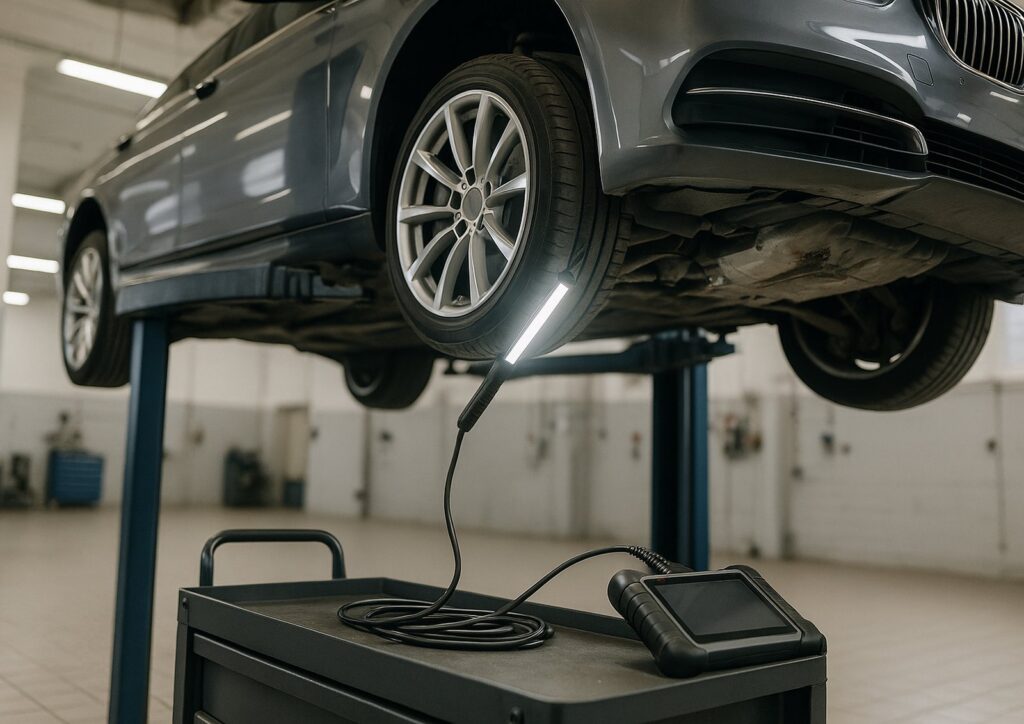
A proper BMW VANOS diagnosis is not a guess based on symptoms. It is a structured process that takes about an hour and produces a clear answer about what to fix. Here is how we work through it at Southside Euro.
Step One: Full Fault Scan with INPA or ISTA
Generic OBD2 scanners are nearly useless on BMW. We use INPA, ISTA, or Carly so we can pull every module, see freeze-frame data, and read VANOS-specific cam position deviation values. The DME logs how far actual cam position drifted from requested, and that delta tells us whether the issue is mechanical or electrical.
Step Two: Live Data and Cam Timing Test
With the engine running, we watch intake and exhaust cam position deviation in real time as we sweep RPM. Healthy cams snap to the requested angle within fractions of a second. Failing VANOS units overshoot, undershoot, or refuse to move. ISTA has a built-in actuator test that commands the cam through its full range so we can see the response curve.
Step Three: Oil Pressure Verification
We T into the oil pressure circuit and confirm the engine is delivering the pressure VANOS needs at idle and at 3,000 RPM. Anything below spec means we fix the oil supply problem first. There is no point installing fresh seals into a unit being starved of oil.
Step Four: Solenoid Bench Test
Before condemning the VANOS unit, we pull the solenoids, inspect the screens for sludge, and test electrical resistance against BMW spec. A clogged screen looks like a failed solenoid, but a quick clean and a fresh O-ring brings it back to life. Owners often replace the solenoid when only the screen needed attention, or vice versa.
VANOS Seal Replacement vs Full VANOS Unit Replacement
Once you know the VANOS unit itself is the problem, you have two repair paths.
Seal Replacement Only
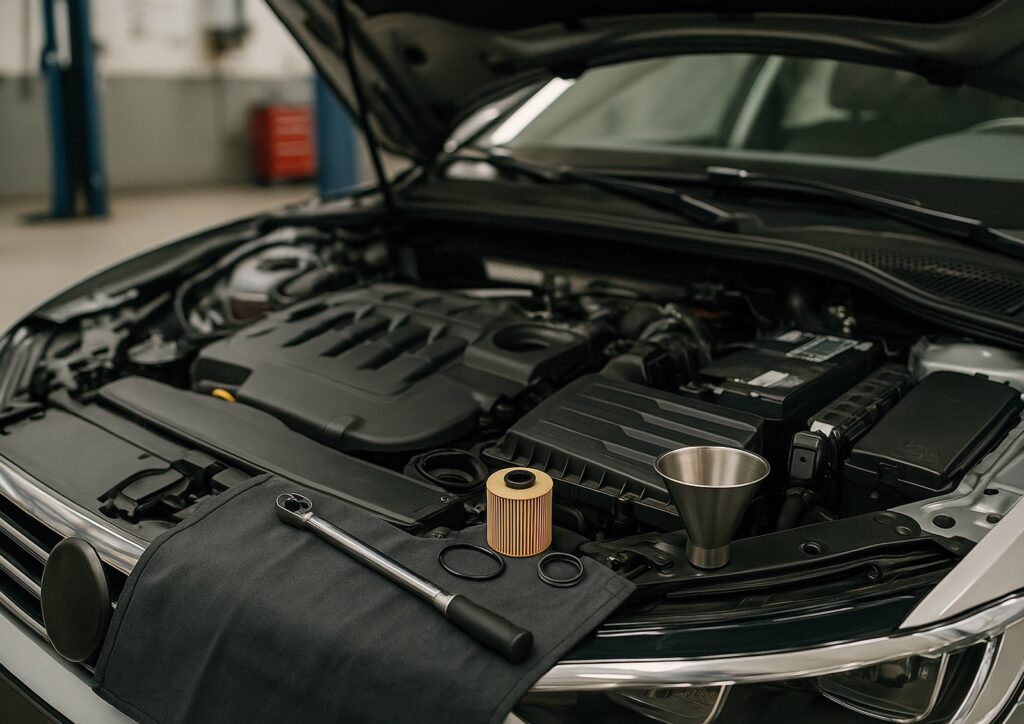
The VANOS unit comes off the engine, gets disassembled on the bench, and the worn rubber seals are replaced with upgraded Viton or Beisan-style kits. The piston, springs, and helical splines stay original. This is the right repair when the unit is mechanically sound but the rubber is shot, which is the common scenario on cars under 150,000 miles. Beisan Systems makes the gold-standard kits for M54, M52TU, S54, and N52 applications, and a properly performed seal job will outlast the original BMW seals by a wide margin.
Full VANOS Unit Replacement
If the helical splines are worn, the piston is scored, or the solenoid block is cracked, the unit gets replaced as an assembly. New OEM units are expensive, remanufactured units from Genuine BMW Reman or quality aftermarket suppliers are a reasonable middle ground, and used units carry obvious risks. Full replacement is the right call on high-mileage cars, on cars run hard with low oil pressure, and on the S54 when a rebuild will not solve underlying mechanical wear.
Realistic BMW VANOS Repair Cost Ranges
Here is the part everyone wants to know. BMW vanos repair cost varies widely depending on the engine, the failure mode, and whether you go to a dealer, an independent BMW specialist, or a general shop that may or may not know what they are doing.
VANOS Solenoid Replacement
Solenoids run $80 to $200 each in OEM quality. Most BMW engines have one or two. Total job at an independent shop is $300 to $600 for the pair installed and coded. This is the cheapest VANOS repair and worth doing first if your codes point that direction.
VANOS Seal Job
DIY, the Beisan seal kit runs about $150 in parts and takes a competent home mechanic six to ten hours on an N52 or M54, longer on an S54. At a shop, expect $900 to $1,800 depending on engine. On the S54 in the E46 M3, the full rebuild is closer to $2,000 to $2,500 at a specialist shop because the unit is more complex.
Full VANOS Unit Replacement
A new OEM N52 VANOS solenoid plate plus cam adjusters runs $1,500 to $2,500 in parts alone, and labor pushes the total to $2,500 to $3,500 installed. S54 full units are more, and on some engines BMW no longer sells the unit as a complete assembly, which forces you back into the rebuild path anyway.
Watch Out for the Hidden Costs
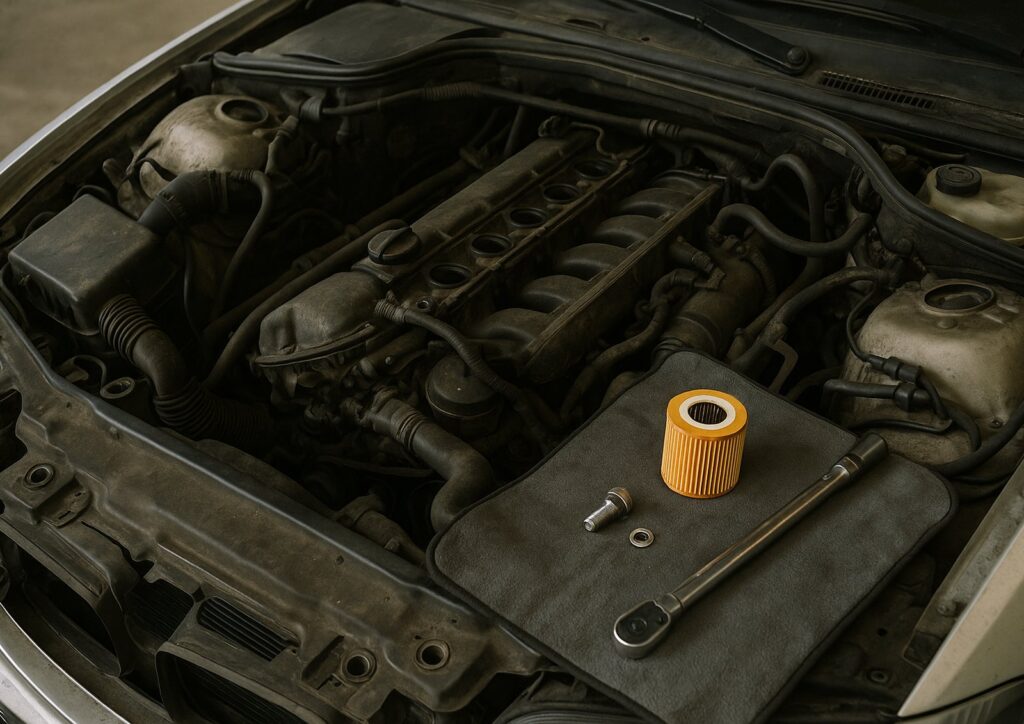
Whenever the valve cover comes off, the valve cover gasket and grommet kit should be replaced. Same for the crankshaft front seal and timing cover gasket if disturbed. Trying to save $80 on gaskets that are right there is how owners end up paying for a second labor visit a month later.
Maintenance That Actually Prevents VANOS Failure
You cannot stop rubber from aging, but you can absolutely slow it down and keep your VANOS healthy well past 150,000 miles.
Shorten Your Oil Change Interval
BMW’s recommended 10,000 to 15,000 mile interval is fine in Munich. In Florida heat with stop-and-go driving, every 5,000 to 7,500 miles is smarter. Fresh oil keeps VANOS solenoid screens clean and keeps oil pressure where it needs to be.
Use the Correct Oil Weight
Most modern BMWs spec a 0W-40 or 5W-30 LL-01 or LL-04 approved synthetic. Do not let a quick lube shop talk you into a generic 5W-20. Wrong-viscosity oil hurts VANOS response and accelerates wear. Castrol Edge 0W-40, Liqui Moly Molygen, and Pentosin 5W-30 LL-04 are all proven choices.
Keep Ignition Coils and Spark Plugs Fresh
Misfires push fuel past the rings and contaminate the oil, which destroys oil quality fast. Replace coils at the first sign of misfire and stick to the BMW-specified plug interval, generally every 60,000 miles on coil-on-plug engines.
Address Oil Leaks Promptly
Valve cover gasket, oil filter housing gasket, and oil pan gasket leaks all lower the actual oil level over time, which lowers oil pressure and starves VANOS. Fix them before they cascade into a VANOS bill.
The Bottom Line on BMW VANOS
VANOS is one of those systems that makes a BMW feel like a BMW when it works and makes one feel like a beat-up rental when it does not. The good news is that VANOS faults are diagnosable, repairable, and almost always less expensive than owners fear once a real shop with real BMW tooling looks at the car. The bad news is that ignoring early symptoms in the Florida heat will turn a $400 solenoid job into a $2,500 rebuild faster than you would believe. If your N52, N54, M54, or S54 is doing any of the things described above, get it on a scanner before the symptoms compound.