













If you own a modern Audi with a dual-clutch gearbox, the words “gearbox malfunction” flashing across your MMI display are enough to ruin a perfectly good Saturday morning. The audi dsg mechatronic unit is the single most failure-prone component in the entire S tronic transmission, and once it starts misbehaving the symptoms only get worse with every drive cycle. Whether you have an A3 with the dry-clutch DQ200, an S4 running the wet-clutch DQ250, or an RS3 with the seven-speed DQ500, the failure patterns are remarkably consistent across the VAG lineup. This guide walks through what the mechatronic actually does, the warning signs that mean you need to stop driving, and what realistic repair pricing looks like in 2026. Florida heat in particular has a brutal effect on these units, and most of the failures we see at the shop trace back to one root cause that owners never knew about.
What a DSG Actually Is
DSG stands for Direkt-Schalt-Getriebe, German for “direct-shift gearbox.” Audi markets the same hardware under the S tronic badge, while VW, Skoda, and SEAT call it DSG. Mechanically they are the same family of transmissions, built primarily by VW Group in Kassel, Germany.

The concept is two transmissions stacked inside one bellhousing. One gearbox holds the odd gears (1, 3, 5, 7) and the other holds the even gears (2, 4, 6) plus reverse. Each half has its own clutch pack. While you are driving in third gear, fourth is already pre-selected and waiting. When the computer commands a shift, one clutch opens while the other closes simultaneously, changing gears in roughly 8 milliseconds with no torque interruption. That is why a DSG-equipped car feels so different from a torque converter automatic.
S tronic vs DSG: Identical Hardware, Different Badge
This catches owners off guard when they call around for a quote. An Audi dealer might tell you the S tronic needs a specific fluid that VW dealers don’t stock, when in reality both cars take the same G 052 182 wet-clutch fluid or G 052 512 dry-clutch fluid depending on the unit code. Knowing this makes it easier to find a competent independent shop.
The Mechatronic Unit Explained
The mechatronic is the brain and the muscle of the DSG. It is a single sealed module bolted to the transmission case, and inside that aluminum housing you have the transmission control unit (TCU), a hydraulic pump, an accumulator, dozens of solenoids, position sensors, and the valve body that routes pressurized fluid to the clutch packs and shift forks.
Every gear change is choreographed by this one part. It reads throttle position, engine RPM, wheel speed, brake input, and steering angle, then commands the clutches with millisecond precision. It also manages clutch wear by adapting engagement points over time, which is why a freshly serviced DSG with a “basic settings” reset feels noticeably crisper than one ignored for 60,000 miles. This is also why a DSG cannot be repaired with a generic scan tool. You need ODIS (the official VAG diagnostic platform) or VCDS to read live data, perform clutch adaptations, and run the basic settings procedure.
Wet-Clutch DSG vs Dry-Clutch DSG: Which Audi Got Which
This is the single most important thing to know about your transmission, because the failure modes, fluid requirements, and repair costs are completely different between the two families.
DQ250 (Wet-Clutch, 6-Speed)
The DQ250 is the original mass-market DSG, introduced in 2003. It uses two multi-plate wet clutches submerged in transmission fluid, handling up to about 350 Nm. You will find the DQ250 in the B7 and B8 A4 with the 2.0T, early 8P A3, first-gen Q3, and a long list of VW Golfs and Tiguans. It is the most durable DSG ever built, and units with 250,000 miles on the original clutches are not unheard of when fluid changes are kept up.
DQ500 (Wet-Clutch, 7-Speed)
The DQ500 is the heavy-duty wet-clutch unit, rated up to 600 Nm. It powers the RS3 (8V and 8Y), TT RS, SQ2, and the new RS Q3, plus the Tiguan R and Cupra Formentor VZ5. Same wet-clutch design as the DQ250 but with seven gears and beefier internals.
DQ200 (Dry-Clutch, 7-Speed)
The DQ200 was designed for fuel economy and packaging in smaller cars. It uses two dry clutches, like a manual transmission, with no oil bath. The mechatronic has its own separate fluid reservoir that never mixes with the gear oil. You will find DQ200 units in the 8V A3 with the 1.4 TFSI and 1.8 TFSI, early Q3 1.4, and almost every VW Polo, Golf, and Skoda Octavia 1.2/1.4/1.5 TSI. The DQ200 mechatronic has a documented design weakness with the synthetic fluid attacking the printed circuit board, leading to one of the most common transmission warranty extensions in VAG history.
Where Each One Lives
The general rule for Audi: A3 1.4/1.8 = DQ200, A3/S3 2.0T = DQ250 or DQ500, RS3 = DQ500, B8/B9 A4 2.0T = DQ250 (later years moved to ZF 8HP torque converter), S4/S5/RS5 = ZF 8HP (not DSG at all on most years), 8R Q5 2.0T = DQ250, and Q3 depends entirely on engine and year. If you are not sure which transmission you have, the unit code is stamped on the bellhousing and also encoded in the seventh and eighth digits of the gearbox identification on your build sticker.
Top Symptoms of Mechatronic Failure
The mechatronic rarely dies all at once. It usually starts dropping hints months before it strands you, and recognizing the early warnings can save you thousands of dollars in catastrophic damage.
Jerky Shifts and Gear Hunting
Healthy DSG shifts at low throttle should be almost undetectable. When the mechatronic starts struggling, you will feel hard upshifts at light throttle, especially the 1-2 and 2-3 changes in stop-and-go traffic. Gear hunting happens when the TCU cannot decide between two gears and bounces back and forth, usually around 35-45 mph on a slight incline. Both symptoms point to worn solenoids or a failing pressure sensor inside the mechatronic.
Slipping and Won’t Shift Past Third
If the car suddenly feels like the clutch is slipping under acceleration, particularly between 3,000 and 4,000 RPM, the mechatronic may be losing hydraulic pressure to one of the clutch packs. A common limp-mode behavior is the gearbox locking itself in third gear or below to protect the clutches from further damage. You can drive home, but the car will not exceed about 60 mph, and you should not keep driving once the warning has appeared.
“Gearbox Malfunction” Warning and Common Fault Codes
The two codes you absolutely do not want to see are P17BF (clutch pressure regulating valve fault) and P189C (clutch slip detected). P17BF is essentially the death certificate for the mechatronic on a DQ250. P189C can sometimes be cleared after a fluid change and basic settings reset, but if it returns within a few hundred miles you are looking at a mechatronic replacement.
Neutral Roll-Back and Launch Judder
Stop on a slight incline, take your foot off the brake, and watch what happens. A healthy DSG will hold the car stationary or creep forward gently. A failing one will roll backwards because the mechatronic cannot maintain enough pressure on the clutch to bite. Launch judder, that horrible shudder you feel when pulling away from a stop sign, is the dry-clutch DQ200’s signature failure mode and indicates the clutches are at the end of their friction life.
Why DSG Fluid Changes Are Critical
Here is the part that drives mechanics crazy: the single biggest cause of mechatronic failure is owners skipping the scheduled fluid change. Audi’s official service interval is 40,000 miles for the wet-clutch DSG fluid and filter. Some dealers will tell you the dry-clutch DQ200 is “filled for life,” and technically that is what the build sheet says, but every independent VAG specialist on the planet will tell you to change the mechatronic fluid in a DQ200 every 60,000 miles regardless.
The wet-clutch fluid is a low-viscosity synthetic specifically engineered to lubricate the gears, cool the clutch packs, and provide hydraulic pressure all at once. It also carries away the friction material that wears off the clutches with every shift. By 40,000 miles that fluid is dark, contaminated with clutch dust, and starting to lose its viscosity. The mechatronic solenoids, which work by moving tiny spool valves through micron-precision passages, begin to stick because the contaminated fluid no longer flows cleanly. Once a solenoid sticks, you get erratic shifts, then fault codes, then the mechatronic gets blamed and replaced. In reality, the mechatronic was destroyed by neglected fluid.
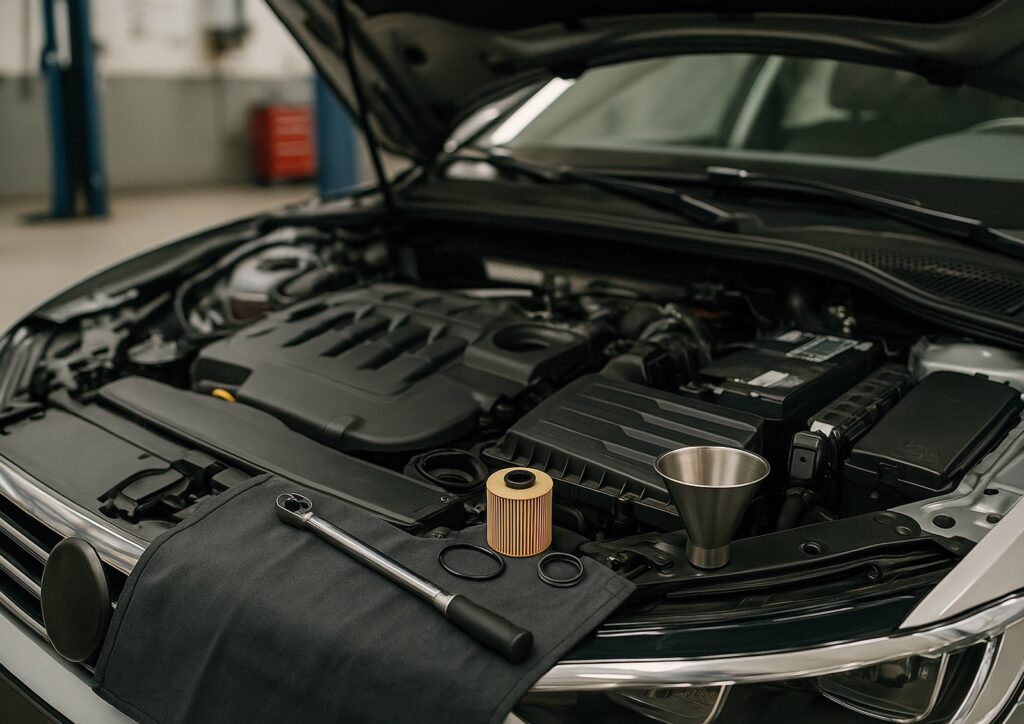
A proper DSG fluid service runs between $400 and $600 at most independent shops. That includes about seven liters of OEM-spec fluid, a new filter, a new pan gasket (or new pan on units where the filter is integrated), and the basic settings reset on ODIS or VCDS. Compared to a $2,000 mechatronic replacement, that is the cheapest insurance policy in the VAG world.
Mechatronic Repair vs Replacement
When the mechatronic does fail, you have three realistic paths forward, and the right one depends on your car’s value, the specific unit code, and how long you plan to keep it.
Refurbished Mechatronic ($1,500-$2,500)
A handful of specialist rebuilders in the US and Europe will take your old mechatronic, replace the failed solenoids, repair the circuit boards, and bench-test the unit before sending it back. This is usually the smart choice for a DQ250 in a daily-driver A4 or Q5. Turnaround time is typically one to two weeks, and most rebuilders offer at least a one-year warranty. The catch is that your car is sitting at the shop the whole time the mechatronic is gone, because there is no driving it without one.
New Mechatronic ($3,500-$5,000+)
A brand-new mechatronic from VAG, programmed and coded to your specific VIN, will set you back somewhere between $3,500 and $5,000 depending on which DSG variant you have. The DQ500 is the most expensive because of lower production volumes. New units come with a full factory warranty and they slot into your existing transmission case, so you keep your original gear sets and clutches.
Full DSG Replacement ($6,000-$9,000+)
If the failure has spread beyond the mechatronic, for instance if a clutch pack has overheated and welded itself together, or if metal debris has contaminated the gear oil, you may need a complete remanufactured transmission. Pricing for a remanufactured DSG starts around $6,000 and can climb past $9,000 for the DQ500 in an RS3 or TT RS. Labor on top of that adds another $1,200 to $1,800 because the entire front subframe has to come down to drop the gearbox.
DIY vs Specialist: Why Generic Transmission Shops Fail at DSG
You cannot fix a DSG the way you fix a 4L60E. The mechatronic requires not just the right scan tool but also a stable battery voltage during the basic settings procedure, the correct fluid level checked at a specific temperature window (35-45 degrees C), and a written procedure that has to be followed in order or you brick the unit. We have seen cars towed in to Southside Euro from chain transmission shops where the technicians put in the wrong fluid, skipped the basic settings reset, or worse, drained the mechatronic chamber on a DQ200 and refilled it with gear oil. That last mistake instantly destroys the circuit board.
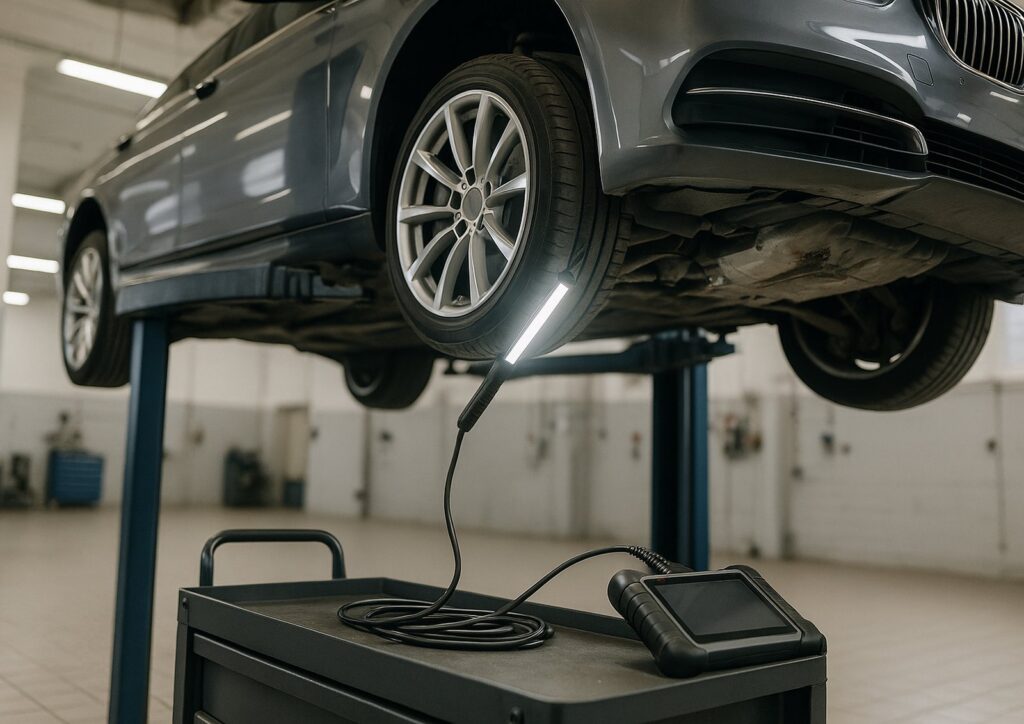
The minimum tooling for a DSG service is ODIS or VCDS, a fluid pump capable of pushing oil up into the transmission against gravity through the fill plug, a properly calibrated VAG-spec torque wrench for the pan bolts, and a temperature-controlled bay so the fluid can stabilize before the level check. None of this is exotic, but it is all VAG-specific and not the kind of equipment a general repair shop is going to buy for the occasional Audi customer.
What “Basic Settings” Actually Does
After any fluid change or mechatronic work, the TCU needs to relearn the clutch touch points. This procedure takes about 20 minutes with the car in a specific state (engine running, transmission warmed to operating temperature, all doors closed, steering wheel centered, brake held). During the procedure the mechatronic engages and releases each clutch a dozen times to map out exactly where the engagement begins. Skip this step and you get juddery launches and harsh shifts even if everything else was done correctly.
The Florida Failure Mode
Jacksonville heat is uniquely hard on DSG transmissions, and we see this pattern repeat almost every summer. The wet-clutch fluid is rated for sustained operation up to 130 degrees C, but in stop-and-go traffic on I-95 in August, with the AC running flat out and the car creeping forward at 5 mph, that fluid can easily hit 140 C. At those temperatures the additive package starts to break down, viscosity drops, and the clutch packs begin to glaze. Combine that with sandy debris that finds its way into the cooler lines on cars that get driven on the beach, and you have a recipe for accelerated mechatronic wear.
The most common Florida-specific failure we see at Southside Euro is sticky solenoids on DQ250 units between 70,000 and 100,000 miles when the original fluid was never changed. The car will throw a P17BF code, the customer will get quoted $5,000 by the dealer for a new mechatronic, and in many cases a fluid flush combined with a basic settings reset will buy them another 30,000-50,000 miles. Not always, but often enough that it is always worth trying before you commit to the expensive repair.
Cooler and Heat Management
Higher-output applications like the RS3 and SQ2 with the DQ500 came from the factory with an auxiliary transmission cooler. If you have one of these cars in Florida and your cooler lines are weeping, replace them immediately. A failed cooler line dumps fluid in seconds and the mechatronic will not survive a low-fluid event.
Maintenance Schedule to Make a DSG Last 200,000+ Miles
The DSG can absolutely go the distance if you treat it right. Here is the schedule we recommend for any Audi or VW with a dual-clutch transmission in our climate.
Wet-Clutch DSG (DQ250, DQ500)
- Fluid and filter every 30,000 miles in Florida (Audi says 40,000, but the heat justifies the shorter interval)
- Basic settings reset with every fluid change
- Inspect cooler lines and fittings annually
- Avoid creeping in DSG mode in heavy traffic; use the manual paddles to hold first gear instead of letting the clutch slip at low speeds
- Never launch-control a cold transmission; let the fluid reach at least 60 C first
Dry-Clutch DSG (DQ200)
- Mechatronic fluid every 60,000 miles regardless of what the build sheet says
- Clutch inspection at 80,000 miles, replacement when judder appears
- Avoid riding the brakes in stop-and-go traffic; the dry clutches do not tolerate sustained slip
- If the car has been sitting for more than two weeks, take it for a 20-minute drive to recirculate the mechatronic fluid before any extended trip
Both Variants
Get a VCDS or ODIS scan once a year to check for stored codes and to read the clutch adaptation values. The mechatronic stores wear data that gives you a real number for how much life is left in the clutches, and that number predicts failure months before the warning lights ever appear.
The S tronic fluid service is one of the easiest items to miss. Our Audi maintenance schedule guide shows where it fits alongside the regular services.