













There is no failure mode in modern Porsche ownership more discussed, more feared, and more misunderstood than porsche ims bearing failure. The premise is simple and terrifying: an eight-dollar sealed ball bearing, hidden deep inside the engine, can disintegrate without warning and turn a perfectly running flat-six into a $25,000 paperweight. If you are shopping for a 996, a 997.1, or any water-cooled Boxster or Cayman from the 1997-2008 era, this is the single most important conversation you can have before signing the title. The good news is that the problem is well understood, the retrofits are proven, and a properly inspected and updated car is one of the best driver’s-car bargains on the planet right now. The bad news is that uninformed buyers are still grenading engines in 2026 because they did not know what to look for.
What the IMS Bearing Actually Is
IMS stands for Intermediate Shaft. Inside Porsche’s M96 and M97 flat-six engines, there is a shaft that runs the length of the block, parallel to the crankshaft. Its job is to take rotational drive off the crank via a chain at the rear of the engine and use that motion to drive the camshaft chains on each cylinder bank. It is, in essence, a middleman between the crankshaft and the camshafts.

That intermediate shaft has to spin on something, and Porsche chose a sealed deep-groove ball bearing pressed into the rear of the block, accessible only when the engine is separated from the transmission. The bearing itself is a fairly ordinary industrial component. The problem is not the part. The problem is the application.
Why the Design Was a Problem
Air-cooled Porsche engines used gear-driven camshafts and never needed an intermediate shaft bearing of this type. When the M96 architecture was introduced for the 996 and Boxster, engineers chose a sealed grease-packed bearing with rubber seals on both sides. In theory, that grease would last the life of the engine. In practice, the seals degrade, engine oil eventually washes the grease out, and the bearing is left running in a marginally lubricated environment under high cyclic load. When it fails, debris travels into the timing chains, the cam timing slips, the valves meet the pistons, and the engine destroys itself in seconds.
Affected Models and Years
Knowing exactly which generation and which bearing variant lives in the car you are looking at is essential. Porsche revised the IMS bearing several times during the M96 and M97 production run, and each revision changed the failure rate and the available retrofit options.
M96 Engine — Dual-Row Era (1997-2000)
The 986 Boxster from 1997 through roughly the end of model year 1999, and the 996 Carrera from 1999 through model year 2000, used a larger dual-row IMS bearing. Two rows of balls means more load capacity and a meaningfully lower failure rate. Real-world data from independent specialists and the well-known Eisen class action analysis suggests dual-row failure rates in the low single digits, often cited around 1 to 4 percent over the life of the engine.
M96 Engine — Single-Row Era (2000-2005)
Beginning in roughly model year 2000 for the Boxster and 2001 for the 996, Porsche switched to a smaller single-row bearing. Failure rates climbed. The commonly cited estimate is 8 to 10 percent for single-row cars, though specialists who see fleet data argue the real number is somewhere between 4 and 8 percent depending on usage patterns. Short-trip cars driven gently appear to fail more often than cars that are regularly run hard and brought up to full operating temperature.
M97 Engine — Single-Row IGFC Era (2005-2008)
The 997.1 Carrera (2005-2008) and the 987.1 Boxster and Cayman (2005-2008) received the M97 evolution of the engine. These engines use a larger single-row bearing that Porsche considered “non-serviceable” — internally referred to as the IGFC bearing — because the intermediate shaft was redesigned in a way that prevents removing the bearing without splitting the engine case. You cannot retrofit these cars in the conventional sense without major engine teardown. The failure rate is debated but generally considered lower than the smaller single-row bearings, partly because the bearing itself is bigger and partly because these engines are newer.
What Does NOT Have an IMS Problem
The 997.2 Carrera (2009-2012) and 987.2 Boxster/Cayman (2009-2012) use the direct-injection 9A1 engine, which eliminated the intermediate shaft entirely. The 991 generation and everything after is also IMS-free. The Mezger-engined GT3, GT2, and Turbo models from this era do not have the problem either — they use a completely different motorsport-derived engine.
Why the IMS Bearing Fails
There is no single root cause. Failure is a stack-up of several engineering compromises that interact badly over time.
The bearing is sealed and grease-packed, but the seals are organic and degrade with heat cycles. Once a seal fails, engine oil enters the bearing cavity. That sounds beneficial, but the oil supply is incidental and inconsistent — it relies on splash and seepage rather than a pressurized feed. The bearing now runs in oil that is contaminated with combustion byproducts, with no real flow to carry away wear debris.
Compounding the lubrication issue, the bearing supports the intermediate shaft under significant cyclic load from the chain tension on both cam banks. Each combustion event sends torque pulses through the system. Over hundreds of millions of revolutions, the balls and races develop fatigue spalling. Once the bearing starts to come apart, the intermediate shaft begins to deflect, chain tension goes out of spec, and within a very short time you have catastrophic timing failure.
The Short-Trip Problem
Cars that are driven on short trips and never reach full operating temperature appear to fail more often. Moisture and combustion acids accumulate in the oil. The bearing degrades faster. Garage queens and weekend cars used for ten-mile errands are statistically worse off than cars that get regular highway exercise.
Failure Rate Statistics
Hard numbers are hard to come by because Porsche has never published official failure data, and the well-known class-action settlement worked from a sample that critics argue was biased. The most defensible ranges, drawn from independent specialist data and forum aggregations:
- Dual-row M96 (1997-2000): approximately 1-4% lifetime failure rate
- Single-row M96 (2000-2005): approximately 4-10% lifetime failure rate
- Single-row IGFC M97 (2005-2008): lower percentage but harder to retrofit
Translated practically: the dual-row cars are statistically very safe, the single-row cars represent a real risk that justifies a retrofit, and the late M97 cars require a more involved conversation about whether to address the bearing at all.
Symptoms Before Catastrophic Failure
This is the brutal part. The majority of IMS failures happen with no warning whatsoever. The car drives normally on the way to lunch, the bearing lets go in the parking lot, and the engine refuses to restart. There is no check engine light, no rough idle, no preceding misfire.
That said, there are a small number of warning signs that have been documented in cases where the bearing was beginning to come apart but had not yet seized:
Metal Debris in the Oil Filter
The single most reliable early indicator. When a Porsche specialist cuts open the oil filter at every service interval, ferrous fuzz or fine metallic flakes in the pleats are a serious red flag. This is why a magnetic drain plug and routine filter cuts are standard operating procedure on these cars.
Faint Ticking or Whining
Some owners report a subtle metallic tick or a high-pitched whine from the rear of the engine before failure. This is not reliable — most failures occur silently — but if you hear something new from the bellhousing area, take it seriously.
Oil Pressure Anomalies
Sudden pressure drops at idle or unexplained oil consumption can occasionally precede IMS failure, though both symptoms have many other causes on these engines.
RMS Leak — A Related but Separate Issue
The rear main seal on M96/M97 engines leaks frequently. While an RMS leak does not directly indicate IMS distress, the transmission has to come off to address either issue, which is the perfect opportunity to do an IMS retrofit at the same time.
Pre-Purchase Inspection — What a Porsche Specialist Checks
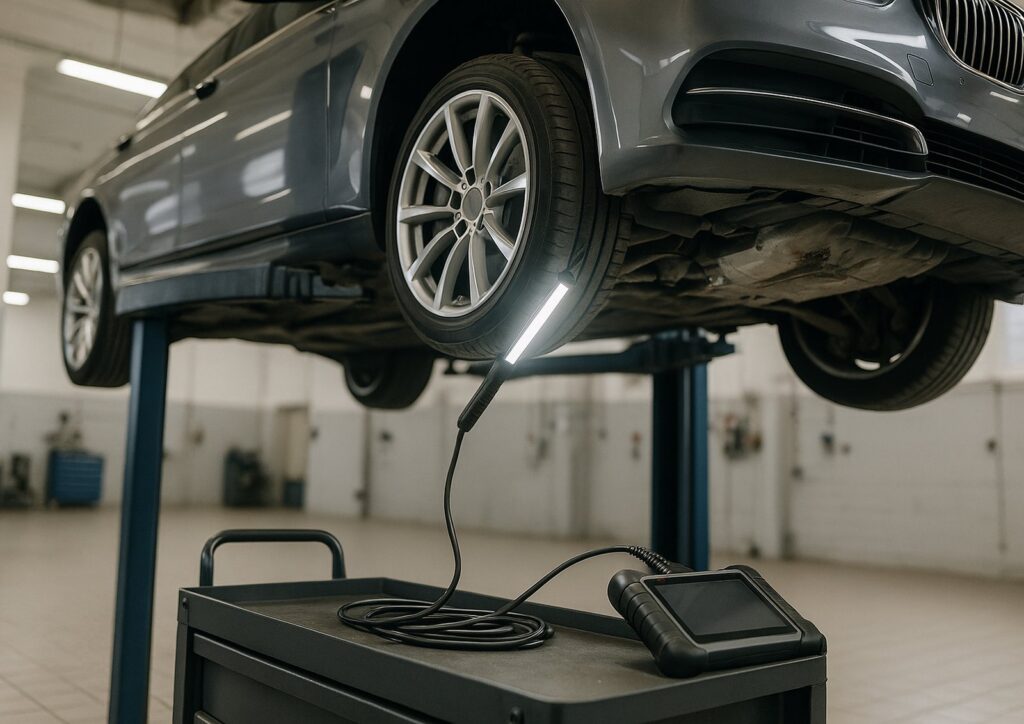
If you are looking at any 996, 997.1, 986, or 987.1 in 2026, a pre-purchase inspection by an independent Porsche specialist is non-negotiable. A general-purpose mechanic will miss things. The PPI for an IMS-affected car has specific steps that go beyond a normal used-car check.
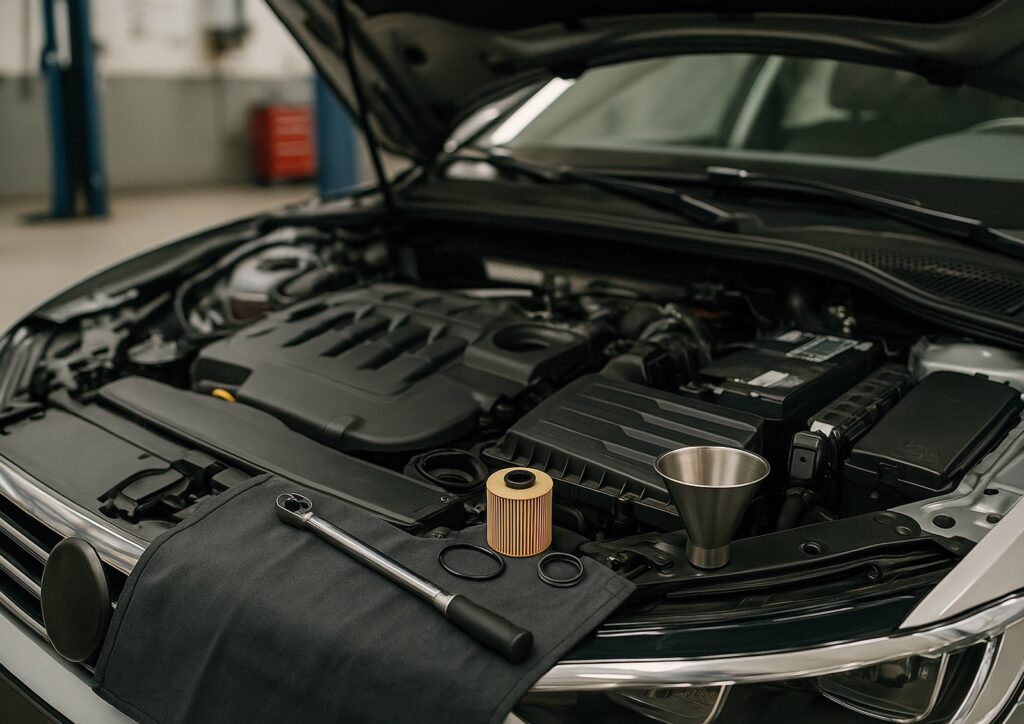
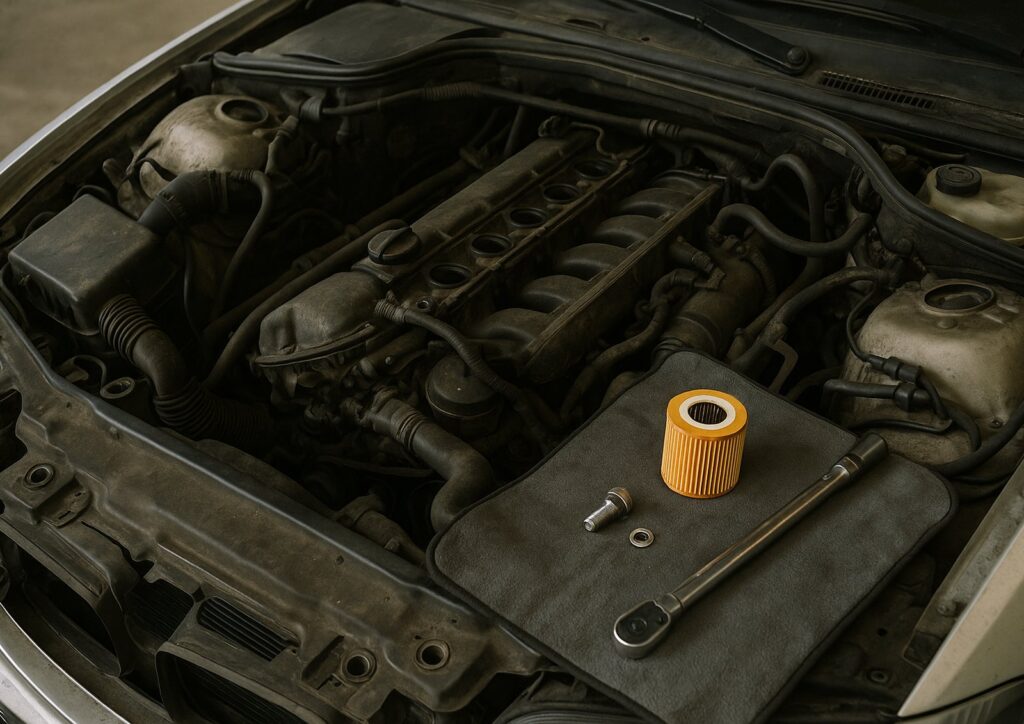
Oil Filter Cut and Inspection
The technician removes the current filter, cuts it open, and inspects the pleats under a strong light, looking for ferrous particles, brass-colored bearing cage material, or any sign of abnormal wear. This single step has saved buyers from six-figure mistakes.
Magnetic Drain Plug Reading
If the seller has been running a magnetic drain plug, the amount and character of material clinging to it tells a story. Fine fuzz is normal. Visible chunks are a hard pass.
Oil Analysis
A used oil sample sent to a lab like Blackstone returns wear-metal counts. Elevated iron, copper, or chromium can indicate bearing distress before visible debris appears.
Engine Compartment and Underbody Inspection
Look for evidence of a prior IMS retrofit — service records, an updated bearing, or telltale signs of the transmission having been pulled. A car with documentation of an LN Engineering IMS Solution installed at a previous clutch job is worth a meaningful premium over an unconverted car.
This is the kind of inspection where shop selection matters. Southside Euro and other Jacksonville-area European specialists who see these engines weekly have a calibrated eye for what is normal versus what is the start of something expensive. A general independent shop without M96/M97 experience can give you a clean bill of health on a car that is days away from failure.
IMS Retrofit Options
The aftermarket has solved this problem. Three retrofit paths exist, each with different costs, capabilities, and applicability.
LN Engineering IMS Solution — The Gold Standard
The lnenginee ring ims solution is a complete redesign that eliminates the ball bearing entirely. In its place, LN Engineering installs a plain bearing — essentially a precision sleeve — that is fed pressurized engine oil through a dedicated oil line tapped into the block. There are no balls to spall, no cage to disintegrate, and the lubrication is positive rather than incidental. It is widely considered a permanent fix and carries a no-time-limit warranty when installed by a certified shop. This is what most knowledgeable owners specify when the transmission is out for any reason.
IMS Retrofit Single-Row Ceramic Bearing
The original LN Engineering retrofit replaces the factory bearing with a ceramic hybrid bearing of the same form factor. It is serviceable — meaning it can be replaced again at the next clutch job — and is significantly more durable than the original steel bearing. It is the appropriate choice for cars where the IMS Solution is not feasible, and it is less expensive.
Dual-Row Replacement
For dual-row cars (1997-1999 Boxster, 1999-2000 996), the original bearing is replaced with an upgraded dual-row unit. These cars already have the lowest failure rate, and a dual-row replacement essentially resets the clock.
What About the M97 IGFC Bearing?
The 2005-2008 M97 cars cannot accept any of these retrofits without splitting the engine, because the intermediate shaft itself is constructed in a way that prevents removing the bearing. Owners of these cars have three realistic options: drive it and accept the risk, do an oil-bypass intervention that improves lubrication without replacing the bearing, or wait for the engine to fail and rebuild with a redesigned shaft. There is no easy answer, which is part of why the late 997.1 cars trade at a discount versus the 997.2.
Cost Breakdown
Numbers vary by region and shop, but the realistic 2026 ranges in the Southeast US look like this:
Pre-Purchase IMS-Focused Inspection
$150 to $300. Includes an oil filter cut, magnetic plug reading, compression and leak-down test, and a road test focused on the symptoms specific to these engines. This is the cheapest insurance in the entire ownership stack.
IMS Retrofit During a Clutch Job
$1,800 to $3,500 in addition to the clutch job itself. The reason this combination is so common is that 80% of the labor — pulling the transmission — is already being done. The marginal cost of doing the IMS at the same time is overwhelmingly worth it. If you are paying for a clutch and not addressing the IMS, you are throwing money away.
IMS Retrofit as a Standalone Job
$2,500 to $4,500. More expensive because the transmission has to come out specifically for this job, but still vastly cheaper than the alternative.
Engine Rebuild After IMS Failure
$15,000 to $30,000 or more, depending on extent of damage and whether you are sourcing a remanufactured short block or doing a full rebuild. Catastrophic IMS failures typically require new pistons, valves, heads, and often a new crankshaft. Some failures are total losses where a used engine swap becomes the cheaper path.
The math is unforgiving. A $2,500 retrofit done preventively is roughly 10% the cost of a $25,000 engine rebuild done reactively. Even if the failure rate is only 5%, the expected-value math heavily favors the retrofit.
Should You Buy an IMS-Affected 911 in 2026?
Yes — with eyes open and a clear plan.
The 996 and 997.1 are now 18 to 27 years old. They are entering classic-car territory. Prices on clean, well-sorted examples are climbing. The driving experience is hydraulically-steered, mechanically connected, and increasingly difficult to find in any new car at any price. A 996 Carrera with an IMS Solution retrofit and documented service history is one of the great driver’s-car bargains of the modern era.
The Smart Buying Framework
If the retrofit has been done with documentation, pay the premium and enjoy the car. The risk is essentially eliminated.
If the retrofit has NOT been done, budget $3,000 to $5,000 to do it within the first year of ownership, and combine it with the clutch job if possible. Negotiate the price accordingly.
If the seller refuses inspection or has no service history, walk away. The car may be fine. It may also be days from failure. You cannot tell from a test drive.
What to Avoid
Avoid 2005-2008 M97 cars (997.1 Carrera, 987.1 Boxster/Cayman) unless the price reflects the IGFC retrofit limitation, or unless you are buying a car that has been preventively maintained with documented oil analysis history. The 997.2 from 2009 onward eliminates the problem entirely and is worth the price step-up if your budget allows.
The 997.2 and Beyond — IMS Eliminated
In 2009, Porsche introduced the 9A1 direct-injection flat-six in the 997.2. The new architecture deletes the intermediate shaft and drives the camshafts directly off the crankshaft via redesigned chains. No intermediate shaft means no IMS bearing means no IMS failure. The 997.2, 991, and 992 generations are all IMS-free, as are all post-2009 Boxsters and Caymans.
This is part of why the 997.2 trades at a meaningful premium over the 997.1 despite being visually nearly identical. You are paying for the engine architecture change as much as for any cosmetic update. If your budget can stretch to a 997.2, it removes the IMS conversation from the table entirely. If it cannot, a properly retrofitted 996 or 997.1 is the next best thing — and arguably more soulful to drive.
For Jacksonville owners and prospective buyers, working with a specialist who has done dozens of these retrofits matters more than almost any other ownership decision. Southside Euro sees these engines regularly and can guide you through the inspection, retrofit, and ongoing maintenance conversation that turns an IMS-affected 911 from a liability into a long-term keeper.
Shopping for a used 911 or Boxster? Our guide to a pre-purchase inspection on a used European car covers what we check before you buy, including the IMS bearing history.