













BMW water pump failure is the single most common warm-weather tow we see in Jacksonville. And it’s almost always a preventable one — because the pump gives you five clear warning signs before it strands you on the shoulder of I-95. Every summer we watch a predictable wave of overheated E90s, F30s, and X5s roll in on flatbeds, nearly every one flashing a warning the driver missed. This guide breaks down which engines are most vulnerable, the symptoms you cannot ignore, and why Duval County heat cuts the pump’s service life nearly in half.
How BMW Electric Water Pumps Differ From Traditional Mechanical Pumps
For decades, water pumps were dumb, belt-driven mechanical devices. As long as the crankshaft was turning, the pump was moving coolant — full stop. There was no electronics, no thermal management logic, and no way for the pump to fail without also silencing the engine (a snapped belt or seized pulley made itself known immediately).

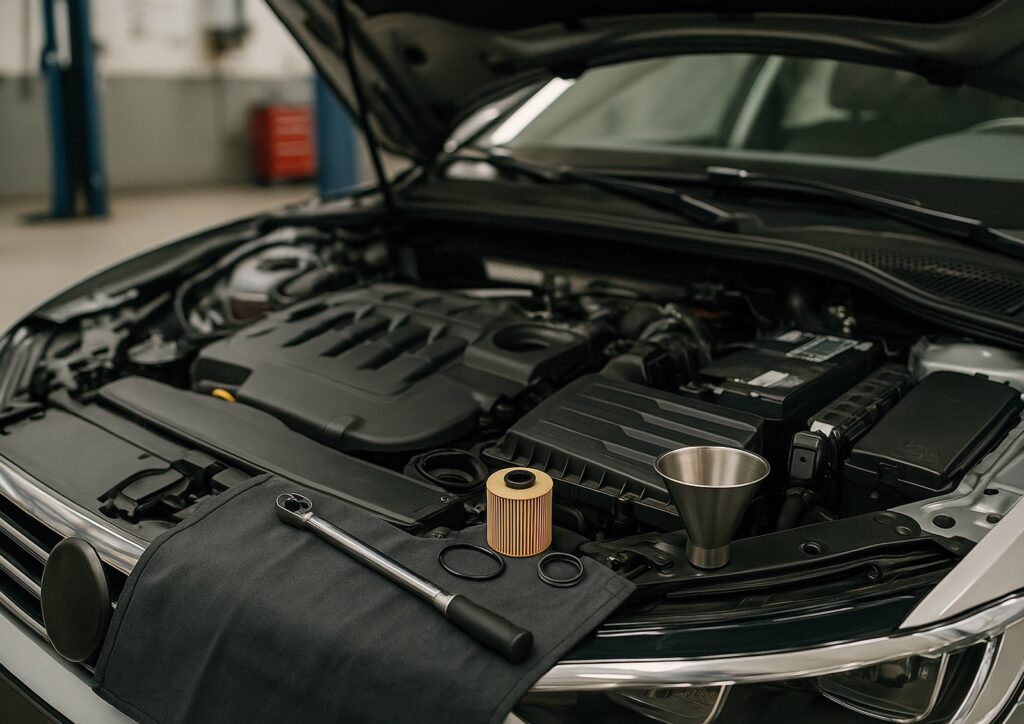
BMW walked away from that architecture in the mid-2000s. Starting with the N52 inline-six, virtually every modern BMW engine uses an electric water pump controlled directly by the DME (Digital Motor Electronics). The pump itself is a self-contained module bolted to the front of the block, driven by an internal brushless motor, and commanded via a PWM signal from the engine computer. There is no belt, no pulley, and no mechanical link to the crankshaft.
Why BMW made the switch
The engineering rationale was efficient thermal management. A mechanical pump spins at whatever RPM the engine dictates. An electric pump runs at whatever speed the DME commands regardless of engine RPM — 10% duty cycle on cold start to warm the block faster, 100% on a July highway climb. That flexibility is worth 2-3 mpg and cleaner emissions.
The trade-off you inherited
BMW housed the entire assembly — motor, plastic impeller, controller board — in a plastic housing bolted to a 200°F+ block. Unlike a mechanical pump, there is no “limp home” mode: when the electric pump quits, coolant flow instantly goes to zero, and the engine has 30-90 seconds before it cooks itself.
Affected Models & Engines: What You’re Driving Matters
Not every BMW is equally exposed. Some engine families are known to eat water pumps every 60,000-80,000 miles; others are markedly better. Here is the shop-floor reality on the most common platforms.
N52 (2005-2015): the original electric-pump platform
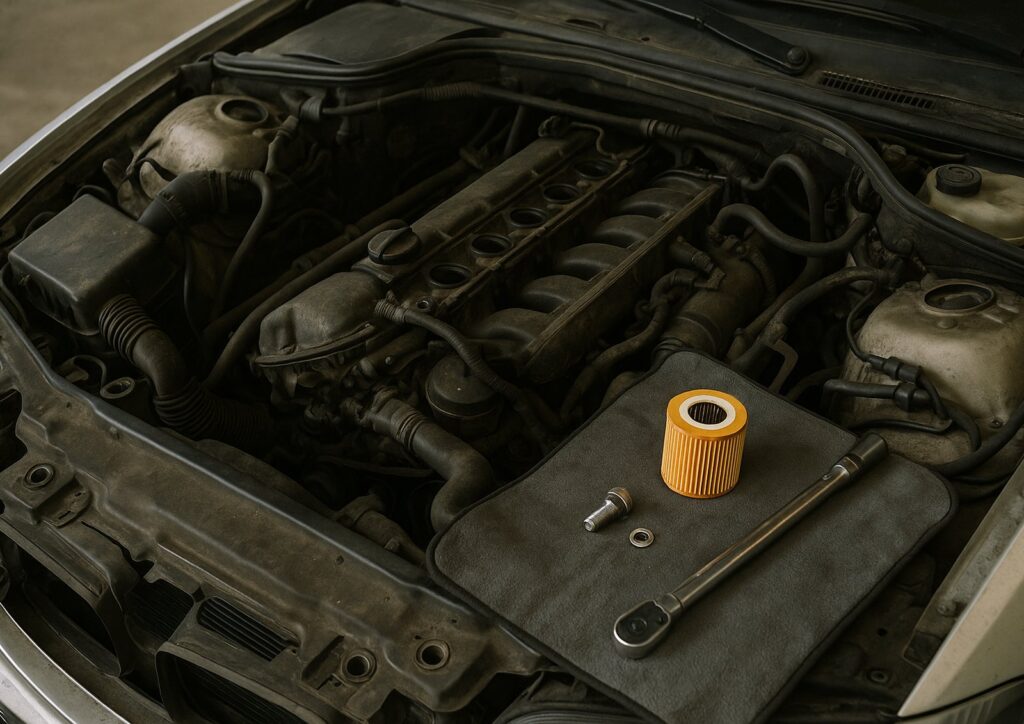
Found in the E60 525i/528i/530i, E90 328i, E82 128i, E83 X3, and E70 X5 3.0si. This was BMW’s first mass-deployed electric water pump, and the early Pierburg units are notorious for failure between 60,000 and 90,000 miles. If you’re driving a 2007-2011 N52 in Florida with the original pump, you are living on borrowed time. Fault codes 2E81, 2E82, 2E83, and 2E84 (water pump activation, deactivation, control, and thermal management) are the classic diagnostic fingerprint.
N54 (2007-2013): twin-turbo heat load
The 335i, 135i, 535i, and 1M all ran the N54. Because this engine is force-inducted and dumps massive heat under boost, the water pump works significantly harder than in a naturally aspirated N52. Failure ranges tighten to 50,000-80,000 miles, and the failure is often catastrophic: many N54 owners report the pump seizing at highway speed with no warning noise at all.
N55 (2010-2016): incremental improvement, same weakness
F30 335i, F22 M235i, F10 535i, F25 X3 35i, F15 X5 35i. BMW revised the pump design but kept the same core architecture. Failures around 70,000-100,000 miles are typical. Codes 2E81/2E82 still apply.
N20 (2011-2017): the 328i workhorse
F30 328i, F32 428i, F25 X3 28i. The N20’s water pump is somewhat more robust, but timing chain and oil filter housing gasket failures often disguise cooling-system symptoms, so proper diagnosis matters.
N63/S63 (V8): high-thermal-load applications
F10 550i, F13 650i, F15 X5 50i, F85 X5 M. Twin-turbo V8s run extraordinarily hot. Water pumps in these platforms should be considered a 60,000-mile wear item in Florida, full stop.
B58 (2016+): newer, still not immune
G20 340i, G05 X5 40i, F30/G30 540i. BMW’s current inline-six uses a redesigned electric pump with better thermal isolation. Early data suggests longer service life — but “longer” in Florida still means expect issues around 80,000-100,000 miles.
The 5 Warning Signs Your BMW Water Pump Is Failing
Here is what we see on the diagnostic bench, in order of how often drivers actually notice them. If you catch any two of these, book the diagnostic — do not wait for the third.
1. Coolant temperature climbing after a highway-to-traffic transition
This is the single most diagnostic symptom in Florida. On the highway at 70 mph, ram-air over the radiator is doing most of the cooling — the pump can be at 40% capacity and the system still keeps up. The moment you exit onto Southside Blvd or hit stop-and-go on 295, ram-air vanishes and the pump has to work at 90%+. A weakened pump can maintain temp at speed and fail to maintain it at idle. If your temp gauge sits fine on the freeway then creeps toward red once you’re stuck at a light, that’s the pump — not the thermostat, not the fan.
2. Check-engine light with codes 2E81, 2E82, 2E83, or 2E84
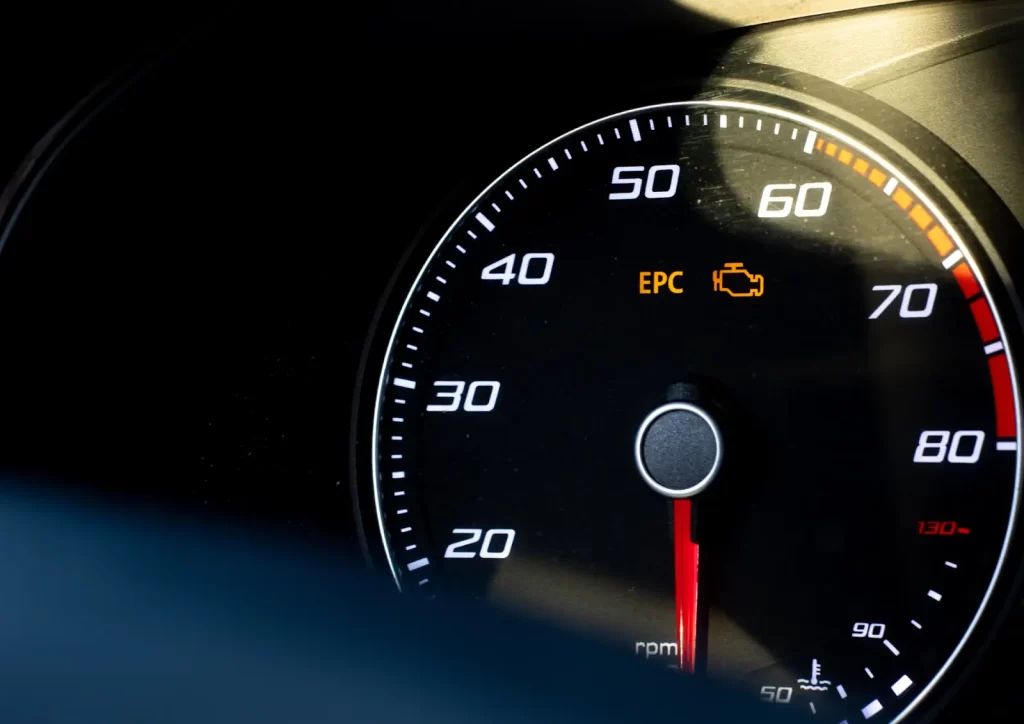
These are BMW-specific fault codes for electric water pump activation, deactivation, control-signal, and thermal management errors. The DME monitors pump current draw and PWM feedback constantly, and when the pump’s internal controller starts throwing off-nominal signals, one of these codes stores. Sometimes the pump still works when the code sets — sometimes it fails within days. Either way, a scan tool that reads BMW-specific codes (not just generic OBD-II) will surface it.
3. Whining or grinding noise from the front of the engine
Because BMW’s electric pump has an internal brushless motor, worn bearings produce a distinct high-pitched whine that changes with pump duty cycle rather than engine RPM. If you hear a whine that gets louder when the engine is hot but stays constant across RPM ranges, that is a failing pump bearing. Grinding or intermittent chattering means the impeller itself is contacting the housing — replace immediately.
4. Visible coolant leak at the pump housing
The pump’s plastic housing eventually cracks from thermal cycling. Look for green, blue, or pink coolant residue on the front of the block, on the underside of the pump, or pooling on the plastic engine belly pan. In Florida heat, hairline cracks in the plastic housing weep slowly at first, then let go all at once.
5. HVAC blowing warm at idle when it worked at speed
The heater core relies on coolant flow. If your A/C or heat is fine at 55 mph but blows tepid or ambient-temperature air at a red light, coolant flow through the heater core is dropping to near zero at low pump speeds — a classic signature of a pump losing pumping efficiency without yet triggering a temperature warning.
Why Florida Kills BMW Water Pumps Faster Than Anywhere Else
The published service life on a BMW electric water pump is 80,000-120,000 miles, or roughly seven-plus years. In Jacksonville, we typically see them come in at 50,000-70,000 miles, or four to five years. That is not anecdotal — it is thermodynamics.
Sustained ambient heat destroys plastic components
The impeller and housing are polyphenylene sulfide (PPS). Their published thermal fatigue rating assumes an ambient envelope typical of Munich or Ohio. A Jacksonville BMW parked outside in July sees under-hood temperatures of 160-180°F after sitting eight hours; start it and coolant hits 220°F in ten minutes. The plastic never fully cools between cycles, and repeated heat cycling embrittles PPS far faster than the design brief anticipated.
I-95 and I-295 stop-and-go maximizes pump duty cycle
On a European autobahn at a constant 90 mph, ram-air and steady coolant flow keep pump duty cycles in the 40-60% range. On the I-95 crawl through downtown Jacksonville at 5:30 PM, or the JTB backup on a game day, ram-air is zero and coolant demand is maximum. The DME pushes the pump to 90-100% for 20 minutes at a stretch, sometimes daily. That is exactly the duty-cycle profile the pump was not thermally designed to sustain.
Coolant breakdown accelerates in sustained heat
BMW’s factory-spec coolant (blue G48 or the newer G40) is engineered to last five to seven years. In Florida, the additive package degrades noticeably at three to four years. Depleted corrosion inhibitors mean the pump’s aluminum interfaces start pitting, which increases turbulence, which further stresses the impeller and bearings. It is a compounding failure loop we see constantly on customer cars where the coolant has never been flushed.
Thermostat and pump often fail together
BMW’s electric thermostat (also DME-controlled, often with codes 2CF0 through 2CF9) sits inches from the water pump and shares its thermal environment. When we replace a water pump on a Florida BMW, we find a marginal thermostat probably 60% of the time. Replacing one without the other is a false economy — you’ll be back in six months.
Consequences of Ignoring It: Head Gaskets, Warped Heads, and Cracked Blocks
BMW’s aluminum cylinder heads on the N52, N54, N55, and N20 do not tolerate overheating. Neither do their aluminum blocks (the N54 has an aluminum block with cast-iron liners — impressive, but not immune to thermal warping). And the older cast-iron blocks in the S54 and M54 platforms can crack when a shock-cooled event hits after a hard drive.
Ten minutes at 260°F is enough
Once coolant flow stops, the head reaches head-gasket-damage territory (about 240-250°F on the cylinder head) in three to five minutes at highway speed. Ten minutes without coolant flow and you are looking at warped head castings — a $3,500-5,500 repair on a 328i, and often more on turbo cars.
Head gasket damage
The MLS (multi-layer steel) head gasket is designed for a specific thermal expansion range. Exceed it, and the gasket loses seal at the fire ring. Combustion gases push into the cooling jacket, oil crosses into coolant, and you have combustion-chamber-pressure spikes in the radiator. Symptoms include misfires, white steam from the exhaust, coolant loss with no visible leak, and a sweet smell in the interior heat.
Cracked blocks and heads
The rarest but most expensive outcome. In extreme cases — a driver ignoring a temp gauge that has been pegged for ten miles — thermal stress cracks the head casting or the block itself. That is total-loss territory for most owners: repair costs exceed vehicle value.
Replacement Cost Breakdown: Parts, Labor, and What Else Should Be Replaced
Here are the honest numbers for a BMW electric water pump replacement at Southside Euro and typical rates elsewhere in Duval.
Parts
- OEM Pierburg pump (BMW-badged or Pierburg-branded): $300-500 depending on engine. The N52/N54/N55 Pierburg 11517586925 or the updated 11518635089 both fall in this range.
- OEM electric thermostat: $130-220. Do not skip this — see above.
- Upper and lower radiator hoses: $50-120 combined.
- BMW blue coolant (G48) or G40: $40-60 for two gallons plus distilled water.
- Aftermarket alternatives: Reputable aftermarket (Rein, Hepu, Graf) pumps run $180-300. Avoid unbranded eBay units — we have replaced brand-new “premium” no-name pumps that failed inside 90 days.
Labor
Book time on N52/N54/N55 water pump R&R is 2.5-4 hours depending on chassis. F30 platforms tend toward the shorter end; E60 and X5 chassis toward the longer. Expect $350-650 in labor at Jacksonville independent shop rates.
Total realistic out-the-door cost
- Pump only, aftermarket: $700-1,000
- Pump + thermostat, OEM Pierburg: $1,100-1,600
- Full cooling refresh (pump, thermostat, hoses, coolant, pressure test): $1,400-2,000
Compared to a $4,500 head-gasket job — or a $12,000 engine — the full refresh is cheap insurance.
DIY vs. Professional Replacement: Why the Bleed Procedure Matters
The mechanical portion of a BMW water pump replacement is well within reach of an experienced home mechanic. The bleed procedure is where DIY jobs go wrong.
Why BMW cooling systems must be bled electronically
Unlike traditional systems where you crack open a bleed screw and burp air by hand, BMW’s electric cooling system requires a specific sequence: the DME commands the pump into a dedicated bleed mode, cycling flow at variable rates to purge air from the block, heater core, and radiator. Without this sequence, air pockets remain trapped in the block. Those pockets create localized hot spots, cavitation at the pump impeller, and — within weeks — a burned-out replacement pump. This is why every “I just replaced my BMW water pump and it failed in two months” forum post exists.
What software you need
BMW INPA, ISTA/D, ISTA+, or a professional scan tool like Autologic or Foxwell NT510 with BMW-specific coverage can command the bleed procedure. Generic OBD-II scanners cannot. The full bleed takes 15-25 minutes of the pump cycling through its programmed sequence with the front of the car elevated on ramps.
The Southside Euro perspective
We see two or three “DIY water pump gone wrong” jobs a month at the shop. Most are cases where the pump was fine but the bleed was skipped — and now the new pump is airlocked, the coolant is milky, and the system has to come apart again. If you have INPA and know how to run it, DIY is viable. If not, the labor cost at a shop is less than the cost of doing the job twice.
Preventive Maintenance Schedule for Florida BMWs
The BMW factory maintenance schedule was written for European driving conditions. Florida requires adjustments. Here is the schedule we recommend for any BMW that lives in the Jacksonville metro.
Coolant flush: every 3 years, not 5
BMW says five years or 60,000 miles. In Florida, do it every three years or 45,000 miles. Fresh coolant means intact corrosion inhibitors, which means the pump’s aluminum and plastic interfaces stay smooth.
Pressure test at 60,000 miles
A cold-system pressure test at 60,000 miles catches early housing cracks and weeping seals before they progress. It takes 15 minutes and costs less than a tow.
Proactive pump replacement at 80,000-100,000 miles
This is the single best decision a Florida BMW owner can make. Replace the pump and thermostat as a preventive service in the 80,000-100,000-mile window — before the failure — and you eliminate the head-gasket-damage risk entirely. The labor is the same whether the pump is dead or alive; the difference is whether your car strands you first. We handle proactive water pump replacements weekly and consider it standard maintenance for any high-mileage Jacksonville BMW.
Under-hood inspection every oil change
Every oil change is a chance to eyeball the water pump housing, coolant reservoir level, and any residue on the belly pan. Catching a weep two weeks before it becomes a leak is worth the 90 seconds it takes.
Watch the temperature gauge, not the warning light
BMW’s temp gauge is intentionally damped — it sits dead-center 210°F for a wide range of actual temperatures. If you see it move at all from center, especially in traffic, that’s your cue to book a diagnostic. By the time the “overheating” warning triangle appears on the iDrive, coolant is already at 250°F+ and damage is beginning.
Frequently Asked Questions
How long do BMW water pumps last?
Factory life expectancy is 80,000-120,000 miles or roughly seven-plus years under moderate climate conditions. In Florida heat with sustained highway commuting, real-world life drops to 50,000-70,000 miles or four to five years. The N54 twin-turbo platform tends toward the low end of that range; the N20 and newer B58 toward the high end. Any BMW in Jacksonville with the original pump past 70,000 miles should be considered high-risk.
What are the symptoms of a failing BMW water pump?
The five most reliable indicators are: coolant temperature climbing after transitioning from highway to stop-and-go, check-engine codes 2E81 through 2E84, a whining or grinding noise from the front of the engine that changes with pump duty cycle rather than RPM, visible coolant residue at the pump housing, and HVAC blowing warm air at idle when it was cold or hot at speed. Any two of these together warrant an immediate diagnostic.
Can I drive with a bad water pump?
No. Once the electric pump quits, coolant flow drops to zero and cylinder-head temperatures reach head-gasket-damage territory in three to five minutes at highway speed. Unlike a slowly failing mechanical pump, an electric pump can go from functional to non-functional in seconds. If you are seeing warning signs, get the car diagnosed before your next long drive. If the pump has already failed and the temp gauge is climbing, pull over immediately, shut off the engine, and call for a tow — driving another mile can turn a $1,500 job into a $5,000 one.
Do BMW water pumps fail faster in Florida heat?
Yes, significantly. Three compounding factors accelerate failure in Jacksonville and the broader Florida climate: sustained under-hood heat that never fully dissipates between drives, elevated duty cycles from stop-and-go I-95 and I-295 traffic where ram-air cooling disappears, and faster coolant additive breakdown in high ambient temperatures. Combined, these cut typical service life from seven-plus years to four or five. Florida BMW owners should treat water pumps as a 60,000-80,000-mile wear item, not a 120,000-mile one.
Should I replace the thermostat at the same time as the water pump?
Yes, always. The electric thermostat sits directly adjacent to the pump, shares the same thermal environment, and typically has a nearly identical failure timeline. Roughly 60% of the water pump jobs we perform reveal a marginal or already-failing thermostat when we test the removed unit. The parts cost is $130-220 for an OEM electric thermostat, and the labor is already covered because the coolant is drained and the front of the engine is open. Skipping it to save $150 today usually means a repeat visit within six to twelve months.