












Summarize this article with:
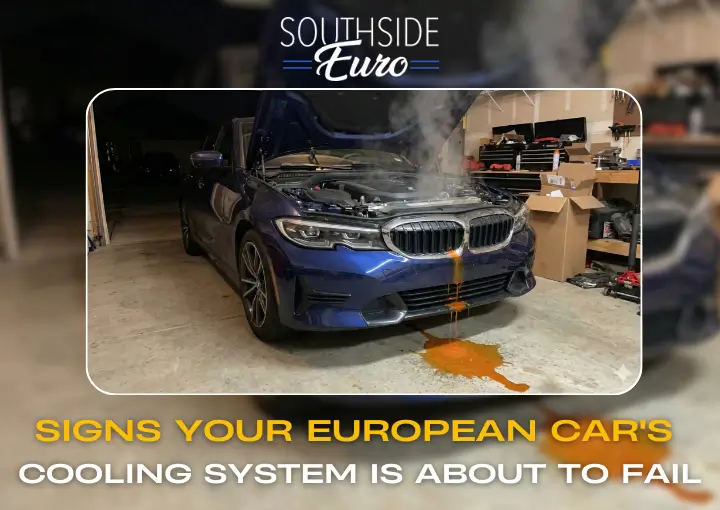
The cooling system in European vehicles operates under extreme pressures and temperatures that would disable American or Asian cars within minutes. BMW, Mercedes-Benz, Audi, Porsche, Volkswagen, Jaguar, Land Rover, Volvo, Mini Cooper, Alfa Romeo, Maserati, and Rolls-Royce engineers design cooling systems with minimal safety margins to optimize performance and efficiency.
This approach delivers incredible power density but creates vulnerability to catastrophic failure when components begin degrading. The warning signs appear weeks before total failure, yet owners routinely miss or dismiss these indicators until overheating destroys their engine in spectacular fashion.

Jacksonville's
Most Trusted
Euro Car Shop
Book Your Appointment Today
Understanding European Cooling System Design Philosophy
Performance-Oriented Temperature Management
European manufacturers pursue performance and efficiency targets that demand engines operate at temperatures American manufacturers would consider dangerous. BMW’s turbocharged four-cylinder engines run coolant temperatures regularly exceeding 220°F, while Mercedes-AMG V8s operate even hotter during performance driving.
These elevated temperatures:
- Improve fuel economy
- Reduce emissions output
- Allow smaller displacement engines to produce remarkable power
- Optimize combustion efficiency
Sophisticated Electronic Integration
The cooling systems use sophisticated electronic thermostats, multi-speed electric fans, expansion tanks with integrated sensors, and complex coolant routing through engine blocks, cylinder heads, turbochargers, and heat exchangers.
Unlike conventional systems with simple mechanical thermostats and belt-driven fans, European designs integrate cooling system operation with engine management computers that constantly adjust coolant flow, fan speed, and thermostat opening based on driving conditions.
Multiple Failure Points
This complexity creates multiple failure points. Electric water pumps used in many BMW, Mercedes, and Audi models eliminate parasitic losses from belt-driven pumps but introduce electronic control units and motors that fail progressively.
Plastic expansion tanks and radiators reduce weight but crack under thermal cycling stress. Aluminum components develop electrolysis corrosion when coolant chemistry deviates from specifications.
Warning Sign 1: Fluctuating Temperature Gauge
Understanding Normal vs. Abnormal Behavior
The temperature gauge that previously sat rock-steady at the midpoint suddenly begins moving. You notice the needle climbing slightly higher than normal during highway driving, then dropping when coasting or idling.
This fluctuation indicates the cooling system cannot maintain stable operating temperature, a critical warning of impending failure.
Root Causes of Temperature Fluctuation
Several causes create temperature fluctuations:
- Trapped air pockets prevent proper coolant circulation through the engine block or cylinder head
- Failing thermostat sticks partially closed, restricting coolant flow to the radiator
- Low coolant level from slow leaks reduces the system’s heat capacity
- Weak water pump struggles to circulate coolant adequately, particularly at low engine speeds
High-Pressure System Complications
European cooling systems operate at 15-22 PSI pressure, much higher than domestic vehicles. This elevated pressure raises the coolant boiling point to approximately 265°F, preventing vapor formation.
When air enters the system, it creates compressible pockets that reduce pressure. The localized pressure drop allows coolant to boil at lower temperatures, forming steam bubbles that disrupt circulation. These air pockets typically lodge in the highest points of the cooling system, the cylinder head, heater core inlet, or expansion tank.
Progressive Damage Timeline
Ignoring temperature fluctuations allows the underlying problem to worsen:
- Air pockets grow larger as more coolant escapes through leaks
- Stuck thermostats deteriorate further until they fail completely in the closed position
- Water pump impeller blades erode or break off, destroying pumping capacity
- What begins as minor fluctuation escalates to severe overheating within weeks
Warning Sign 2: Sweet Smell from Vents or Engine Bay
Recognizing the Distinctive Odor
A distinctive sweet, almost syrupy smell indicates coolant leaking and evaporating. Ethylene glycol, the primary component in automotive antifreeze, produces this characteristic odor when heated.
The smell appears most strongly after shutting off the engine when heat continues radiating from components and evaporating any leaked coolant.
Common Leak Sources by Brand
BMW models frequently develop leaks from the electric water pump housing where plastic components crack from thermal stress.
Mercedes-Benz vehicles suffer expansion tank failures where the tank neck separates from the body.
Audi and Volkswagen models leak from thermostat housings and coolant flanges that use plastic components with embedded o-rings.
Internal vs. External Leaks
Heater core leaks create especially potent sweet smells in the passenger compartment as coolant evaporates from the HVAC box behind the dashboard. These leaks often present with:
- Oily film on the windshield interior
- Wet carpet under the passenger side floor
- Dashboard removal required for repair
- Labor costs of $1,500-$3,000 alone
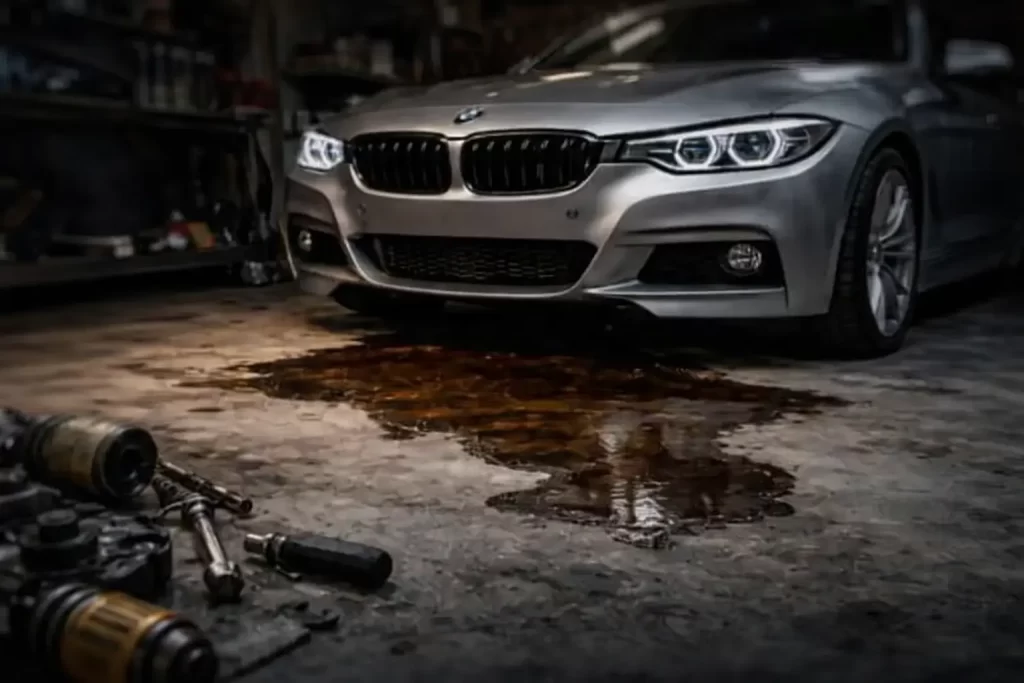
External leaks leave visible residue under the vehicle, greenish or pinkish puddles that feel slippery between fingers. The leaked coolant attracts pets who find the sweet taste appealing, but ethylene glycol is highly toxic and causes kidney failure.
Combustion Chamber Intrusion
The sweet smell combined with no visible external leaks suggests internal coolant loss into the combustion chamber through cylinder head gasket failure. The coolant burns in the combustion process, producing sweet-smelling white exhaust smoke.
This failure mode is catastrophic:
- Coolant mixing with engine oil destroys bearings
- Combustion gases pressurizing the cooling system cause expansion tank bursting
- Repair requires complete engine disassembly
Warning Sign 3: Coolant Loss Without Visible Leaks
The Mystery of Disappearing Coolant
You regularly add coolant to maintain proper levels, yet never observe puddles under the vehicle. The expansion tank level drops steadily between fill-ups, indicating the system is losing coolant through internal consumption rather than external leakage.
This symptom strongly suggests cylinder head gasket failure or cylinder head cracking, both expensive repairs requiring complete engine disassembly.
Head Gasket Failure Mechanics
Modern European engines use aluminum blocks and heads that expand significantly when heated. The cylinder head gasket seals between these components, containing combustion pressure while allowing coolant and oil passages to function.
When head gaskets fail, they allow:
- Combustion gases to pressurize the cooling system
- Coolant to enter the combustion chamber
- The coolant burns and exits through the exhaust, leaving no external trace
Progressive System Damage
Combustion gases entering the cooling system create progressive damage. The high-pressure gases rupture coolant hoses, crack expansion tanks, and force coolant past water pump seals.
The cooling system pressure cap, designed to vent excess pressure above 15-22 PSI, constantly releases pressure as combustion gases accumulate. This continuous venting allows air to enter when the engine cools, creating the air pockets that cause temperature fluctuations.
European Engine-Specific Challenges
Cylinder head gasket failures in European vehicles rarely present with obvious symptoms until catastrophic failure occurs. Unlike domestic engines that produce milkshake-like oil/coolant emulsions visible on the dipstick, European engines often show no oil contamination until the failure progresses extensively.
The combustion chamber pressures in turbocharged engines exceed 150 PSI, overwhelming gasket sealing capacity once microscopic failures begin.
Professional Diagnostic Requirements
Professional diagnosis requires:
- Chemical testing of cooling system contents using combustion gas detection fluid
- Pressure testing the system overnight to reveal coolant loss rates
- Cylinder leakdown testing to identify which cylinder exhibits gasket failure
These diagnostic procedures require specialized equipment unavailable at general repair shops.
Warning Sign 4: Overheating During Idle or Low-Speed Driving
Pattern Recognition
The temperature gauge climbs rapidly when stuck in traffic or idling at drive-throughs, yet returns to normal when driving at highway speeds. This pattern indicates electric cooling fan failure, one of the most common cooling system failures in European vehicles.
The fans remain off when they should activate, preventing adequate airflow through the radiator when vehicle speed cannot provide natural cooling.
Multi-Stage Fan System Design
European vehicles use electric fans controlled by the engine computer based on coolant temperature sensor inputs. Many models employ multi-speed fans or multiple fan assemblies that activate progressively as temperature rises:
- Stage 1: Low speed for normal cooling
- Stage 2: Increased speed for moderate heat loads
- Stage 3: Maximum speed during severe conditions
Any stage failure compromises cooling capacity.
Fan Motor Failure Progression
Fan motor bearing wear causes initial failures. The motors make grinding noises, draw excessive electrical current, and eventually seize completely. The engine computer detects the excessive current draw and disables the fan to prevent electrical system damage.
Unfortunately, many vehicles store fault codes for fan failures without illuminating dashboard warning lights, leaving owners unaware until overheating occurs.
Control Module Complications
Fan control modules separate from the fan motors on many BMW and Mercedes models. These modules contain power transistors that switch high current to the fan motors. The transistors fail from heat stress, requiring module replacement at $400-$800.
The modules mount in locations exposed to engine heat and road spray, accelerating failure rates. Many technicians miss failed control modules and replace functioning fan motors unnecessarily.
Radiator Blockage Symptoms
Radiator blockage creates similar symptoms, adequate cooling at highway speeds where air pressure forces flow through the radiator, but inadequate cooling during idle.
Causes include:
- Debris accumulation between the radiator and condenser
- Internal radiator tube corrosion and scaling
- External fin damage from rock impacts reducing heat transfer surface area
Warning Sign 5: White Exhaust Smoke After Startup
Identifying Coolant Combustion
White smoke billowing from the exhaust after cold starts indicates coolant entering the combustion chamber and evaporating during the first minutes of operation. This signature symptom points to cylinder head gasket failure, cracked cylinder head, or intake manifold gasket failure depending on engine design.
The smoke appears most dramatically during cold starts when coolant pools in the combustion chamber overnight.
Thermal Expansion and Temporary Sealing
As the engine runs and components warm, thermal expansion often seals the minor cracks or gasket failures that allow coolant intrusion. The smoke diminishes or disappears after several minutes of operation, leading owners to dismiss the problem.
However, the underlying failure worsens with every thermal cycle as combustion pressures stress the compromised sealing surfaces.
Turbocharged Engine Vulnerabilities
Turbocharged European engines face elevated risk of cylinder head issues. The turbocharger generates tremendous heat that radiates to the cylinder head:
- BMW N54 and N55 engines commonly develop cylinder head warping
- Mercedes M276 and M278 engines suffer similar head gasket failures
- Volkswagen and Audi TSI engines develop cylinder head cracks around coolant passages
Distinguishing from Normal Condensation
The white smoke differs from normal water vapor condensation that occurs in cold weather:
- Coolant smoke: Appears thicker with characteristic sweet smell
- Coolant smoke: Continues for several minutes rather than clearing within 30-60 seconds
- Coolant smoke: Accompanied by heavy coolant consumption (weekly or daily top-offs)
Secondary Damage Concerns
Coolant burning in the combustion chamber creates additional problems beyond the smoke:
- Coolant contaminates engine oil, reducing lubrication properties
- Bearing wear accelerates dramatically
- Combustion byproducts deposit on spark plugs, causing misfires
- Catalytic converters become contaminated with coolant residue
- Emissions testing failures occur
Warning Sign 6: Dashboard Warning Lights for Coolant Level or Temperature
Electronic Monitoring Systems
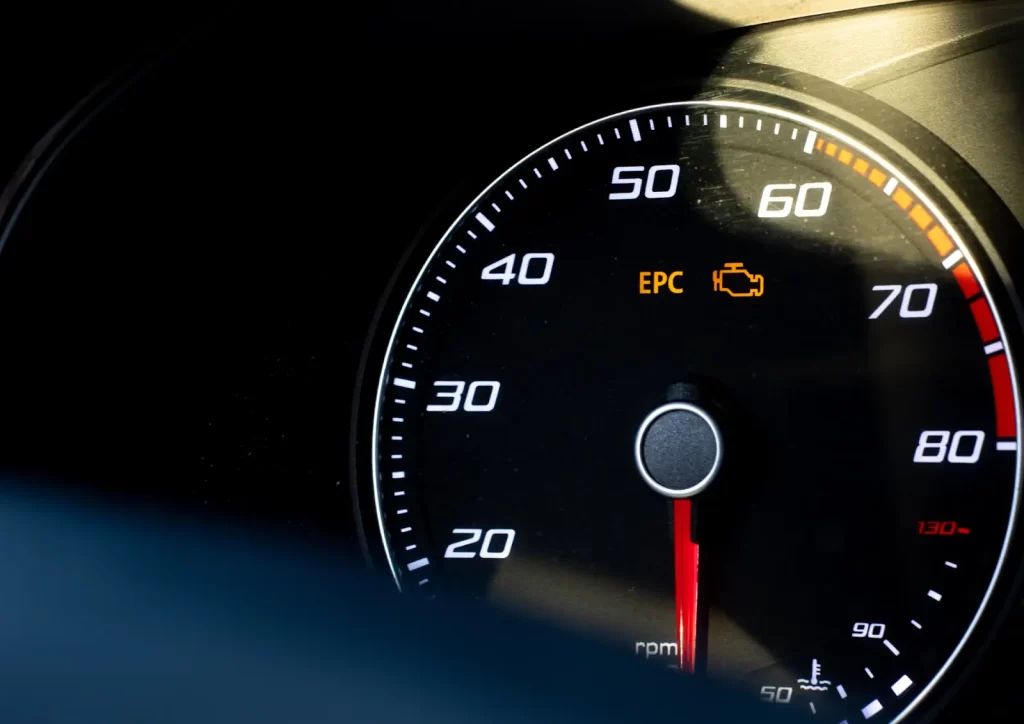
Modern European vehicles monitor coolant level through sensors in the expansion tank and temperature through multiple sensors throughout the cooling system. When these sensors detect out-of-range conditions, warning lights illuminate on the dashboard:
- Thermometer symbol
- Coolant level indicator
- Text messages: “Engine Overheating” or “Coolant Level Low”
The Danger of Delayed Response
These warning systems provide early alerts before overheating causes engine damage, yet owners frequently ignore or dismiss them. The reasoning follows dangerous logic:
“The gauge isn’t in the red zone yet, so I can keep driving to my destination.”
This assumption fails to account for the lag between coolant temperature sensors detecting dangerous conditions and visible gauge response. By the time the gauge enters red territory, aluminum components have already begun warping.
Sensor Failure vs. Legitimate Warnings
Electronic coolant level sensors fail frequently in European vehicles, particularly in BMW and Mercedes-Benz models. The sensors mount in the expansion tank and use:
- Ultrasonic detection methods
- Conductivity-based detection
- Both subject to coolant contamination and scale buildup
However, owners cannot distinguish between legitimate warnings and sensor failures without professional diagnosis, making every coolant warning potentially serious.
Temperature Sensor Cascade Effects
Temperature sensors provide critical data to the engine computer for:
- Fuel mixture adjustment
- Ignition timing control
- Cooling fan activation
Failed temperature sensors cause numerous cascading problems:
- Engine computer assumes the engine remains cold and enriches fuel mixture
- Fuel economy decreases and emissions increase
- Fans never activate because computer believes engine hasn’t warmed up
- Thermostat remains closed as it responds to actual coolant temperature
Limp Mode Protection
Dashboard warnings demand immediate professional evaluation. Many European vehicles enter “limp mode” when overheating is detected, limiting engine power to prevent damage:
- Vehicle becomes difficult to drive
- Acceleration capability severely limited
- May refuse to exceed 40-45 mph
- Continuing operation still causes cumulative wear
Warning Sign 7: Heater Blowing Cold Air
Climate Control System Integration
The climate control system set to maximum heat produces lukewarm or cold air despite the engine reaching normal operating temperature. This symptom indicates several potential cooling system failures:
- Trapped air in the heater core
- Failed heater control valve
- Low coolant level preventing adequate flow through the heater core
Heater Core Function and Location
European vehicles route coolant through the heater core to provide cabin heating. The heater core functions as a small radiator with a blower fan directing air through its fins.
When coolant circulation through the heater core stops or becomes restricted, heat production stops. The heater core sits at one of the highest points in the cooling system, making it susceptible to air pocket accumulation that prevents coolant flow.
Air Pocket Formation After Service
Air pockets typically form after:
- Cooling system repairs
- Coolant changes
- When leaks allow air to enter during operation
European cooling systems require specific bleeding procedures using bleed screws or bleed valve protocols. Improper bleeding leaves air trapped in the heater core circuit. As the air pocket grows from additional coolant loss, heater performance degrades until no heat is available.
Electronic Heater Valve Failures
BMW vehicles use electronic heater valves that control coolant flow to the heater core based on climate control inputs. These valves fail in closed positions, preventing all coolant flow and eliminating heat production.
The failure often occurs gradually:
- Reduced heat output over weeks
- Complete failure follows
- Replacement requires accessing the valve location deep in the engine bay
- Significant labor costs added to simple part replacement
Early Warning of Larger Problems
Insufficient coolant level from leaks or consumption manifests first as heater performance degradation. The heater core requires adequate coolant volume and pressure to transfer heat effectively.
When levels drop, the heater core doesn’t receive enough coolant flow to warm the passenger compartment. This early warning sign precedes more serious overheating issues, providing owners time to address the underlying leak before engine damage occurs.
Warning Sign 8: Radiator Hose Collapse or Bulging
Identifying Hose Deformation
Coolant hoses appear deformed, either collapsed inward like crushed soda straws or bulging outward with visible distension. These conditions indicate dangerous pressure imbalances within the cooling system that stress all components.
- Collapsed hoses: Suggest vacuum formation from cooling system contraction
- Bulging hoses: Indicate excessive pressure from combustion gas intrusion or failed pressure cap
Lower Radiator Hose Vacuum Issues
Radiator hoses connect the engine to the radiator and operate under extreme conditions. The lower radiator hose experiences vacuum during engine operation as the water pump draws coolant from the radiator.
Quality hoses contain internal reinforcement springs that prevent collapse under this vacuum. Aged hoses lose reinforcement integrity, allowing vacuum to collapse them and restrict coolant flow. The restriction:
- Reduces cooling capacity
- Creates flow noise audible with the hood open
- Progressively worsens until complete blockage
Upper Radiator Hose Heat Stress
Upper radiator hoses face different stresses. These hoses carry hot coolant under pressure from the engine to the radiator inlet. Coolant temperatures often reach 230-250°F, well above water’s boiling point at atmospheric pressure.
The pressurized system prevents boiling, but hose materials degrade from continuous heat exposure:
- Inner rubber lining cracks
- Hot coolant attacks fabric reinforcement layers
- Hoses become soft, spongy, and bulge visibly
European-Specific Hose Complications
European vehicles commonly use molded radiator hoses with complex shapes that route around engine components. These hoses cost significantly more than universal straight hoses:
- OEM European hoses: $80-$200 per hose
- Generic straight hoses: $15-$30
- Complex shapes make aftermarket alternatives less reliable
- Slight dimensional differences create connection issues
BMW and Mercedes owners should always use OEM or OEM-quality replacement hoses.
Catastrophic Burst Failure Pattern
Coolant hose failure rarely occurs gradually. The degraded hose appears functional until sudden rupture occurs during high-temperature operation. The catastrophic failure:
- Releases all coolant instantly
- Causes immediate severe overheating
- Results in expensive towing bills
- Creates potential engine damage if overheating wasn’t detected immediately
The cooling system inspection during regular service intervals identifies hoses requiring replacement before failure occurs.
Warning Sign 9: Coolant Contamination or Discoloration
Visual Coolant Assessment
Coolant visible in the expansion tank appears rusty brown, murky, or contains visible particles and sediment. Fresh coolant is bright green, pink, orange, or blue depending on formulation, and remains transparent.
Contamination indicates:
- Chemical breakdown
- Corrosion occurring in the system
- Mixing of incompatible coolant types
All conditions compromise cooling system function and accelerate component failures.
Manufacturer-Specific Coolant Requirements
European manufacturers specify particular coolant formulations for their vehicles:
- BMW: Blue coolant meeting proprietary specification
- Mercedes-Benz: Antifreeze meeting MB 310.1 or 326.0 standards
- Volkswagen/Audi: G12 or G13 formulations required
These coolants contain specific corrosion inhibitors, pH buffers, and additive packages designed to protect aluminum components used extensively in European engines.
Generic Coolant Dangers
Generic “universal” coolants or mixing different coolant types neutralizes the protective additives. The pH balance shifts, allowing electrolysis corrosion to attack aluminum components.
The corrosion produces:
- Reddish-brown iron oxide particles
- White aluminum oxide particles
- Particles circulate through the system
- Abrade water pump seals
- Clog radiator tubes
- Deposit in narrow coolant passages
Oil Contamination Indicators
Oil contamination in the coolant appears as brownish streaks or an oily film on the expansion tank surface. This contamination indicates cylinder head gasket failure allowing oil and coolant to mix within internal passages.
The mixture forms sludge that:
- Clogs the radiator
- Blocks heater core passages
- Requires complete cooling system flushing
- Necessitates component replacement
- Costs often exceed $3,000-$5,000 including gasket repair
Professional Coolant Testing
Professional cooling system service includes coolant chemical testing that measures:
- pH balance
- Freeze protection level
- Corrosion inhibitor concentration
These tests identify degraded coolant requiring replacement even when visual appearance seems acceptable. European vehicles require coolant replacement every 2-4 years depending on the specific formulation and manufacturer recommendations.
Extended coolant change intervals contribute to premature cooling system component failures.
Warning Sign 10: Unexplained Engine Performance Issues
Indirect Cooling System Symptoms
The engine exhibits reduced power output, rough idle, hesitation during acceleration, or increased fuel consumption without obvious cause. These symptoms can result from cooling system failures that aren’t immediately apparent.
Overheating affects engine performance long before temperature gauges indicate problems or warning lights illuminate.
Electronic Control System Interactions
Modern European engines use extensive electronic control systems that adjust fuel delivery, ignition timing, and variable valve timing based on engine temperature.
The engine computer:
- Enriches fuel mixture during warm-up
- Leans mixture once operating temperature is reached
- Cooling system problems preventing normal operating temperature cause excessively rich operation continuously
Detonation and Timing Retardation
Detonation (engine knock) occurs when combustion temperatures exceed safe limits. Localized hot spots in the cylinder cause fuel to ignite prematurely before the spark plug fires.
The engine computer detects detonation through knock sensors and retards ignition timing to prevent damage. This timing retardation:
- Reduces power output significantly
- Decreases efficiency
- Results from inadequate cooling creating hot spots
Turbocharger Performance Degradation
Turbocharger performance degrades significantly when cooling system efficiency drops. The turbocharger’s exhaust turbine operates at temperatures exceeding 1,500°F, relying on coolant circulation through bearing housings to prevent oil degradation and bearing failure.
Without proper cooling:
- Oil passages through turbo develop scale and corrosion
- Flow restriction worsens progressively
- Supercharger overheats
- Rotor clearances tighten
- Eventually seizes completely
Misdiagnosis and Unnecessary Repairs
Owners often spend thousands on unnecessary repairs chasing performance problems:
- Replacing ignition coils
- Installing new spark plugs
- Changing fuel injectors
- Replacing sensors
All while ignoring underlying cooling system degradation. Professional comprehensive diagnostics evaluate all systems including cooling efficiency to identify root causes rather than treating symptoms.
Preventing Catastrophic Cooling System Failure
Regular Maintenance Requirements
European cooling systems require regular maintenance beyond simple coolant level checks:
- Coolant replacement at manufacturer-specified intervals preserves corrosion inhibitor effectiveness
- Pressure testing identifies minor leaks before they become major failures
- Component inspection during routine oil changes catches degraded hoses, seeping gaskets, and expansion tank cracks
Proactive Component Replacement
Water pump replacement on BMW, Mercedes-Benz, and Audi vehicles should occur proactively at 80,000-100,000 miles regardless of symptoms. These electric pumps fail without warning, and the failure often occurs at the worst possible time:
- During highway trips
- In heavy traffic where overheating develops rapidly
- Preventive pump replacement: $600-$1,200
- Overheated engine rebuild: $8,000-$15,000
Thermostat Service Intervals
Thermostat replacement during major service intervals prevents stuck-closed failures that cause catastrophic overheating. Modern electronic thermostats used in European vehicles:
- Cost $150-$400
- Provide years of reliable service
- Feature complex electronic controls
- Don’t exhibit gradual degradation like mechanical thermostats
- Function properly until sudden complete failure
Expert Cooling System Service at Southside Euro
Specialized European Vehicle Knowledge
Our European vehicle specialists understand the unique cooling system designs used by BMW, Mercedes-Benz, Audi, Porsche, Volkswagen, and other European manufacturers.
We perform comprehensive cooling system inspections including:
- Pressure testing for leak detection
- Chemical testing of coolant condition
- Component evaluation and thermal imaging
- Identification of problems before engine damage
OEM-Specification Coolants and Parts
We use only manufacturer-specified coolants meeting BMW, Mercedes, Audi, and VW specifications. Our technicians follow proper bleeding procedures to eliminate air pockets that cause overheating and heater problems.
We replace cooling system components with OEM-quality parts backed by our comprehensive warranty.
Jacksonville’s Trusted European Specialists
Located at 4583 Sunbeam Rd., Jacksonville, FL 32257, Southside Euro has protected Jacksonville’s European vehicles from cooling system failures since 2019.
Don’t wait for warning signs to become catastrophic failures. Call (904) 240-1440 to schedule your cooling system inspection today.