














BMW vehicles are synonymous with performance, luxury, and engineering prowess, but they aren’t immune to mechanical challenges.
One prevalent concern among owners is oil consumption, where the engine burns or leaks oil at varying rates. While some oil use is normal in high-performance engines, excessive consumption can signal underlying problems leading to costly repairs.

This article delves into what’s considered normal versus problematic, affected models, warning signs, causes, diagnosis, solutions, costs, and preventive strategies.
For BMW owners in Jacksonville, FL, specialized shops like Southside Euro’s BMW repair page offer expert diagnostics and maintenance to address these issues effectively.
Common BMW Models Affected by Oil Consumption Issues
Oil consumption problems are more common in certain BMW engines and models, particularly those from the mid-2000s to early 2010s. The N52 inline-six engine, found in models like the 3 Series (E90/E91/E92/E93, 2006-2011), 5 Series (E60, 2006-2010), and Z4 (E85/E89), is notorious for higher-than-average oil use due to design elements like piston rings and valve stem seals.
The twin-turbo N54 engine in the 335i (2007-2010) and 135i often experiences turbo-related leaks, exacerbating consumption.
The N55 engine, successor to the N54 in models like the 335i (2011-2015), 535i, and X3/X5, improved somewhat but still reports issues around 50,000-100,000 miles. The N63 V8, powering the 550i, 650i, 750i, and X5/X6 (2008-2014), is infamous for excessive burning, with some owners adding a quart every 500-600 miles.
Newer B-series engines in the G30 5 Series or F90 M5 are less prone but can develop problems if maintenance is neglected.
Higher-mileage vehicles (over 80,000 miles) are at greater risk, though issues can appear earlier in turbocharged models due to heat and pressure stress. Ignoring this can lead to engine damage, reduced performance, or failure. For tailored service on these models, visit Southside Euro’s brands we service, specializing in BMW diagnostics.
Early Warning Signs of Excessive Oil Consumption
Recognizing symptoms early can prevent major damage. Here’s what to watch for:
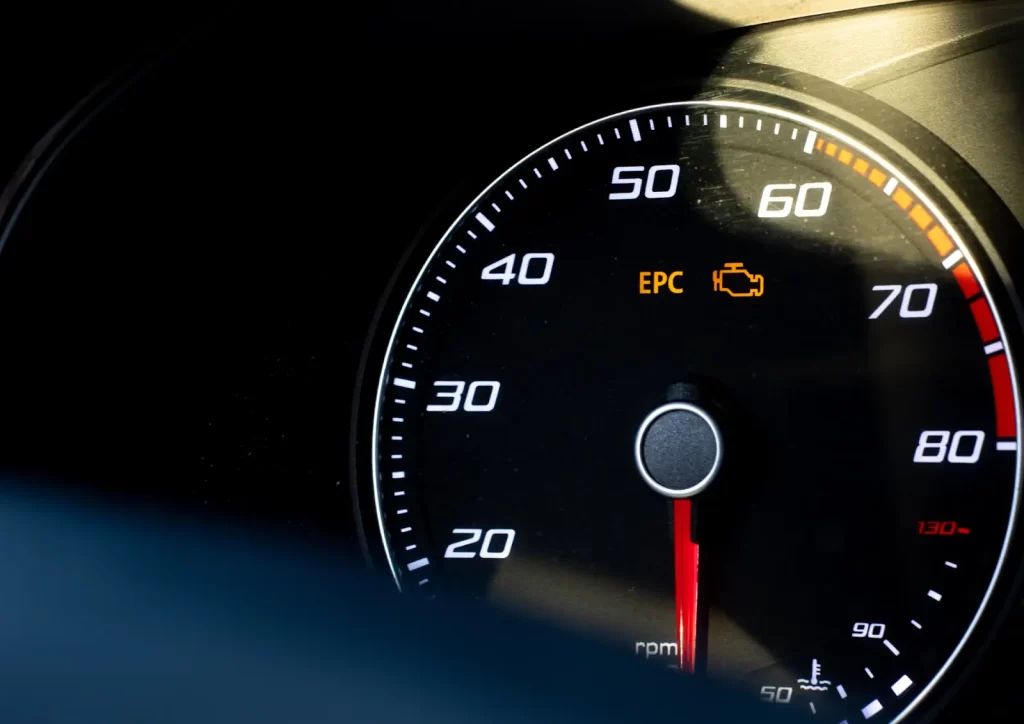
- Low Oil Level Warnings: BMW’s electronic oil level sensor often triggers a dashboard light when oil drops below minimum. If you’re adding oil frequently (more than 1 quart every 1,000 miles), it’s a red flag.
- Blue Smoke from Exhaust: Especially on startup or acceleration, this indicates oil burning in the combustion chamber, often from worn valve seals or piston rings.
- Burning Oil Smell: A distinct odor inside the cabin or from the engine bay suggests leaks or burning, potentially from gaskets or the PCV system.
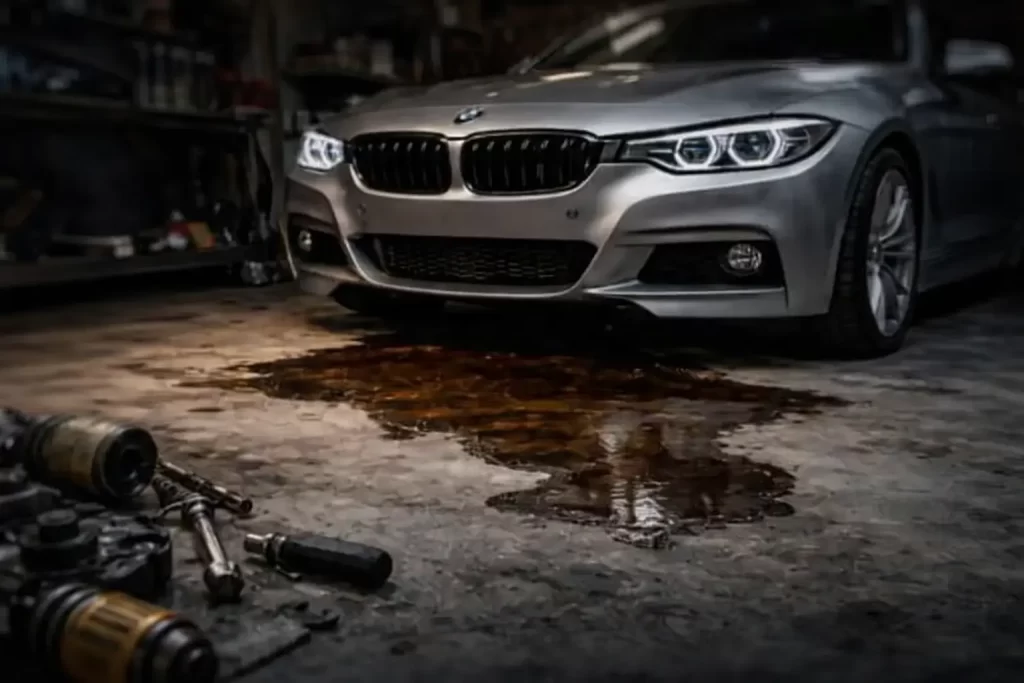
- Oil Spots Under the Vehicle: Puddles or stains on your driveway point to external leaks from seals, gaskets, or the oil pan.
- Reduced Engine Performance: Sluggish acceleration, misfires, or rough idling can occur if low oil affects lubrication.
- Increased Fuel Consumption: As the engine compensates for poor lubrication, efficiency drops.
If these signs appear, schedule a check-up promptly. Southside Euro’s services page offers diagnostics starting at $100 for European vehicles like BMWs.
What’s Normal vs. What’s Not in BMW Oil Consumption
BMW states that oil consumption up to 1 quart every 750-1,200 miles is normal for many engines, especially turbocharged ones like the N63, due to high operating temperatures and tolerances designed for performance. This accounts for minor evaporation, burning, and seepage in a healthy engine. For non-turbo models like the M54 or N52, 1 quart every 2,000-3,000 miles is more typical.
However, anything exceeding this, such as 1 quart every 500 miles, indicates a problem. Excessive consumption isn’t just inconvenient; it can lead to carbon buildup, catalytic converter damage, or engine seizure if levels drop too low. Factors like driving style (short trips vs. highway), oil quality, and age influence rates. Always monitor via the iDrive system or dipstick.
For advice on oil types and intervals, check Southside Euro’s blog for European car maintenance tips.
Causes of BMW Oil Consumption Problems
Multiple factors contribute to excessive oil use in BMWs:
- Worn Valve Stem Seals: Common in N52 and N63 engines, these seals harden over time, allowing oil to enter the combustion chamber.
- Piston Ring Wear: In high-mileage engines, rings fail to seal properly, leading to blow-by and burning.
- Turbocharger Issues: Leaky seals in N54/N55 turbos cause oil to burn or leak externally.
- PCV System Failure: The crankcase ventilation valve can clog or rupture, drawing oil into the intake.
- Gasket and Seal Leaks: Valve cover, oil pan, or filter housing gaskets degrade, causing external leaks.
- Poor Maintenance: Using incorrect oil (not LL-01 spec) or extended intervals (BMW’s 10,000-15,000 miles) accelerates wear.
Manufacturing defects in early N63 engines prompted class-action lawsuits and warranty extensions. Short trips prevent full warm-up, increasing condensation and dilution.
Diagnosing Oil Consumption Issues
Diagnosis starts with monitoring: Track oil additions over mileage to quantify consumption. A professional inspection includes:
- Visual checks for leaks.
- Smoke tests for PCV integrity.
- Compression tests for ring wear.
- Borescope inspection of cylinders.
- Oil analysis for contaminants.
BMW dealers may perform a consumption test, driving 750 miles and measuring loss. In Jacksonville, Southside Euro’s BMW-specific services use advanced tools like fault code scanners for accurate diagnosis.
Fixing BMW Oil Consumption Problems
Repairs depend on the cause:
- Valve Stem Seals Replacement: Involves removing cylinder heads; labor-intensive, 10-20 hours.
- Piston Rings Overhaul: Requires engine disassembly; often a full rebuild.
- Turbo Seal Repair: Rebuild or replace turbos.
- PCV Valve Swap: Simpler, accessible on valve cover.
- Gasket Replacements: Valve cover ($300-600), oil pan ($500-1,000).
For severe cases, engine replacement might be needed, especially in N63 models. Use OEM parts for longevity. Southside Euro’s warranty coverage includes 2-3 years on such repairs.
Oil Consumption Repair Costs: What to Expect
Costs vary by issue and model:
- Minor Fixes (Gaskets/PCV): $500-$1,500, including parts ($100-300) and labor (4-8 hours at $120-150/hr).
- Valve Seals: $2,000-$4,000.
- Turbo Repairs: $1,500-$3,000 per turbo.
- Piston Rings/Engine Rebuild: $5,000-$10,000+.
- Full Engine Replacement: $10,000-$20,000 at dealers.
Independent shops like Southside Euro charge $125/hr, potentially saving 30-50% vs. dealerships. Check for warranty extensions on N63 engines. See their testimonials for cost-effective repair stories.
Preventing BMW Oil Consumption Issues
Proactive maintenance is crucial:
- Change oil every 5,000-7,500 miles with LL-01 synthetic, not BMW’s extended intervals.
- Monitor levels weekly via iDrive.
- Use additives like Liqui Moly for seal conditioning.
- Avoid short trips; allow full warm-up.
- Inspect PCV and seals at 60,000 miles.
Regular services catch issues early. Southside Euro’s car detailing services complement maintenance by keeping underhood areas clean for leak detection.
Why Professional Service Matters for BMW Oil Issues
DIY fixes risk further damage due to BMW’s complex systems like VANOS. Certified techs use specialized tools and OEM parts. Shops like Southside Euro offer warranties and expertise in N-series engines. Their FAQs page covers common BMW concerns.