













Summarize this article with:
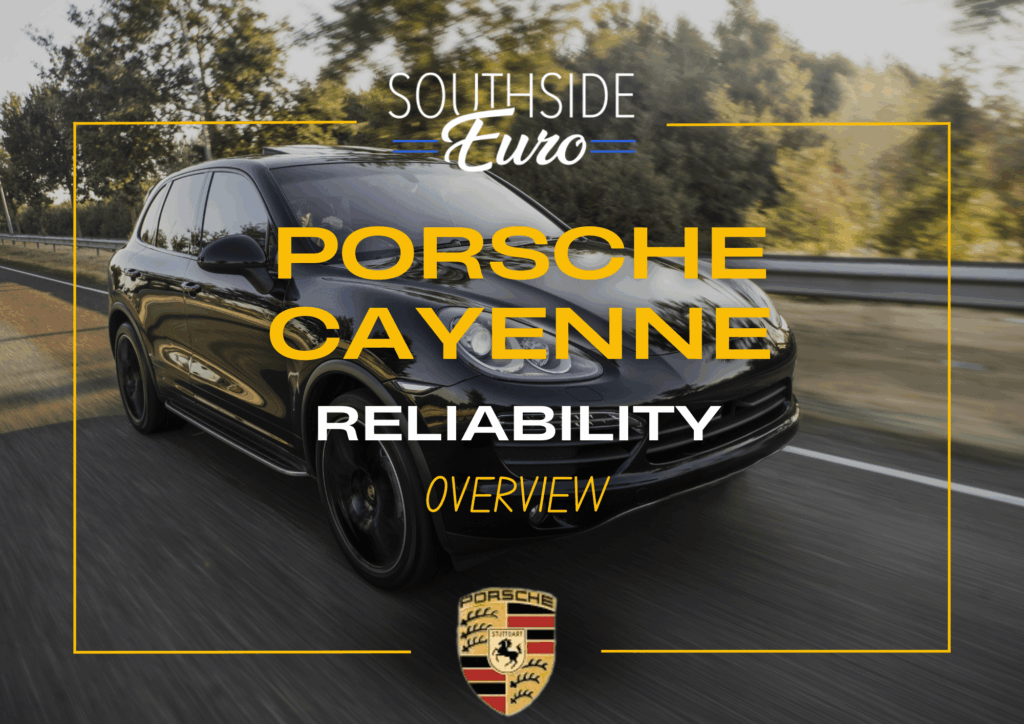
Quick Overview of Porsche Cayenne Reliability & Common Issues by Generations
The Porsche Cayenne is a luxury SUV with strong performance and advanced engineering, but its reliability varies by generation. Early first-generation models (2003–2010) are prone to engine bore scoring, water leaks, and electrical faults. The second generation (2011–2018) is known for camshaft bolt failures, coolant leaks, and transfer case issues. The current third generation (2019–present) has fewer major problems but still shows minor issues such as squeaky brakes and transmission surging.
Overall, the Cayenne can be dependable when properly maintained, but owners should expect higher-than-average repair costs and stay proactive with service to avoid expensive failures.

Jacksonville's
Most Trusted
Euro Car Shop
Book Your Appointment Today
Let’s get into it.
Jacksonville’s
Most Trusted
Euro Car Shop
Book Your Appointment Today
First-Generation Porsche Cayenne Reliability (2003–2010)

The first-generation Porsche Cayenne (955/957) was produced from 2003 through 2010 and is now well into high-mileage territory. While these SUVs introduced Porsche’s first venture into the luxury SUV market, age and engineering flaws mean that many examples face significant reliability challenges today.
The most notable issue is engine bore scoring, which affects the early 4.5-liter V8 engines used in 2003–2006 Cayenne S and Turbo models. Bore scoring leads to knocking noises, high oil consumption, smoke from the exhaust, and ultimately engine failure. Repair requires a complete rebuild or engine replacement, making it one of the most expensive problems on this generation.
Water intrusion is another recurring concern. Blocked sunroof drains and poor sealing allow water to leak into the cabin, damaging carpets, trim, and electronic modules under the seats. In severe cases, owners face mold issues and costly electrical repairs.
Other age-related problems include failing driveshaft center supports, worn suspension components, and electrical faults such as malfunctioning window regulators and warning light errors. The 2003 and 2004 models had the highest number of recalls, while later years (2008–2010) benefited from updated components and are considered somewhat more dependable.
For buyers considering a first-generation Cayenne, a full service history is essential. Without documented maintenance, ownership costs can quickly exceed the value of the vehicle.
Schedule for Vehicle Inspection.
Second-Generation Porsche Cayenne Reliability (2011–2018)
The second-generation Cayenne, produced from 2011 to 2018, is widely regarded as the least reliable generation. One of the most serious issues involves failures of the camshaft adjuster bolt.

When camshaft adjuster bolts snap, the engine can lose power instantly, warning lights flood the dashboard, and in many cases, the SUV is left undrivable. The problem became so widespread that Porsche issued a recall in 2017 to replace the defective hardware, but buyers should confirm that this work has been completed before purchasing a used model.
Another recurring problem is transfer case failure, which often shows up as drivetrain vibration, shuddering under acceleration, or difficulty engaging gears. Once wear becomes severe, replacement of the transfer case is typically the only option, and it is one of the most expensive repairs on this generation.
Cooling system weaknesses are also common. Plastic pipes, radiators, and fittings often develop leaks as the SUV ages, and these can quickly escalate into overheating if ignored. Overheating in turn risks far more serious damage to the engine, which is why inspections and prompt repair of any coolant loss are critical for Cayenne owners.
Book a Porsche Repair consultation.
Third-Generation Porsche Cayenne Reliability (2019–Present)
The third-generation Cayenne, launched in 2019, is currently the most reliable of the lineup, though a few recurring issues have already surfaced. Owners frequently report squeaky brakes, which can persist even after replacing pads and rotors. While not a safety risk, it is a common annoyance.
Transmission surging or lurching at low speeds has also been reported, often described as hesitation or jerking when pulling away from a stop. In most cases, this behavior is linked to the transmission’s software calibration rather than a mechanical failure, though it can still affect drivability.
Some V6 models have shown vibration at higher speeds, which can stem from wheel balance, alignment, or drivetrain components.
Because these SUVs are still relatively new, long-term reliability data is limited. Preventive maintenance and early attention to any unusual behavior remain the best ways to preserve dependability as these vehicles age.
Keep Your Porsche Cayenne Reliable with Proper Maintenance
The Porsche Cayenne is a luxury SUV that delivers strong performance, but its reliability depends heavily on consistent maintenance. Problems such as coolant leaks, transfer case wear, or brake issues can escalate quickly if ignored, leading to high repair costs. Addressing them early keeps the Cayenne dependable for daily driving and long trips alike.
Following the recommended service schedule, using quality replacement parts, and keeping accurate service records are the best ways to extend the life of any Cayenne. For buyers considering a used model, verifying past maintenance is just as important as checking mileage or features.
Schedule professional Porsche Cayenne service today!